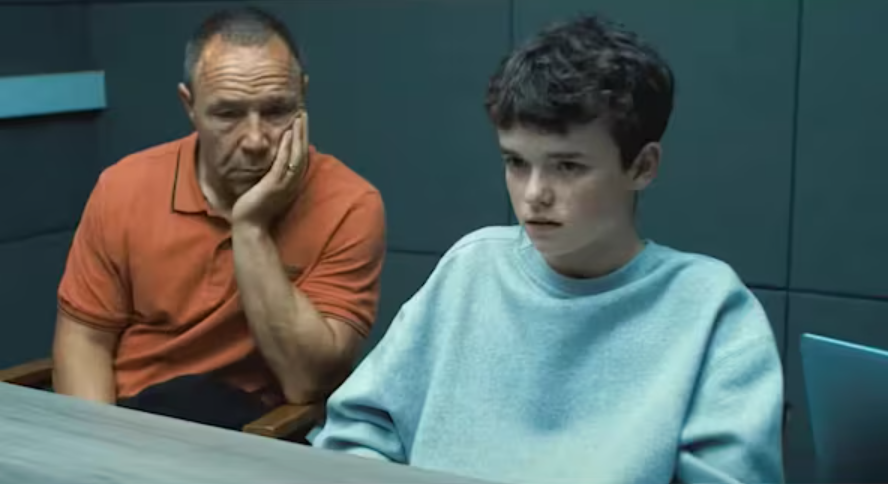
Adolescence is a British crime drama limited series, raw and audacious, straddling the lines of reality, that was released on Netflix in 2025. The series consists of 4 episodes that dare to ask the question “why” instead of “who,” focusing on the narrative of 13-year-old Jamie Miller’s arrest for his classmate’s murder. Adolescence, with its signature continuous one-take filming technique, showcases the fundamental bullying and social disintegration that come with growing up in the age of digital media. Accompanied by a stellar ensemble cast, the show acts as a brutally honest portrayal of teenage life.
In this review, we highlight Jamie Miller’s complex journey while focusing on every detail of his character through the lens of Owen Cooper. With incredible, verified information that speaks to the show’s stellar cast and crew, it’s impossible to ignore the boldness of the production, redefining the genre and mirroring the turbulent times we live in.

A New Kind of Crime Drama: The Narrative and Its Themes
The series Adolescence does not resemble traditional crime dramas. Instead of using the “whodunnit” approach, this series is a “whydunit,” investigating the sociological and psychological reasons that would compel a young person to commit a shocking crime. The script tackles the complexities of modern teenage life. Drawing on experiences from previous groundbreaking dramas, the story attempts to portray the world of youth as one grappling with deep feelings of loneliness, cyberbullying, and toxic subcultures that act like a fuse in a bomb, waiting to explode.
The central character is level 1: Jamie Miller. He is on a journey filled with unforeseen obstacles. His inner struggle is what drives the story. After being arrested for a shocking murder, Jamie is presented to the audience as a deeply troubled character but also a complex one whose actions are a product of their social environment. The story is told from the perspectives of family, teachers, law enforcement, and peers, so the viewer gets a holistic idea of what happened in the days leading up to that fateful day. In this manner, adolescence is a personal examination as well as a collective one of guilt, blame, and atonement.
Disruptive One-Shot Filming: A Striking Example of Technical Brilliance
The most striking characteristic of Adolescence is the attention given to a single continuous take per episode. The series follows an approach with no cuts or edits. This groundbreaking artistic choice forces each episode to be performed live and uncut, capturing the characters’ lives in what feels like a relentless and constant version of time.
The Art of Continuous Shot
Uninterrupted movement is maintained throughout entire episodes. The feat is achieved through extensive and meticulous practice, as well as planning by the cast and crew. The smoothness of the camera movements throughout the sets and the city ensures no bumps along the routes, thanks to the DP’s expertise in operating state-of-the-art stabilization systems like Steadicam rigs, gimbals, and drones. Accompanying the actor’s movements serves as a metaphor for the uncontrollable flow of life. The technique places the actors in an authentic and extremely demanding way of performing, where every fleeting glance or small movement of the face is out in the open to be scrutinized by the audience.
Sound and Music: Seizing Emotions as They Happen
The series’ use of sound is truly impressive. Capturing sound design as live dialogue was captured during filming presented unique challenges. The sound crew mixed every sonic detail, from the chatter of a city’s street to the gentle whispers in a school’s corridor, setting an immersive and tense soundscape for each scene. Accompanying the harsh sounds of the streets is a ghostly score that serves the story by enhancing the shifts in feeling, though never overpowering the dialogue.
Production Design and Cinematographic Brilliance
Equally brilliant in Adolescence is its production design. Every place is captured in its full glory, from the suffocating corridors of a suburban school’s high school to the sprawling urban settings of a city. The production designer and art directors created places that are both realistic and deeply metaphorical, ensuring every set is alive with busy detail—prosaic things, naturalistic furniture, or decor that tell a lot about the character’s socio-economic backdrop. The continuous camera does not miss any of these details, adding rich layers of meaning to the drama.
Outline the social roles each character embodies. Costume design complements the naturalistic feel of the series. From school uniforms to law enforcement uniforms, the character clothing choices demonstrate their nuanced personalities and inner lives. Each piece of design captures the spirit of modern youth and sets the story in a context that is deeply intimate and real.
Character Portraits: The Human Element of a Complex Society
While Adolescence has some groundbreaking technical elements, what truly resonates is the human story it interweaves. The series has one of the best ensemble casts who undoubtedly perform every bit as much as the script, which is both heartbreaking and deeply complex.
The Tormented Protagonist
This primary character encapsulates every adolescence’s struggle best, which is trying to break free from the shackles of society whilst at the same time wishing to belong somewhere. There are numerous instances of the character deep in thought, in isolation or amidst some social gathering, meandering through the busy city streets on a rainy evening. This hero’s journey is a ceaseless calibration between succumbing and defiance. Underneath the veneer is an endless storm of modern youth; every bounded shift in expression and body contains an entire world.
The Duality of Conformity and Rebellion
The character placed in opposition to the tortured protagonist’s portrayal is arguably the mix of fragility and confidence put together. The figure in question is able to complete this shift from wanting to fit in to rebelling against the peers, school, and the sharp criticism of digital culture surrounding them. Her story, captured through raw, uncut bits, adds more detail to the portrayal of youth as a period of self-discovery and defiance, enhancing the untamed spirit of adolescence.
A Family Under Siege
The family drama centers around a struggling father and a grieving mother. The father, played by a renowned actor typecast as a hothead, is a blue-collar worker suffering from the agonizing plight of parenthood—fighting an internal conflict between shielding his child and grappling with the reality behind the tragic incident. His restrained style, coupled with the wife’s portrayal, effectively captures the depths of parental anguish, guilt, and desperate, futile responses..
The Investigative Pillars
The crime investigation is anchored to a case by a seasoned detective and a trusted colleague. The lead detective is portrayed with authority and quiet sorrow, a man whose job is made much harder considering the shocking level of youth violence. To help out, his partner provides more levelheaded, harshly humane perceptions on the other layers of the case. Their exchange is done in one take so that their chemistry is depicted without any cuts, which is a meticulous test of acting as everything carries a giant burden.
The Legal Relations in Education
Alongside the family and investigative storylines, the series provides sharp critique of the legal and educational systems. An ardent lawyer readily comes to the aid of the young defendant while a caring educator offers equally important sociological commentary about the class. Even though these are supporting roles, they help illustrate the social context of the crime and its social consequences.
Owen Cooper as Jamie Miller: The Center of the Tragedy
Wrapped around this ethnographic weave is Jamie Miller, enacted by Owen Cooper in his debut role, which is delivered in chilling undertones of outstanding subtlety. The character of Jamie, who grapples with the life-changing charge of murder at the age of 13, is portrayed in deeply contradictory ways that cannot be easily interpreted. Jamie gives the impression of a sullen teenager who does not seem to engage with life, but during the striking shift of the camera capturing his story in real time, people witness his internal battle, a heartbreaking concoction of defiant anger and vulnerability.
Owen Cooper consistently portrays the contradictions of Jamie’s character with precision. During specific parts of the film, the audience can see other sides of Jamie. The camera stays zoomed in on Jamie’s face, and one can notice the delicate traces of self-reflection—a faintly misplaced stride, a quirk of the eye, almost imperceptible changes in shapes—that suggest grievous turmoil within, which is far worse than what his behavior implies. The sequence of events for Jamie includes pauses for deep self-reflection as well as impulsive decisions signifying actions and stillness, which are quintessential to the foundational themes of the series. It is safe to say he is the embodiment of the issues of today’s teenagers because it pushes them to confront uncomfortable truths.
Jamie captures the attention of the audience as someone who, overtaken by overwhelming circumstances, struggles to navigate society’s rigid structures. Rather, through Jamie, the series does not consider the individual tragedy but reflects on the societal backdrop of neglect for youngsters. His character, balanced perfectly by Owen Cooper, makes sure to look beyond the criminal act to see the man behind it. Jamie Miller should not just be referred to as a criminal but regarded as a human, rather a lost one, whose desperate actions stem from needing a supportive environment.
A Collaboration Comes to Life: The Making of ‘Adolescence’
The power of collaboration is magnificently demonstrated through the creation of Adolescence, showcasing the efforts of modern television’s most creative minds. Co-creators and executive producers poured their lived experiences and youth cultural critique into incisive writing, creating a script that directly enacts modern millennial social commentary. Their approach of focusing on “why” instead of “who” shifted the series into a contemplation on the forces that influence modern adolescence.
With a director famous for his one-take style, the production achieved harmony of technical and artistic achievement. The continuous-shot technique facilitated sophisticated cinematography because the camera and sound design needed to interact with the scenes in real time. Coordination at every level of the team was complex and unifying, yielding a series where every frame feels spontaneous and meticulously planned at once, a vivid, uncut portrayal of life in its ceaseless motion.
Production design and costume choices provide a visceral base for the story. The sets and costumes capture the relatability of young people today, which deepens the emotional impact the story portrays. Production companies pooled their resources and talents for this project to ensure Adolescence tells a compelling narrative in a groundbreaking way, both aesthetically and experientially.
The Consequences of the Impact of a Unified Vision
Adolescence (2025) combines innovative techniques with pressing social issues, provoking critical thought about the accepted notions surrounding youth and blame. With no interruptions, the camera captures everything as it is to reflect the unending passage of time—an artistic decision that ensures every instant and sentiment is captured. Every enduring shot compels the audience to confront the reality of contemporary adolescence, where the distinction between the virtual and the physical, defiance and fragility, is perpetually blurred.
The essence of the series revolves around a profound examination of adolescence. It exposes the vulnerabilities, piercing realities, and especially the devastation that marks this age period. The unbroken visual approach captures every detail, from the stillness of a distressed adolescent to the restrained sadness of a heartbroken parent, amplifying the emotional impact. Jamie Miller’s story, portrayed by Owen Cooper, acts as a warning to society to recognize the dangerously neglected plight of its most helpless members and understand the multifaceted emotions intertwined with violence through a lens of systemic inadequacy.
Final Thoughts: A Remarkable Exhibition of Modern Narratives
Suffering from the sick brain syndrome that is contemporary TV, Adolescence (2025) blames the traditional, comforting pattern that has become the safety blanket of storytelling. Stripping youths of their sentimental attitudes toward adolescence, this program is art that gracefully refuses to accept simplistic structures, instead offering genuine insight into the lives of adolescents and showcases the boldest attempts in cinematography that challenge spectators with a shocking fresh perspective. Its prominent feature is a a daring one-take approach intertwined with skillful narration and powerful acting, making it a defining piece of cinema that transforms visceral adolescence into a visually untamed masterpiece.
The series captures life as a continuous flow, prompting us to confront the unrelenting passage of time and the intricately interwoven emotions that shape the human experience. Adolescence, like any other film, urges us to appreciate every inch of a young person’s experience—from anger to silent contemplation— and makes us question the lack of consideration shown for the plight of the youth.
The most compelling example for the characters of Jamie Miller is Owen Cooper in adolescence. His portrayal of a traumatized, conflicted teenager is a dreadful tragicomedy that any rational being in the civilized world would admire. Cooper’s performance, in which he captures Jamie’s acute mental distress in real-time unmoving frames, is astonishingly relatable in a profoundly alien way. It becomes unmistakably relevant even after the very last image disappears from the screen.
By celebrating the creativity of its multi-faceted cast and crew, including writers, directors, technical teams, and actors, Adolescence (2025) continues to inspire with the power of art. The production challenges us to modernize the concept of youth, as every unedited second of existence is filled with an epic tale of struggle, hope, and relentless self-exploration. This series is not simply a crime drama; it is a raw portrayal of life in all its profundity—a striking testimony to the relentless, albeit agonizing, experience of growing up.
Adolescence (2025) is for anyone who dares to grapple with the unforgiving depiction of contemporary youth and is ready to witness a story told through unparalleled artistic mastery. The film takes viewers on an unforgettable journey through the souls of youth.


Leave a Reply