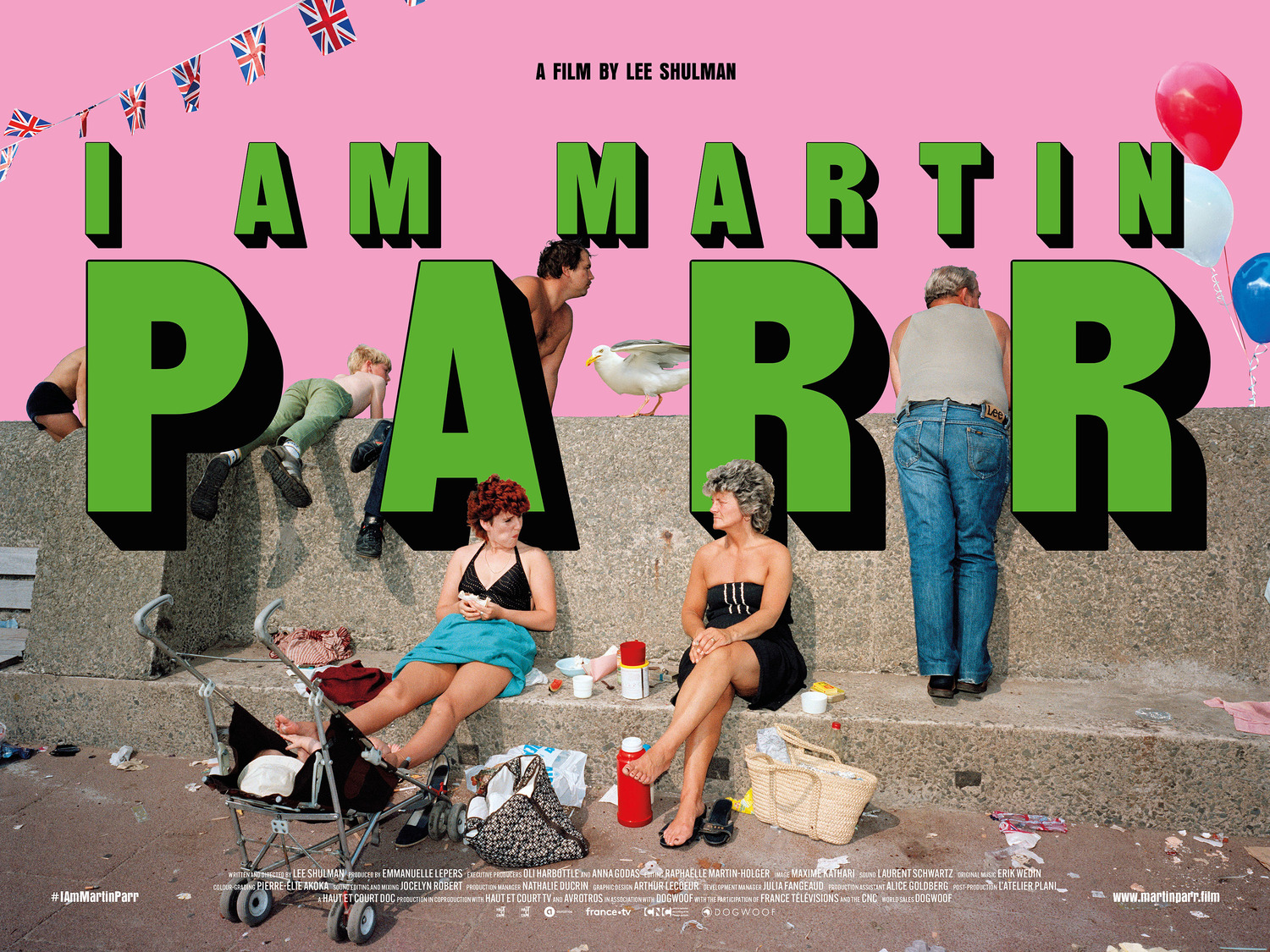
The 2024 documentary I Am Martin Parr profiles the British photographer whose colorful and unvarnished portrayal of day-to-day life in Britain is both heartwarming and jarring. Directed by Lee Shulman, this film goes beyond a mere biography to unveil the more complex personality, evolving artistry, and sociology-informed spycraft—for Martin Parr sociology is never merely “sociology”—of its subject. Here, we adopt a broader lens to study the film’s themes, production elements, and cultural impact, citing multiple references to reveal the rich intrigue and layered storytelling beneath the film’s surface.
I Am Martin Parr: A Portrait of the Artist and the Man
At its core, I Am Martin Parr is much more than a study of photography. It’s a portrait of a man who is inseparable from the art he creates. As the director of the film, Lee Shulman aptly observes, “It’s not just a film about a photographer.” Indeed, it is a film about a British sociologist and his journey spent thinking of Britain from the inside out—his subject, his object, his home.
Martin Parr has an extraordinary influence and, at the same time, strikes the viewer as remarkably humble. In the film, he is described as “brilliantly ordinary, but one of the greatest photographers of all time.” The story develops by exposing Parr’s self-deprecating humor and his astonishing passion for mundane subjects. By featuring interviews of Parr himself, his wife Susan, and other cultural figures like Grayson Perry and Bruce Gilden, the film places the viewer in the context of the artist’s mind and his creative process.
The perspective on I Am Martin Parr forces the audience to confront notions of celebrity, art, and personal identity. As he elaborates, it was his initial reluctance to become a documentary subject—as shown when he claimed Shulman was “chasing” him—that initiated the debate about artistic value and the many layers of an artwork’s maker and its audience.
Evolution of a Photographic Vision

The documentary covers the evolution of Parr’s style of photography as one of its main themes. Before he was known for his color photographs, Parr was known for his stark black-and-white images capturing the decline of Britain’s working class. The documentary explains how his shift to color photography, which was branded as a radical change, came about due to changing technology, aesthetic norms, and eclectic attitudes toward art.
Parr used a Plaubel 6×7 camera with flash for color photography, which caused outrage among critics. Those who saw his work earlier could not accept the reason-defying flashes of color he included in his works. This shift challenged his artistic language. Narrators note the change was essential in controlling the overwhelming light in orthographic images and that it served a purpose in guiding the viewer’s gaze. Parr asserts part of the switch came from the growing acceptance of color in museums. Additionally, Parr’s interest in portraying the “garish flash and saturated color” prevalent in everyday life in Britain played a significant role.
A photographic series that stood out during his career was “The Last Resort,” when he moved to Liverpool. The movie emphasizes this turning point, showing how New Brighton’s neglected seaside resort turned into Parr’s signature touch. He comments on trying to make his pictures “open, colourful and bright,” seducing the audience with a surface level only for them to discover deep, nuanced truths hidden within. By doing so, Parr worked against the traditional expectation of the tension between beauty and critique.
Break Stereotypes and Perspective
In I Am Martin Parr, it is noticeable how much the stereotypes of Parr’s work are challenged as a central issue of focus. His work has been for a long period criticized as lacking emotional substance or being cynical, which the film actively tries to counter. Lee Shulman provides a useful counterbalance when he says,
“He would hate me to say this but Martin cares a lot, not just about people but about the world we live in… He’s just showing life as it is… He finds beauty in the everyday, but he is more politically engaged than you might think – he sees the truth.”
This piece of praise casts Parr in the light of an artist filled with empathy and genuine compassion for those around him, instead of a detached documentarian. Other interviewees from the cultural commentary space also argue that there is a touch of politics and social reasoning peeking through the satire and humor in Parr’s work. This is where I Am Martin Parr fights the narrative of the artist who does not feel, arguing that, rather, he is someone who is immersed in life, which he is depicting..
“He’s changed the way we look.”
Other than Grayson Perry’s statements (who says the whole film is “wonderful”) where the film is accepted to shift opinions, the ability to dismantle these misconceptions is impressive.
These types of endorsements have proven the change of perception of photography, which is remodeled through the eyes of Parr’s artistic vision and the societal relations intertwined in it, as well as the perception of other art forms.
The Documentary
The observant’ part of Parr’s practice—his chase after the dull and the omnipresent—is something the documentary tries to capture in detail. His approach is, at once, systematic and gut feeling. In Lee Shulman’s words, he faces practical problems with “collaborating with an artist who doesn’t dwell in one place for long.” One of the things that sticks is the way Shulman tells us:
“It’s great to work with Martin, but you have to work fast because he doesn’t hang about… Martin doesn’t do anything for the camera – you have to grab the moments when they happen.”
That statement encapsulates the essence of Parr’s approach: a photographer who pursues the reality of life, its spontaneity, and its rawness with unwavering determination, akin to a soldier in battle. He was able to get close to his subjects without interrupting their space because of his intuition about people. It also captures how he tries to camouflage himself within crowds so as to maintain the integrity of his observational techniques, which the film documents through his innovative camo technique based on a wheeled walking frame he was forced to use after surgery.
I Am Martin Parr embodies the profound logic of Parr’s artistry and his unwavering commitment to portraying life as it is. His images eloquently convey the paradoxical realities of contemporary Britain—the serene yet terrifying tragedies, as well as the beauty that coexists with decay.
A Cinematic Journey Through Place and Time

The documentary is also a tour of the landscapes, that have influenced Parr’s exhibition vision. Places such as New Brighton and Hebden Bridge are returned to, providing a poignant understanding of the changes in British society. The places that Parr has left nostalgic are rich in personal cultural meaning.
On reflecting on his earlier pieces, Parr comments, “It was very intriguing to rediscover and go back to these places that I shot my work in many years ago.” Commentary like this serves little to bolster sentimental value. The change in society is as remarkable as the changing spaces. British seaside stands out as a particular example of this change. Despite its economic squalor, the seaside serves as a microcosm of the entire country, brimming with spirit.
The filming in the movie captures these contrasts with a sensitivity that reflects Parr’s own style. The vibrant color and the decaying urban environments put together visually are appealing, yet at the same time, they are thought-provoking. With that said, I Am Martin Parr becomes an essay in observation that reflects the places that are affected by time, pondering how culture and society change along with them.
Cultural Analysis and Reception
The I Am Martin Parr documentary seems to have received praise from various critics. A review in ‘Rotten Tomatoes,’ Par 25, 2025, claimed that the film had approximately 90% positive review rating. The film has been successful among the public and the critics. The documentary has been useful for audiences unfamiliar with traditional photography. As photography lover Lee Shulman claims, it offers more than just learning photography; it is “…about a wonderful person,” indicating it teaches about England’s societal norms.
The account of Martin Parr offered in the film is multifaceted and offers satisfying humor with a tenderness loaded with sadness and frustrations surrounding the issue. Debates about the broad spectrum of color and Parr’s unconventional working methods during his career are central issues, and the film captures them all without hesitation. Furthermore, those controversies are used to precisely explain not just an influenced artist but a complex one too. Viewers are given the freedom to arrive at their own conclusions about Parr’s work, which is wonderful and great for them to observe.
Furthermore, the interviews with cultural commentators Grayson Perry and David Walliams, as well as reflections from Parr’s close colleagues, deepen the scope of credibility and context. Where the film succeeds is in the blending of personal stories and cultural reflection that brings Martin Parr forward as a figure who, regardless of class boundaries, seems to unify in his work because humanity, in all its various forms and experiences, is central to it.
The Legacy of a British Icon

What is more, the story within the documentary, I Am Martin Parr, stands out as a testimony to the legacy of a photographer who has inspired and continues to inspire many. Throughout his career, Martin Parr has faced various controversies as he received recognition, vividly illustrating the complicated relationship between society and a photographic artist in the modern world. His association with Magnum Photos, which at first seemed dicult to grasp because of his novel colouristic approach, has become one of his triumphs.
Parr’s impact goes further than his own work. He has set up a foundation in Bristol aimed at aiding the work of other British documentary photographers. This effort shows his acknowledgment of the talent present in Britain and his attempt to build a community that strives to go beyond artistic boundaries. In this way, Parr not only becomes a leader of innovation in his discipline but also assumes the role of a guide and defender of younger creators.
The documentary emphasizes this legacy by portraying the many sides of his influence. His name is associated with some of the most iconic symbols of British life over the past century, and his images are imbued with humor, irony, and sharp sociological observations. In his words, he strives to make photographs that are ‘open’ and ‘colorful and bright,’ which in turn allows the viewer to step into a dialogue where everything is not as simplistic as it seems.
I Am Martin Parr goes beyond celebrating a singular life and career; it demonstrates the capacity of art and film in portraying the essence of a nation. The documentary is a testament to the unyielding importance of commentary photography in modern Britain, highlighting Britain’s identity and history while serving as a visual record that captures their evolving social identity.
Reflections on the Documentaries Broader Implications
Parr’s piece extends beyond a biographic reflection, as I Am Martin Parr puts the audience into consideration. I Am Martin Parr profoundly urges audiences to rethink the relations in regard to art, politics, life and everything intertwined. The documentary’s structure—with archival material, interviews, and voice-over reflection—within the framework of juxtaposing art and society challenges the viewer to take a stand for themselves. The only thing left to grapple with is the absurd reality of existence, which, judging by much of Parr’s work, is pretty comical with deeper layers to be stripped away.
Lee Shulman’s reflective statements during the film support the argument. His comment that “people should see this film because it’s a great film about a great person” highlights the appeal of Parr’s work. It is not solely a tribute to a man’s artistic life; it serves as a reflection of the beauty and richness of life itself. The film depicts British culture with all its contradictions, including its dying seaside resorts and the enduring will of its people, and provides a deeper commentary on its changing social conditions.
The documentary’s exploration of these themes is made even more compelling by the criticism it received. I Am Martin Parr has maintained a spot as a must-see in contemporary British cinema, receiving a 90% score on Rotten Tomatoes and acclaim from both film critics and cultural commentators. The documentary is argued to capture the audience’s attention on so many levels, from striking images to sharp reasoning and biting social commentary.
I Am Martin Parr stands out as an insightful film portraying the life and work of a British figure. The film captures the essence of Martin Parr, not merely as a photographer but as a sociologist in perspective with its incisive commentary and multifaceted narrative. The documentary is a blend of personal stories, anecdotes, technical insights, and cultural reflections, ensuring its appeal to both art lovers and the general public.
The film demonstrates art’s ability to challenge stereotypes by revisiting landmarks that form the basis of Parr’s photographic vision. It captures the metamorphic qualities of photography whilst delving into the unremarkable aspects of human life and the brilliance of modern photography. I Am Martin Parr captures this essence with a rich array of interviews alongside the stunning insights portraying a career that has altered the modern perception of our world.
In the documentary’s final interpretation, it is a reflection of British cultural identity, combining lightheartedness with seriousness and old customs with modern practices. Martin Parr has dramatically shifted the world of photography with his unique perspective on life’s beauty and absurdities, which serves as a testament to the contradictions in society. Like all forms of art, I Am Martin Parr will have a lasting impact on its viewers, and that is the legacy of Parr in the minds of film critics, journalistic writers, and ordinary citizens.
The film serves to prove that Parr’s legacy goes way beyond his life and achievements. By focusing on the insights provided by the man himself, socially relevant critiques, and the incorporation of historical factors, this film shows us the new kind of conversation we are all a part of: the one that defines humanity’s existence today into a single phrase—’Martin Parr.’ It is a dialogue that will never go out of date because it has the ability to urge endless waves of artists and critics to join in.
From the very outset, when the film takes us on this journey, we get a sense of Parr’s own words regarding his commitment to making his images “open” in the sense that they are easily accessible yet filled with subtle layers of meaning. This, ‘I Am Martin Parr,’ becomes not merely a documentary but a critical meditation on art, society, and the power of seeing the world through a unique lens.
In I Am Martin Parr, we see a fitting tribute to a man who dedicated his entire life to seeking the humor always present within the mundane and beauty in the most ordinary things while telling the stories hidden within tiny details that often go unnoticed. This film encourages us all to delve deeper into our surroundings, question the perceptions and assumptions we often take for granted, and appreciate the extraordinary hidden within the ordinary.




Leave a Reply