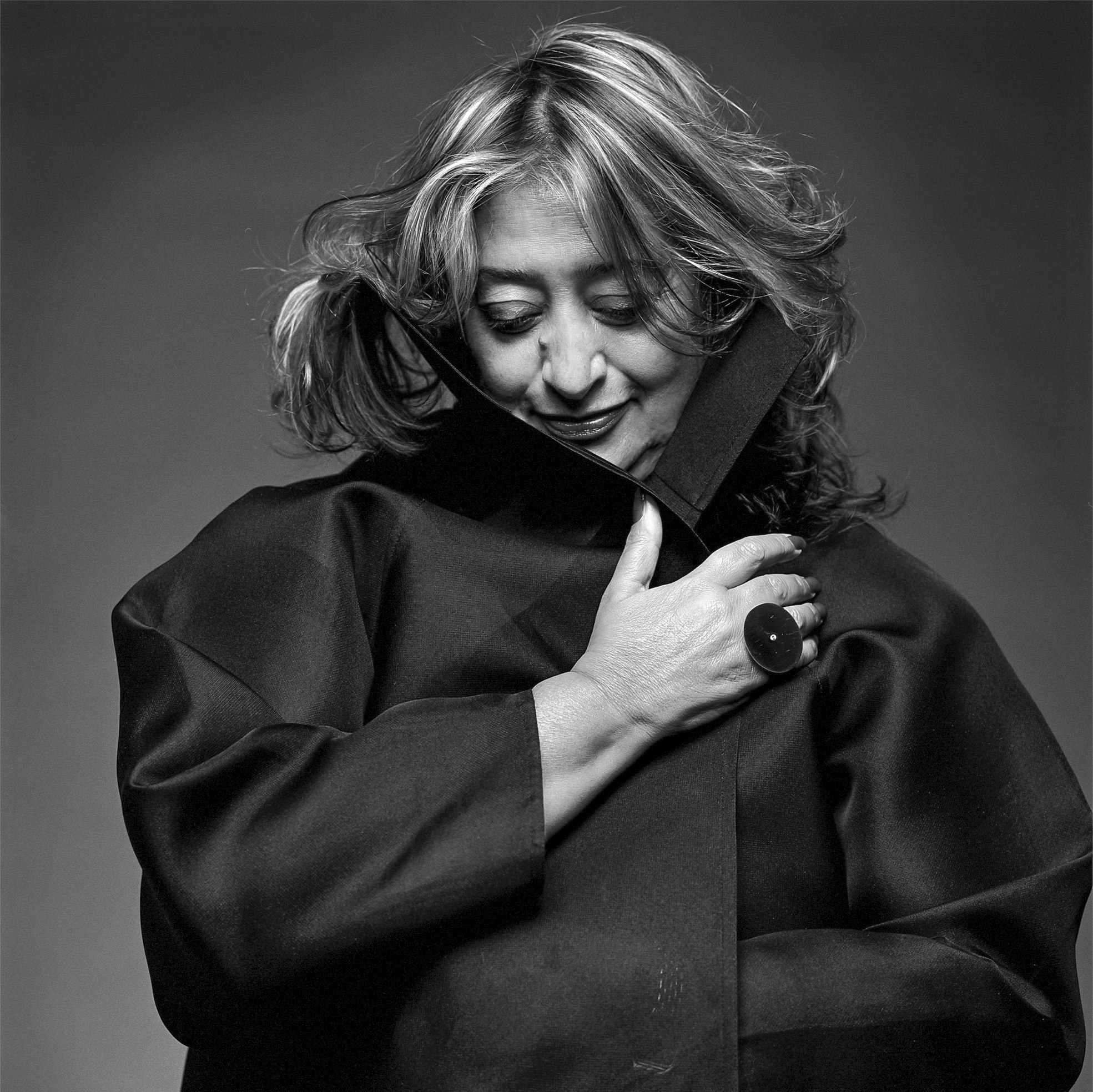
Zaha Hadid, the Iraqi-British architect whose groundbreaking designs have left an indelible mark on the world of architecture, was a force of nature. Known for her futuristic, fluid forms and revolutionary approach to design, Hadid’s work transcended traditional boundaries and reshaped skylines around the globe. Her legacy continues to inspire architects, designers, and creatives worldwide.
Early Life and Education
Zaha Hadid was born on October 31, 1950, in Baghdad, Iraq, into a prosperous family. Her father, Muhammad Hadid, was an industrialist and a prominent figure in Iraqi politics, while her mother, Wajiha Al-Sabunji, was an artist. Growing up in an intellectually stimulating environment, Hadid developed a passion for design and architecture at a young age. Her early education at a Catholic school for girls in Baghdad was followed by studies in mathematics at the American University of Beirut.
In the early 1970s, Hadid moved to London to study at the Architectural Association School of Architecture, one of the most prestigious institutions in the field. Here, she was mentored by influential architects such as Rem Koolhaas and Elia Zenghelis, who recognized her extraordinary talent and avant-garde vision. Hadid’s time at the AA was transformative, setting the stage for her future career. She graduated in 1977, having established herself as a brilliant and unconventional thinker.
Trailblazing Career
After completing her studies, Zaha Hadid joined the Office for Metropolitan Architecture (OMA) in Rotterdam. At OMA, she collaborated with prominent figures like Rem Koolhaas and Elia Zenghelis, absorbing their avant-garde ideas and developing her unique approach to architecture. Her time at OMA was marked by intense creativity and a deepening understanding of architectural theory and practice.
In 1980, Hadid established Zaha Hadid Architects (ZHA) in London. The firm quickly gained a reputation for its daring and unconventional designs, characterized by sharp angles, fragmented forms, and dynamic compositions. Hadid’s early works, such as the Peak Club in Hong Kong (1983) and the Vitra Fire Station in Germany (1993), showcased her bold vision. Although the Peak Club project was never built, it won an international competition and cemented her status as a cutting-edge architect.
Hadid’s breakthrough came with the completion of the Vitra Fire Station. This project exemplified her deconstructivist style, with its angular forms and sense of movement. Despite initial skepticism, the fire station received critical acclaim and established Hadid as a leading figure in contemporary architecture.
Throughout the 1990s and early 2000s, Hadid continued to push boundaries with projects like the Rosenthal Center for Contemporary Art in Cincinnati (2003) and the Phaeno Science Center in Wolfsburg (2005). These buildings combined complex geometries with innovative use of materials, demonstrating Hadid’s ability to translate abstract concepts into functional structures.
Her career reached new heights with the design of large-scale cultural and civic buildings. The MAXXI Museum in Rome (2010), the Guangzhou Opera House (2010), and the Heydar Aliyev Center in Baku (2012) are among her most celebrated works. Each project showcased her signature fluid forms and seamless integration of interior and exterior spaces.
Hadid’s influence extended beyond architecture to urban planning and design. She envisioned cities as dynamic, interconnected entities and designed masterplans for urban developments in cities like Singapore, Bilbao, and Istanbul. Her holistic approach to urbanism emphasized sustainability, connectivity, and the creation of vibrant public spaces.
Philosophy and Design Principles
Zaha Hadid’s architectural philosophy was rooted in a deep understanding of geometry and a desire to capture the dynamism of contemporary life. She believed that architecture should reflect the complexity and fluidity of the modern world, moving beyond rigid structures and traditional forms. Her design principles were informed by several key ideas:
Fluidity and Movement: Hadid’s work is characterized by flowing lines and organic forms that evoke a sense of movement. She often drew inspiration from natural landscapes, such as rivers, mountains, and sand dunes, to create buildings that appear to be in constant motion.
Deconstructivism: Influenced by the deconstructivist movement, Hadid’s early work embraced fragmentation, asymmetry, and the breaking down of traditional architectural elements. This approach challenged conventional notions of space and structure, resulting in bold, unconventional designs.
Mathematical Precision: Hadid’s designs often incorporated complex geometries and advanced mathematical concepts. She used computer modeling and parametric design tools to create intricate, interlocking forms that would be impossible to achieve through traditional methods.
Integration of Art and Architecture: Hadid saw architecture as a form of art and believed in the seamless integration of the two disciplines. Her buildings often featured sculptural elements and were designed to create an immersive, aesthetic experience for users.
Urban Context: Hadid’s projects were deeply influenced by their urban contexts. She believed in creating buildings that responded to and enhanced their surroundings, contributing to the vitality and dynamism of the urban environment.
Notable Works
Throughout her career, Hadid’s portfolio expanded to include a wide range of projects, from cultural institutions and sports venues to residential buildings and urban masterplans. Some of her most iconic works include:
-
- The MAXXI Museum of 21st Century Arts (Rome, Italy, 2010): This contemporary art museum is celebrated for its innovative use of space and light, with intersecting beams and dynamic forms creating a sense of constant motion. The museum’s design is a testament to Hadid’s ability to integrate art and architecture seamlessly.
- Guangzhou Opera House (Guangzhou, China, 2010): Inspired by the natural landscape, the building’s design features two pebble-like structures that appear to be eroded by the Pearl River. The fluid lines and organic shapes create a harmonious relationship with the surrounding environment.
- Heydar Aliyev Center (Baku, Azerbaijan, 2012): This cultural center is renowned for its sinuous, wave-like design that blurs the lines between architecture and sculpture. The building’s fluid form and seamless surfaces create a sense of continuity and movement, embodying Hadid’s philosophy of fluidity.
- London Aquatics Centre (London, UK, 2012): Built for the 2012 Olympics, the center’s undulating roof mimics the fluidity of water, creating a striking visual impact. The design reflects Hadid’s ability to merge functionality with aesthetic beauty, providing an inspiring space for athletes and spectators alike.
- Port House (Antwerp, Belgium, 2016): A striking fusion of old and new, this project involved the renovation of a historic fire station with a contemporary glass extension. The dynamic design symbolizes Antwerp’s maritime heritage and its future ambitions.
- Legacy and Impact
Legacy and Impact
Zaha Hadid’s impact on the field of architecture is profound and far-reaching. Her revolutionary designs and innovative approach have left an indelible mark on the built environment and continue to influence architects and designers worldwide. Her legacy is reflected in several key areas:
- Pioneering Female Architect: As the first woman to receive the Pritzker Architecture Prize in 2004, Hadid broke significant barriers in a predominantly male-dominated field. Her success has inspired countless women to pursue careers in architecture and design, paving the way for greater gender diversity in the profession.
- Iconic Buildings: Hadid’s buildings are celebrated for their bold, futuristic aesthetics and innovative use of materials. Landmarks like the MAXXI Museum, the Heydar Aliyev Center, and the Guangzhou Opera House have become iconic symbols of contemporary architecture, attracting visitors from around the world.
- Advancement of Architectural Technology: Hadid was a pioneer in the use of digital design tools and parametric modeling. Her work demonstrated the potential of these technologies to create complex, dynamic forms and has influenced the development of new design methodologies.
- Interdisciplinary Collaborations: Hadid’s influence extended beyond architecture into fields such as fashion, product design, and urban planning. She collaborated with renowned brands like Chanel, Louis Vuitton, and BMW, bringing her unique vision to a wide range of design disciplines.
- Educational Legacy: Hadid was a dedicated educator and taught at prestigious institutions like the Architectural Association, Harvard University, and Yale University. Her teaching and mentorship have shaped the careers of numerous architects and designers, ensuring that her ideas and philosophy continue to influence future generations.
Recognition and Awards: In addition to the Pritzker Prize, Hadid received numerous accolades throughout her career, including the Stirling Prize, the Praemium Imperiale, and the Royal Gold Medal from the Royal Institute of British Architects. These awards reflect the widespread recognition of her contributions to architecture and design.
Zaha Hadid’s untimely death in 2016 at the age of 65 was a significant loss to the world of architecture. However, her legacy endures through her revolutionary designs and the ongoing work of her firm, Zaha Hadid Architects. Hadid was the first woman to receive the Pritzker Architecture Prize in 2004, a testament to her exceptional contributions to the field. She also received numerous other accolades, including the Stirling Prize in 2010 and 2011, and the Royal Gold Medal from the Royal Institute of British Architects in 2016.
Hadid’s influence extends beyond architecture into the realms of fashion, product design, and urban planning. She collaborated with renowned brands such as Chanel, Louis Vuitton, and Swarovski, creating avant-garde designs that showcased her unique vision. Hadid’s work in urban planning reflected her commitment to creating sustainable, livable cities, with projects that addressed issues such as transportation, housing, and public spaces.
Her visionary approach has inspired a new generation of architects to push the boundaries of design and explore new possibilities. Hadid’s work continues to be celebrated for its innovation, beauty, and impact on the built environment. Her legacy is not just in the buildings she designed, but in the way she transformed the field of architecture, challenging conventional thinking and opening new avenues for creativity and expression.
Zaha Hadid’s life and work exemplify the power of imagination and innovation. Her ability to envision and create spaces that challenge conventional norms has left an indelible mark on the built environment. As a pioneering female architect in a predominantly male-dominated field, Hadid broke barriers and set new standards for excellence. Her legacy continues to shape the future of architecture, reminding us that the only limits are those of our own imagination. Zaha Hadid’s story is one of passion, perseverance, and an unwavering belief in the transformative power of design.





Leave a Reply