Last updated on September 9th, 2024 at 05:38 pm
“What is art? Is beauty an objective property of things natural or man-made, or is it subjective, existing in the eye of the beholder only? Can something be aesthetically valuable whether or not it is beautiful and whether or not it is a work of art?”- British philosopher A.C Grayling in his book, History of Philosophy, raised an age-old pertinent question which the art wealth evaluators and galleries are still trying to figure out.
Recently, several reports published globally and locally have tried to comprehend how art buyers appreciate art- both aesthetically and financially, and how a particular piece of art makes its mark in the entire wealth management scenario. In this article, we’ll try to answer these two questions, viewing through global and local lenses, the local being the South-Asian scenario.
The global art market stands at an exhilarating $67.8 billion in 2022, marking the highest than its pre-pandemic level in 2019, per the Art Market 2023 report published by Art Basel and UBS. While the US continues to lead the position with its share of sales, the UK and China follow second and third ranks, respectively, with France continuing to hold its fourth position. Although India may not be the leading share-bearer of the global art market, it has already recorded $75.8 million in the first quarter of 2023.
Art Market in India:
Owing to its rich culture and heritage, India’s art and philanthropy date back more than 2000 years old. The philanthropy and patronage may be traced back to Emperor Ashoka (3rd century BCE) and his establishment of various stupas throughout the nation, including The Great Stupa at Sanchi. Raja Raja Chola built The Brihadisvara Temple in the 11th Century, considered the pinnacle of Dravidian architecture in South India. The act of art sponsorship for artists creating miniature paintings increased dramatically during the reign of the Mughal Dynasties (16th – 18th Century) and Deccan Sultanates (16th-17th Century). This trend continued into the 19th Century.
Over the last ten years, many artist-led organizations and public and corporate funds have been initiated in the region to support more artists and art practitioners. While contemporary art remains a marginal category in the auction market, it has found support and new platforms in the non-commercial domain, thanks to numerous private individuals, foundations, and public-private initiatives such as the number of biennials and public art events that have emerged in the last 5-7 years.
Who is buying Art?
ArtTactic’s special report on Indian Art and Philanthropy market 2019 reveals that Private Foundations contribute to more than half of the art philanthropy’s support fund, followed by corporate foundations and artist-led institutions. Together they contributed to 78% of the total source of support by institutions in 2018.
Indian Art Investor’s H1FY2023 India, Art market report lists the top 5 most expensive artworks sold last quarter.
- Tyeb Mehta’s Untitled Acrylic on Canvas (1999) sold at $5.6 M.
- Tyeb Mehta’s Diagonal Oil on Canvas (1973) sold at $3.2 M.
- Raja Ravi Varma’s Untitled Oil on Canvas (Circa 1888-1890) traded at $2.9 M.
- F.N Souza’s Untitled Oil on Board (1957) sold at $2 M.
- F.N Souza’s Broken Head Oil on Canvas (1957) sold at $1.5 M.
Of the five top-performing artworks in terms of wealth, Mumbai-based Saffronart owns three and two are owned by Mumbai’s Astaguru Auction House.
What kind of art are in demand?
Per Indian Art Investor’s India Art market report 2022, FY 2022 witnessed a total turnover of $112.5 M in art sales. Modern artists (born between 1915-1950) contributed the most- 82% of the total turnover, while pre-modern (born before 1915) contributed 14%, and Contemporary artists (born between 1950-1985) 4% of the total. Here is an exciting list of FAQs for art collectors and galleries that may help collect art as a part of wealth management.
- Which is the best-performing medium?
Oil has been witnessed to be the best-performing medium and has contributed to $86.9M of the total turnover, followed by Acrylic at $23.7M, Mixed Media at $11.3M, Watercolour at $1.8M, Gouache at $1.3M and Ink at $0.7M. Oil here contributes to 63% of the market share. Regarding the count of artworks sold, a combination of other mediums (tempera, serigraph, lithograph, pencil drawing, prints, linocuts, aquatints, woodcuts and etching) contributed to the highest count 902 artworks and $11.8M of the total turnover.
Regarding the total count, other mediums are followed by mixed media, acrylic, oil, watercolour, gouache and ink. - Which was the most in-demand material?
Canvas stole first place, contributing to $103.5M of the total turnover, followed by Board at $12.1M, paper at $11.3M and others (wood, cloth, aluminium, cardboard, fabric, stainless steel, ceramic, copper, fibreglass and more) at $10.6M. Regarding count, the paper holds the highest rank, followed by canvas, others and board. - Which is the most optimum size for an artwork?
Medium-sized (600-1500 sq. inches) artworks hold the highest market share at $54.5M, Large (1500-5000 sq inches) artworks at $29.9M), Extra Small (below 150 sq inches) artworks at $26.2M, Small (150-600 sq inches) artworks at $15.1M and Extra Large (above 5000 sq inches) artworks at $11.8M. Extra small artworks, however, sold the highest in number, followed by medium, small, large and extra large size artworks.
While this is a sneak peek towards the Indian Art Market, keep an eye out to learn more about India and the global art market- its past, present and future.
References:
https://arttactic.com/product/india-art-philanthropy-report-2019/
https://indianartinvestor.com/reports/landing/iai-half-yearly-report-22
Deloitte Private & ArtTactic Art and Finance Report 2021, 7th edition
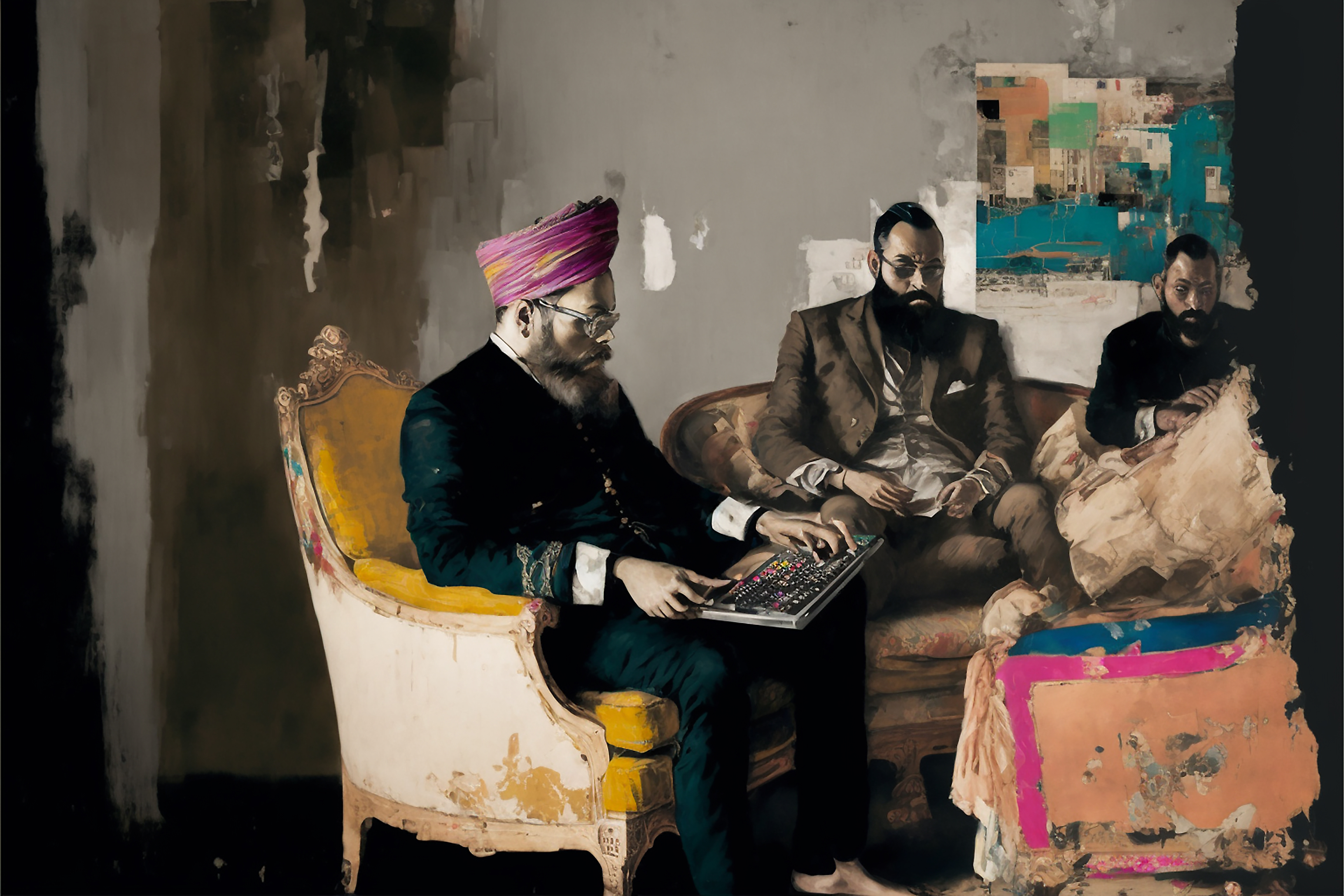
Image Courtesy: Proteek Mandal Studio ©2023


Leave a Reply