
As cultural stories shift and the dialogue between art and society grows deeper, the Sharjah Art Foundation’s new project, April Acts 2025, stands out as a pivotal shift in contemporary artistic practice. From April 18 to 20, 2025, in 16 locations that are extensions of Sharjah Biennial 16, April Acts is not just an event but a weekend project—participatory artwork—that disrupts the normative framework of idea, performance, and activist practice synthesis. In this article, I will outline the curatorial structure of April Acts and its integrated design with distinct multidisciplinary approaches and discuss its impact on international and local art ecosystems.
A Vision of “Carrying New Formations”
The core provocation of the thematic inquiry for April Acts is to carry new formations. This slogan captures the essence of the event, seeking to transform the present situation and attempting to cultivate the many ways communities interact with and relate to the shifting cultural, political, and social paradigms. The idea expands the scope of artistic practice by asking participants and audiences to critically examine their contributions to systems of support, resistance, and perpetual change. With April Acts, we gain another lively space through which to express new forms of collective articulations and conversations in an era when everything is up for questioning.
The philosophical rationale for Sharjah Biennial 16 has been built upon by Alia Swastika, Amal Khalaf, Megan Tamati-Quennell, Natasha Ginwala, and Zeynep Öz. This event, in conjunction with the biennial as a whole, which includes over 650 works and over 200 new commissions, acts as fertile cultural ground, which is both enhanced by and critiques the April Acts. The event aims to shift the perception of art from merely an object of appreciation to an agent of social change. As a result, attendees are encouraged to engage in an artwork beyond its surface, considering its potential to interrogate relationships of power within history, identity, and the bounded spaces that stifle or accelerate human locomotion.
Curatorial creativity and multivocality
April Acts serves as a nexus where the aesthetic and the political converge. The multivocal initiative is structured around opposition, empathy, and community resilience, inviting participants to engage with various contested ideas. Within the context where collective expression is equally important as individual participation, April Acts curates diverse formats, panel discussions, artist talks, and participatory and live workshops.
A fundamental building block for the initiative is the use of dialogue as a method and medium. As seen in the workshop and listening session featuring Singing Wells, April Acts harnesses the power of collective cultural memories through narratives that are created and produced during sessions or walks that are meant to go beyond revealing shared cultural history. These multidimensional engagements aim to inspire deep thought and provoke intellectual critique as well as emphasize the relationship between the politics of memory and the politics of doing. While artists and curators consider new ways to resist culture, they also debate how to destroy current social systems and build a better future.
Interactive Workshops and Team-Based Performances
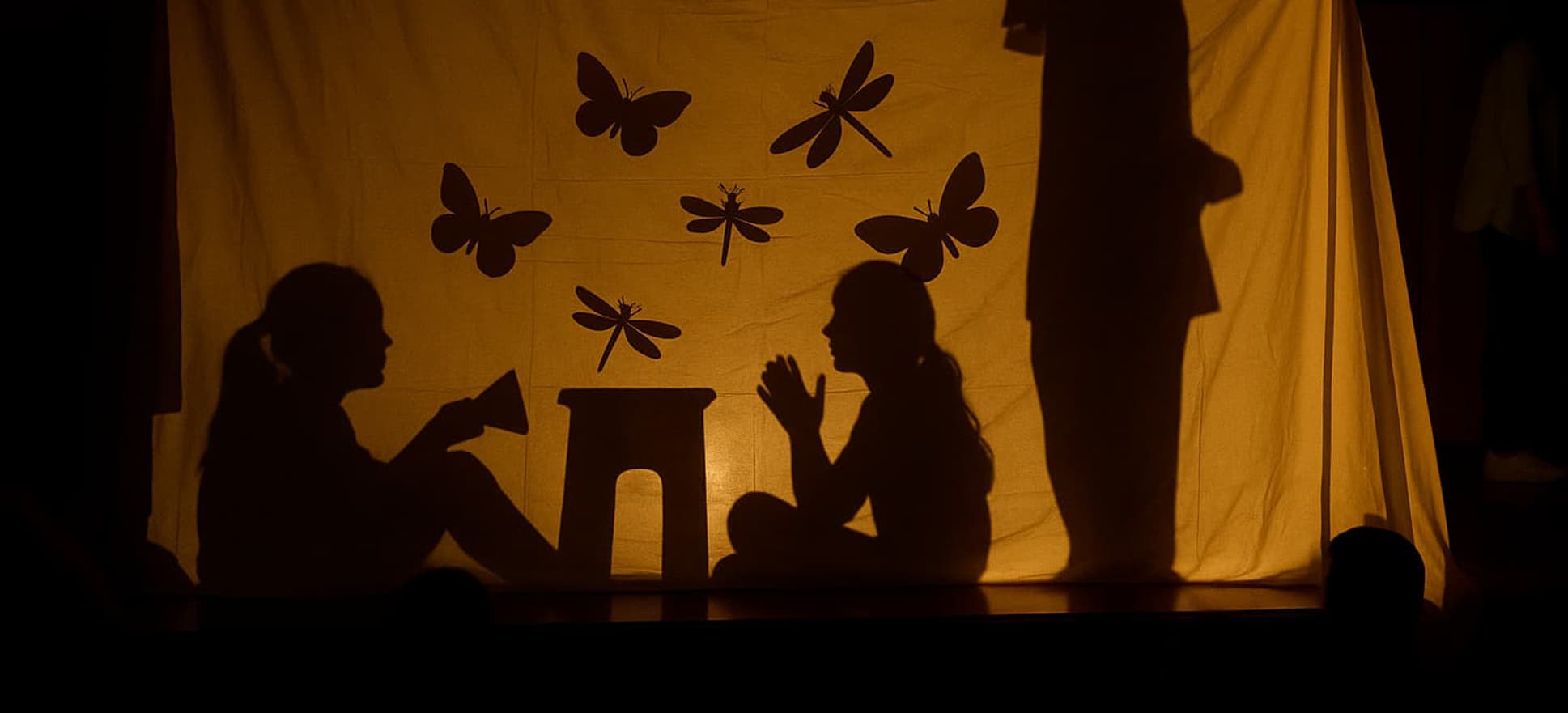
As part of ‘April Acts,’ the Sharjah Art Foundation provides an extensive program catering to diverse cultural and artistic activities that are of great interest to the public. Furthermore, workshops form a key part of the ethos of the event’s participatory, deep learning model. The initiative offers Risograph printing and self-publishing workshops in this age of innovative multimedia and art forms merging into one sophisticated whole. These sessions help learners of all ages saunter through the world of independent publishing, guided by gatekeepers of self-expression like Bhumika Saraswati and Siddhesh Gautam, who mastered the art of self-publishing as the founders of the magazine All That Blue.
Simultaneously, Sharjah’s spatial and urban relations will undergo a transformation through collaborative sound installations and live performances. As an example, several performances will reinterpret SB16’s He Kōrero Pūrākau mō te Awanui o te Motu: Story of a New Zealand River (2011) by adding new layers of sound to the work’s historical and cultural narratives. In the case of April Acts, the performance has heightened the assimilation of traditional and modern elements by cultivating a contemporary interpretation of an aged structure. While the event progresses from venue to venue, it coalesces myriad artistic expressions, demonstrating that art is not only dynamic but also a synthesis of collective consciousness.
Conversations Surrounding Belonging, Mobility, and the Marine Context
April Acts takes on a new meaning when considering Sharjah’s geographical placement between the Gulf of Oman and Arabian Gulf. The sea’s closeness to the region aids in its cultural wealth, all the while forming discourse around belonging and mobility, which are two key themes for this event. In this aspect, April Acts transcends the exhibition boundaries, transforming into an interactive space that articulates marine mobility and socio-environmental art interventions. Such interactions call to mind the time-sensitive issues of contemporary migration, transcultural movement, and the responsibilities that come with them. The combination of artistic works with the fierce realities of natural environments and human habitats begs participants to rethink the relationship between landscapes and human nature.
The talk about spatial and psychic bounds—the unmarked borders that restrict the flow of people and movement—is yet another important feature of April Acts. By providing a polyphonic area where various cultural stories come together, the event favors history and progress from a much more profound perspective. Here, the role of shared mobilization and the growth of shared responsibility become more visible. As artists and cultural practitioners come together to redefine what it means to foster and maintain cultural expression in a fractured world, this shifts the narrative.
Societal Transition and Historical Resonance
Within the framework of April Acts, there is a significant focus on both the lost and the found. The event embraces challenging pasts and celebrates the resilience embedded in cultural memory while acknowledging the fractures defined by modernity. The audiences examine historical narratives through a series of conversations and hands-on sessions, celebrating critique and continuity.
The curatorial framework of April Acts undermines traditional narratives within art history by asserting that heritage and innovation can exist in an intertwined symbiotic continuum. For example, the initiative integrates ancient acoustic heritage with modern experimental performances, highlighting how historical forms can be creatively revitalized and invigorated. This dialectical relationship is critical in shaping a consciousness that is both retrospective and prospective—a consciousness that highlights the need for cultural reinvention, as laden with history as it may be, as a vital aspect of sustainability.
Reimagined April Acts 2025 : Culturally Subversive Infrastructure
April Acts 2025 is not simply an exhibition; it is an ongoing living experiment in the reclamation and re-imagining of cultural infrastructures. While global cultural institutions are continuously forced to justify their existence in contemporary society, Sharjah Art Foundation boldly moves forward in asserting the pivotal role art plays in societal transformation. With the integration of performance, speech, and making, April Acts provides an elapsing space in which art is not only a reflector but also a navigator of reality.
List of Participants
Akinbode Akinbiyi, Akram Zaatari, Al MacSween, Albert L Refiti, Alia Swastika, Amal Khalaf, Andrew J.
Eisenberg, Avni Sethi, Başak Günak, Berke Can Özcan, Bettina Ng’weno, Bhumika Saraswati, Bint
Mbareh, Brian Martin, Caroline Courrioux, Claudia Martinez Garay, Christianna Bonin, Daniela Castro,
Dawn Chan, E.N Mirembe, Engseng Ho, Fatma Belkıs, George Jose, Georgina Velasco (The Voice of
Domestic Workers), Gita Rani, Grace Hussein Karima and Leah Ndahani Zawose (Zawose Sisters),
Hauptmeier I Recker, Hsu Fang-Tze, John Clang, Jo-Lene Ong, Koleka Putuma, Liam Wooding,
Mahmoud Khaled, Marigold Quimoy Balquen (The Voice of Domestic Workers), Mariam M. Alnoaimi,
May Adadol Ingawanij, Megan Tamati-Quennell, Mere Boynton, Natasha Ginwala, One Sudan One
Sound of Solidarity (OSOS), Raafat Majzoub, Red de Reproducción y Distribución (Reproduction and
Distribution Network), Rosie Olang’ Odhiambo, Sa Tahanan Collective, Sandy Chamoun, Sarathy
Korwar, Seema Alavi, Siddhesh Gautam, Sophia Tintori, Tabu Osusa, Taloi Havini, Tara Al Dughaither,
Yasmine El Rashidi, Zeynep Öz


Leave a Reply