As cultural production changes in the twenty-first century, museums are becoming more than just places to keep artifacts and enjoy them in peace. It now works as a polyphonic institution that helps make stories on a global scale, even though it is no longer limited to its physical boundaries. The Kiran Nadar Museum of Art (KNMA) is leading the way in the Southern Hemisphere when it comes to rethinking institutions. Since 2010, KNMA has been slowly breaking down the traditional barriers that have kept South Asia’s private institutions from working together. They plan to keep doing this until 2025 and 2026.
Roobina Karode, the museum’s director, and Kiran Nadar, the museum’s creator, are currently working on a number of important partnerships that span the digital frontiers of Doha, the sacred Mughal geometries of Humayun’s Tomb, and the brutalist halls of London’s Barbican Centre. It’s not just a museum on the move; it’s an act of “world-making.” The Kiran Nadar Museum of Art is creating a new kind of soft power by combining Indian modernism, European existentialism, Indigenous Australian cosmologies, and digital futurism. In this power dynamic, the “periphery” talks to the “center” with historical weight, nuance, and clarity.
Talks in London and at the Kiran Nadar Art Museum
London’s dreary, foggy landscape might be the best place to see this global goal. Meetings: Giacometti is one of the most intellectually challenging curatorial projects in contemporary European art. It is a collaboration between KNMA, the Barbican Centre, and the Fondation Giacometti. In the series, which will run until May 2026, Alberto Giacometti is not shown as an amber-encased historical relic from 1950s Paris. Instead, it portrays his anxious, diminished figures as participants in a contemporary discourse on the fragility of the human body.
In the first chapter, Giacometti and Pakistani-American artist Huma Bhabha set a high theoretical standard. In the small, L-shaped gallery of the Barbican, Giacometti’s post-war fears and Bhabha’s raw, totemic assemblages made of Styrofoam, cork, and construction debris stood like guardians of a future that had already happened. Reviewers said that the way the two things were put together was “psychically charged,” linking the terrible things that happened during the Holocaust to the never-ending wars in the Middle East today. Bhabha’s “Mask of Dimitrios,” which had plastic bags hanging from its body like “deflating lungs,” was a harsh criticism of the military-industrial complex’s view of human life as disposable.
The second version of Encounters: Giacometti x Mona Hatoum is currently captivating audiences and will do so until January 2026. The focus shifts from the physical to the political at this point. Tatoum draws maps of the places where the government watches and moves people, while Giacometti’s work is about the “battle zones of the psyche,” which are like Sartre’s fear of ultimate freedom.
The juxtaposition creates a friction that can almost be heard. Giacometti’s The Cage (1950) is next to Hatoum’s scary industrial containment structures. The “existential shriek” from Hatoum’s Hot Spot, a globe made of buzzing red neon that suggests the whole world is a danger zone, shines a harsh light on Giacometti’s fragile bronze figures. The Kiran Nadar Museum of Art has done a great job of starting this conversation, showing that Indian support can lead to discussions about modernism in general and Indian art in particular.
The series will end in February 2026 with Encounters: Giacometti x Lynda Benglis. This last chapter talks about “the erotic, horror, and humor.” It compares Giacometti’s stiff, vertical work with Benglis’s fluid, frozen latex pours. This curatorial arc looks at how strong the human body is in the face of historical forces, starting with the ruin (Bhabha) and ending with the flow (Benglis).
A holy place: Humayun’s Tomb and the Kiran Nadar Museum of ArtIn New Delhi, a different kind of mapping is going on than what is happening in London, which is more focused on the issues of the Western subject. The Kiran Nadar Museum of Art and the National Museum of Australia (NMA) have worked together to move the exhibition “Songlines: Tracking the Seven Sisters” from the Kiran Nadar Museum to the museum at Humayun’s Tomb World Heritage Site. This collaborative effort is an example of a groundbreaking “Indigenous-led collaboration.”
This project is more than just an ethnographic show; it combines two old ways of knowing and runs from November 22, 2025, to March 15, 2026. In this show, a shape-shifting sorcerer follows the Seven Sisters, also known as the Pleiades, as they travel through the Australian outback. In the traditional Western sense, the story isn’t really a myth; it’s more of a “geographic download” that shows where to find food and water on a harsh continent.
The Kiran Nadar Museum of Art is hosting this show on purpose to show that they support “South-South” dialogue. Curators have cleverly linked the Indian traditions of yatra (pilgrimage) and aakhyaan (embodied storytelling) to the Indigenous Australian idea of Tjukurrpa (Dreaming/Law). The museum cuts out the colonial authority, which is the middleman, and connects the sacred geometries of the Mughal garden directly to the red soil of the Australian outback.
The “DomeLab,” the most advanced traveling dome in the world, is the main point of this partnership. It is located on the grounds of a tomb from the 15th century. Here, technology and tradition go hand in hand. The kinetic rock art and heavenly dances keep visitors’ attention, and they almost “walk” the songlines. Margo Ngawa Neale, the Senior Indigenous Curator, does an impressive job of describing the “Third Archive” as a place where “Country becomes the archive; the body becomes the medium; the song becomes the map.” It makes KNMA a protector of both physical objects and wisdom traditions, which makes a strong point about how important it is to protect intangible heritage.
A Nomad with Digital Roots: M.F. Husain
As Songlines tells the story of history, The Rooted Nomad: M.F. Husain tells the story of how modernism has moved around India. This show changes how people think about the work of India’s most famous painter. It will be on display at Doha’s QM Gallery Katara until February 7, 2026.
Maqbool Fida Husain, the founder of the Progressive Artists’ Group, lived a life of constant movement. He went from the streets of Mumbai to the studios of London and finally to his self-imposed exile in Qatar. The exhibition’s title, The Rooted Nomad, describes an artist who brought the “spirit of India” with him wherever he went, even when political scandals kept him from going back.
The partnership between the Kiran Nadar Museum of Art and Qatar Museums is a great success because it embraces immersive museology. Instead of a regular “white cube” retrospective, visitors can enjoy a “fully immersive, multi-sensory experience” made by the Visioni Srl company in Rome. Husain uses sound design, Blender3D animation, and motion graphics to bring his mythological characters and horses to life outside of the canvas. This immerses the viewer in a colorful and line-filled world.
Some purists may not like the idea of turning modern masters into digital versions, but filmmakers Roobina Karode and Kiran Nadar say that Husain, who was also a toy maker, an innovator, and an artist at heart, would have liked the technology.
There is no way to fully understand the show’s importance in terms of world politics. The Rooted Nomad, which KNMA first showed at the 2024 Venice Biennale, is now on display in Doha as part of an effort to bring cultural artifacts back to where they belong. An Indian institution has come back to Qatar to honor Husain, completing a cycle of migration and memory. Husain sought refuge there in his last years. It makes Husain a “citizen of the world” instead of a fugitive and KNMA the main protector of Husain’s story around the world.
A Trip Through the Interior: The KNMA and the Marco Polo Connection
The Kiran Nadar Museum of Art is showing Indian Interior at New Delhi’s Bikaner House from now until December 28, 2025. It is an ongoing look at cultural mapping. This show is the fourth part of the Venice Biennale and is part of the special project “The Wind Makes the Sky: La Biennale di Venezia in the Footsteps of Marco Polo.”
As the 700th anniversary of Marco Polo’s death approaches, this project changes the way we think about the Venetian explorer’s role in the world, changing his focus from colonizer to “cultural cartographer.” Indian Interior doesn’t look at the “other” from another country; instead, it looks at the home and how design, art, and craft are becoming more and more mixed up.
This show features modern artists whose work doesn’t fit into any one category easily. Thukral and Tagra made a series of “hyperrealistic paintings” called Arboretum. These pieces mix plant research with computer problems and ask how people connect with nature in this age of screens. Their work tries to answer the question, If a tree falls in the Metaverse, does it make a noise? This is a mystery that Marco Polo never thought of, but it now describes the digital Silk Road.
Asim Waqif’s installation Collapse looks at the “architecture of decay” by using bamboo and old car parts. Waqif’s sometimes difficult and temporary works fight against the “fetishization of objects,” which fits with the show’s focus on the “everyday aesthetics” of Indian homes. By working with the Venice Biennale, KNMA puts these modern Indian voices in a historical chain of international exchange that goes back seven centuries.
A Look Ahead to the Horizon: Venice 2026 and Transnational Feminism
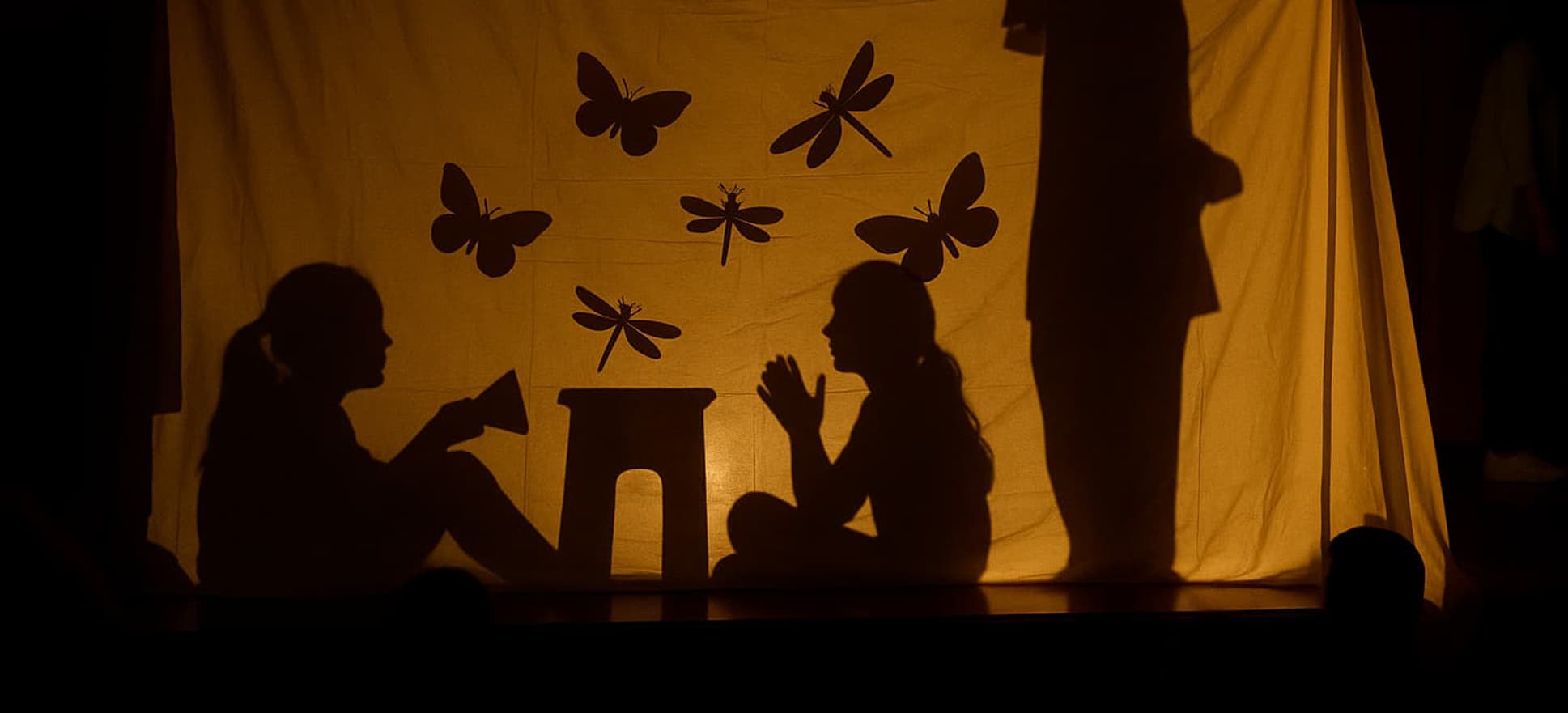
There is no sign that the Kiran Nadar Museum of Art’s path will slow down. The museum has announced that there will be a big side event at the 2026 Venice Biennale featuring the groundbreaking artist Nalini Malani. Malani is known for her immersive “video/shadow plays” and her fearless condemnation of sectarian violence and sexism. This shows that the museum is dedicated to “transnational feminism.”
Helping Malani on the most important art stage in the world is a strong statement. It shows that KNMA is ready to deal with both the happy and sad parts of Indian culture and history. Malani’s art, which mixes mythology with political pain, will make the Indian point of view in Venice important, timely, and unavoidable.
The Last Thoughts on Teamwork as a Force for Good Around the World
The Kiran Nadar Museum of Art is getting ready to move to its new 100,000-square-meter cultural hub, a “marvel” near Indira Gandhi International Airport. The museum’s current programming sets the stage for what’s to come. The museum has successfully started a new era for private institutions in the modern world.
It is no longer enough to just gather and show. The goal right now is “Collaboration as World-Making.” KNMA is making new knowledge networks by working with people in Venice, Doha, and London. It lets the Global South talk directly to the rest of the world without going through the usual Western gatekeepers.
The Kiran Nadar Museum of Art makes sure that Indian art is not only seen but also experienced, discussed, and woven into the very fabric of global culture. It does this by showing works like the existential silence of a Giacometti sculpture in London, the digital gallop of a Husain horse in Doha, and the ancient song of the Seven Sisters echoing in a Mughal garden. This shows that India is not just a bystander to history but an actor in making the future of networked art.




Leave a Reply