Last updated on September 9th, 2024 at 05:15 pm
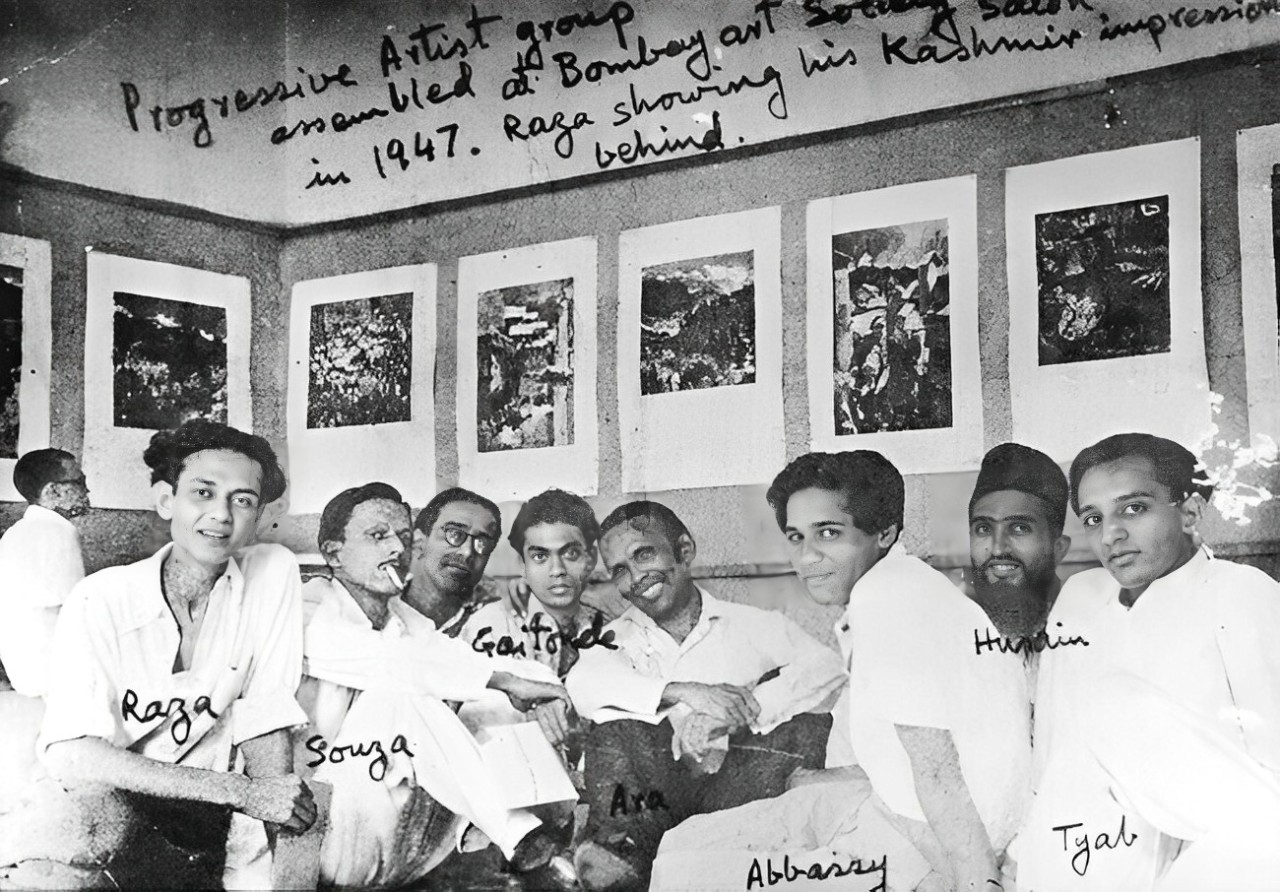
The story of the Bombay Progressive Artists’ Group (PAG) is a cornerstone in the narrative of modern Indian art. Founded in 1947, the same year India gained independence from British rule, this collective brought together six revolutionary artists whose innovative ideas and radical approaches reshaped the Indian art landscape.
In 1947, India was a nation in flux, grappling with the aftermath of partition—an event marked by immense violence, displacement, and trauma. Amidst this backdrop of upheaval, there emerged a fervent desire to break free from the colonial legacy and forge a new cultural identity. It was in this atmosphere that Francis Newton Souza, Syed Haider Raza, Maqbool Fida Husain, Hari Ambadas Gade, Sadanand Bakre, and Krishnaji Howlaji Ara came together to form the PAG.
The Indian art scene at that time was dominated by academic realism, a style heavily influenced by British colonial aesthetics. This approach emphasized meticulous, lifelike representation and adhered to Victorian ideals of beauty and propriety. The PAG artists found this style stifling, feeling it failed to capture the dynamic and multifaceted nature of contemporary Indian society. They sought to break away from these rigid constraints and create an artistic language that was both modern and deeply rooted in Indian traditions and experiences.
Their shared vision was to revolutionize Indian art by integrating Western modernist movements like Cubism, Expressionism, and Surrealism with indigenous themes and narratives. Their first exhibition in 1949 at the Bombay Art Society Salon was a bold declaration of this intent. The exhibition showcased their diverse styles and thematic concerns, challenging established norms and provoking intense debate within the art community. The response was mixed—some critics condemned their work as incomprehensible, while others hailed it as a breath of fresh air.
The ideology of the PAG was not merely about artistic techniques; it was deeply intertwined with the socio-political milieu of the time. The artists were keenly aware of the role of art in reflecting and shaping societal values. They believed in the power of art to transcend regional and cultural boundaries, fostering a sense of unity and universalism. Their works often addressed themes of social justice, human suffering, and the quest for identity, mirroring the broader struggles of a nation in transition.
The emergence of the PAG was also facilitated by a network of patrons, critics, and fellow artists who recognized and supported their revolutionary vision. Figures like art critic Rudolf von Leyden and gallery owner Kekoo Gandhy played crucial roles in promoting and legitimizing the group’s work.
Each member of the PAG brought a unique vision and style to the collective, contributing to the richness and depth of the movement. Francis Newton Souza, the most outspoken and radical member, was known for his bold, expressive lines and controversial themes. His works, like “Birth” (1955) and “Crucifixion” (1959), explored complex subjects such as sexuality, religion, and human conflict, often imbued with a sense of existential angst.
Syed Haider Raza‘s journey from figurative art to abstract forms was instrumental in introducing modernist aesthetics to Indian art. His early landscapes evolved into abstract compositions centered around the ‘bindu‘ (dot), symbolizing the point of creation and source of energy, as seen in works like “Saurashtra” (1983).
Maqbool Fida Husain, often dubbed the “Picasso of India,” was renowned for his dynamic and colorful depictions of Indian mythology, culture, and contemporary life. His vibrant canvases, such as “Between the Spider and the Lamp” (1956), frequently drew upon Hindu epics and Indian folk traditions.
Hari Ambadas Gade‘s innovative landscapes and abstract compositions captured the essence of rural India and the transformation of urban landscapes. His works, like “Landscape with Factory” (1954), blended the rural and industrial, the figurative and the abstract.
Sadanand Bakre, initially a sculptor, brought a unique three-dimensional perspective to his paintings. His abstract forms and use of unconventional materials, as seen in his series of untitled works from the 1950s, challenged traditional artistic norms.
Krishnaji Howlaji Ara, known for his realistic depictions of human figures, particularly female nudes, broke taboos in Indian art. His compassionate approach and mastery of form are evident in works like “Nude with Blue Cushion” (1956).
The PAG was shaped by a confluence of diverse influences, ranging from Western modernist movements to Indian cultural heritage. This synthesis created a distinctively Indian modernism that resonated with the cultural and historical context of post-independence India. Western influences like Cubism, Expressionism, and Surrealism were evident in their experimentation with form, color, and composition. At the same time, they drew upon Indian mythology, spirituality, and local landscapes, integrating these elements into their work.
The impact of the PAG on the Indian art scene was profound. By challenging the prevailing academic and colonial aesthetics, they redefined the Indian art landscape. Their emphasis on individual expression and experimentation encouraged a new generation of artists to explore diverse styles and themes, leading to a more vibrant and dynamic art scene. They addressed previously taboo subjects and integrated modernist techniques with Indian themes, creating a unique blend that resonated with both local and global audiences.
The PAG’s influence extended to art education and institutions in India, prompting curriculum changes and the establishment of more galleries and regular exhibitions dedicated to modern Indian art. Their success in the art market was significant, with works by PAG artists consistently fetching high prices at international auctions. This recognition elevated the status of Indian art on the global stage and encouraged art collecting and patronage in India.
Today, the legacy of the Bombay Progressive Artists’ Group is more robust than ever. Their works are highly sought after in the global art market, commanding impressive prices at prestigious auction houses like Sotheby’s and Christie’s. For instance, Syed Haider Raza’s “Saurashtra” was sold for a record-breaking price, reflecting the enduring appeal and historical importance of PAG artists. Maqbool Fida Husain’s dynamic compositions and Francis Newton Souza’s provocative works continue to captivate collectors and art enthusiasts worldwide.
Beyond their market success, the PAG’s influence permeates contemporary Indian art and culture. Their innovative approaches contributed to a broader cultural renaissance in post-independence India, redefining Indian identity through various forms of artistic expression. Their works often served as social commentary, reflecting and critiquing contemporary issues, and this tradition continues to influence modern Indian artists.
In conclusion, the formation of the Bombay Progressive Artists’ Group was a revolutionary act that transformed the trajectory of Indian art. Rooted in the post-independence quest for identity and self-expression, the PAG’s vision and efforts laid the foundation for a vibrant, modernist art movement that continues to influence and inspire. Their legacy remains a testament to the power of creativity and collaboration, shaping the future of Indian art on both the national and global stages.



Leave a Reply