Last updated on July 1st, 2023 at 12:33 pm
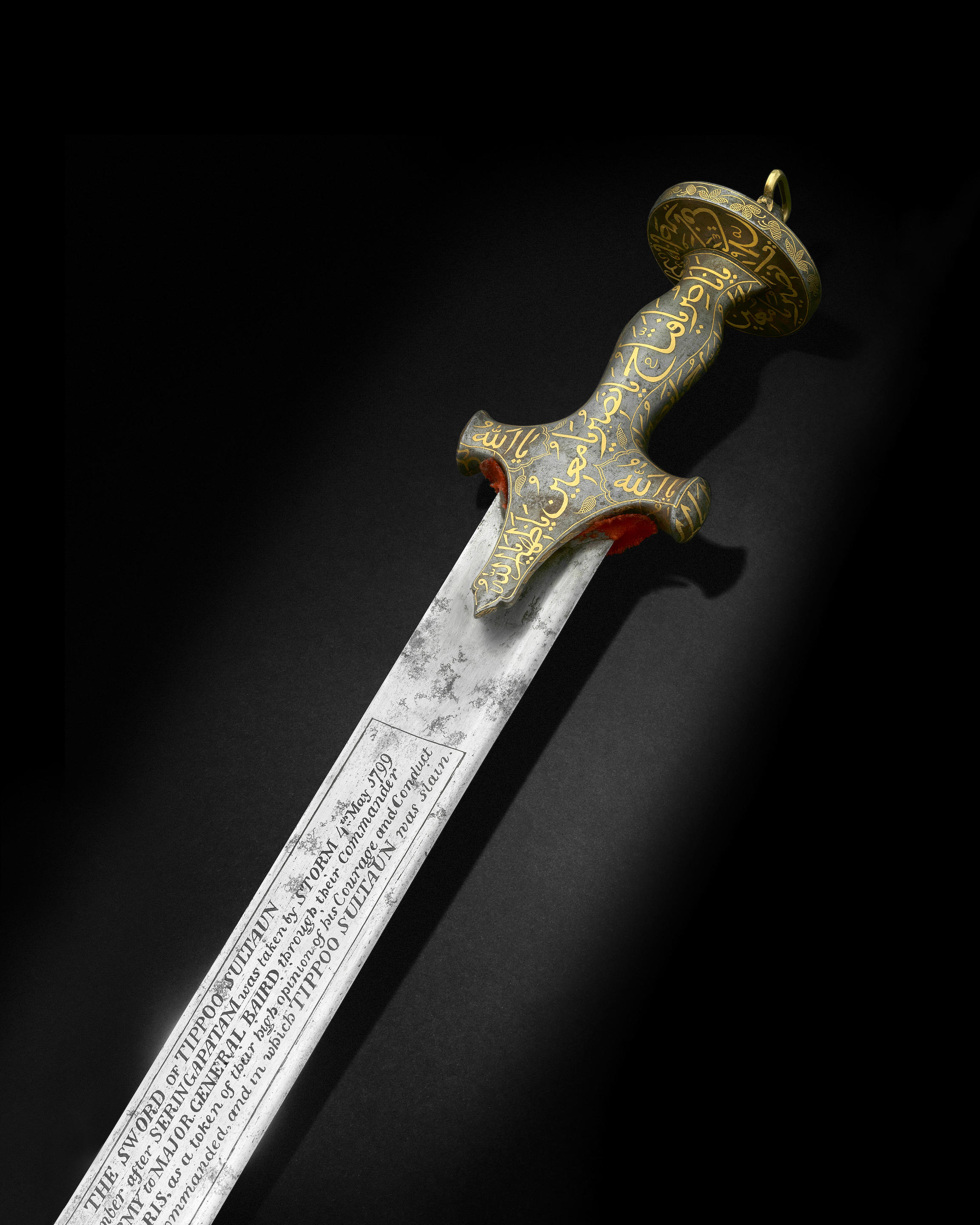
The Tipu Sultan bedchamber sword sold for £14 million at Bonhams Islamic and Indian Art sale in London on Tuesday, May 23, 2023. With its cost of £1.5 million to $2 million, an auction record for Indian or Islamic artefacts was set.
“This amazing sword is the greatest of all the weapons associated with Tipu Sultan still in private hands,” said Oliver White, Bonhams Head of Islamic and Indian Art and auctioneer, before the sale. She added, “Unique and sought after due to its personal link to the Sultan, immaculate provenance from the day it was taken, and superb craftsmanship.”
“The sword has an extraordinary history, astonishing provenance, and unrivalled craftsmanship,” said Nima Sagharchi, Group Head of Islamic and Indian Art. “The three bidders—two over phones and one in person—were competitive. We’re pleased,” added Sagharchi.
The story behind the sword:
The Bedchamber Sword, found in Tipu Sultan’s private quarters after the combat that ended in the loss of his royal bastion at Seringapatam on May 4 1799, is one of the few weapons with such a solid connection to the Tiger of Mysore. Tipu’s sword was the best and most essential of the emperor’s weaponry.
After the siege, Francis Buchanan saw the Sultan sleeping with a sword. (Tipu slept in a hammock suspended from the ceiling of his chained bedchamber with a sword and pistols). Excellent firearm quality. The blade, engraved “The Sword of the Ruler,” is beautiful. Mughal swordsmiths copied 16th-century German blades transported to India. Gold writing engraves five of God’s attributes and two invocations.
The troops presented Major General David Baird the sword “as a token of their high esteem of his courage and conduct in the assault with him commanded and in which Tipo Sultan was slain.” After nearly a month, Baird ended Seringapatam’s siege on May 4.
Tipu Sultan (1751–1799) became Mysore’s ruler in 1782 after his father’s death. He was called the “Tiger of Mysore” because he ferociously defended his realm. He advocated rocket artillery in wars with neighbouring states and the East Indian Company, which he strongly opposed. He built on his father’s foundation and made several administrative and financial reforms, including a new calendar and currency system, to make Mysore India’s most prosperous state.


Leave a Reply