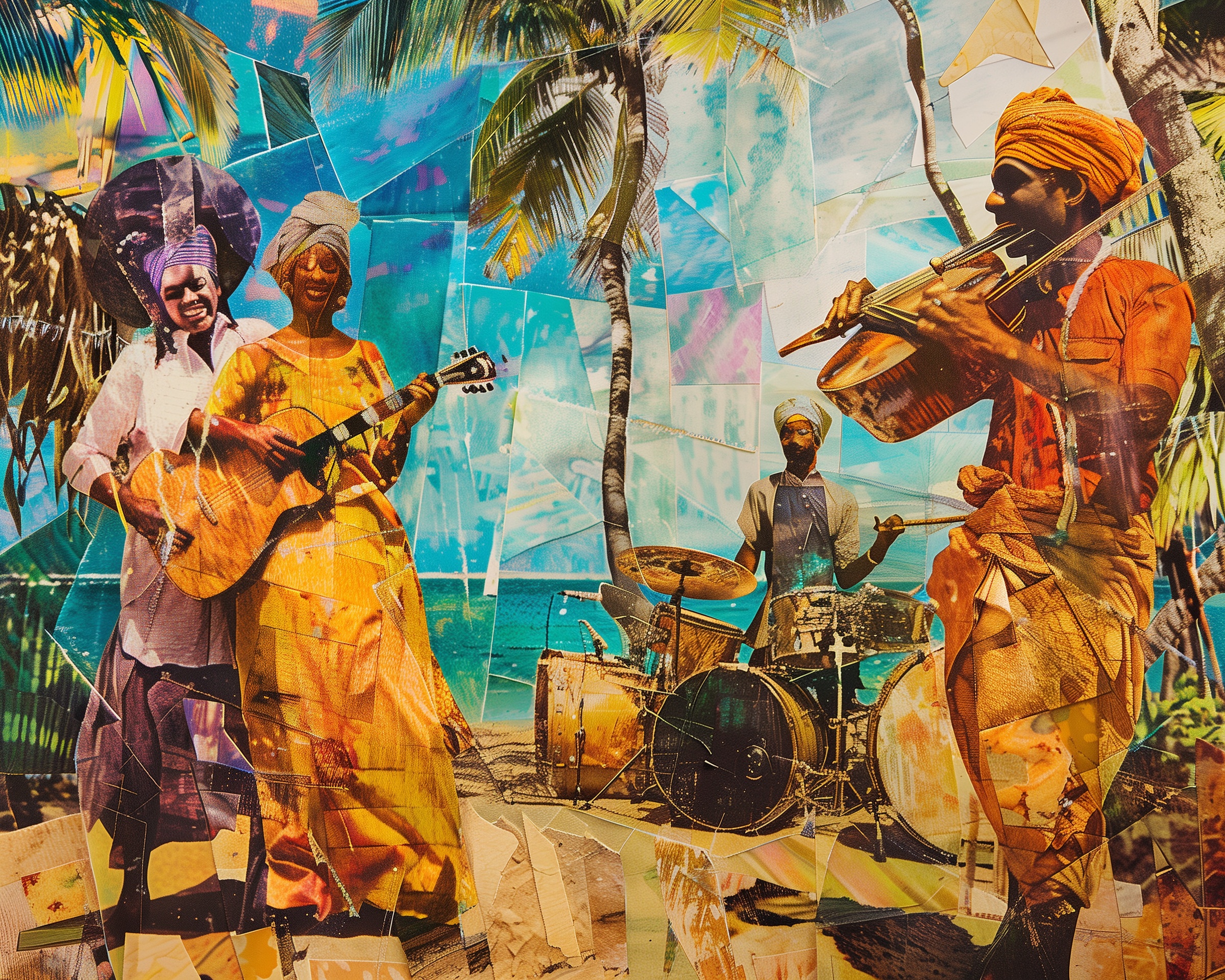
The migration of Indians to South America over the past 150 years has created a rich tapestry of cultural and artistic heritage. This journey, which began with the arrival of indentured laborers in the 19th century, has evolved into a dynamic blend of Indian traditions and South American influences. The legacy of this migration is evident in the vibrant art forms that have emerged, encompassing visual arts, music, dance, and literature. This article explores the history and legacy of Indian art in South America, highlighting the profound impact of this cultural fusion.
Early Migration and Cultural Roots

The Indentured Labor System
The roots of Indian migration to South America lie in the indentured labor system, which began in the mid-19th century. Following the abolition of slavery, British, Dutch, and French colonial powers sought to address labor shortages on plantations in their South American colonies by recruiting workers from India. Countries like Guyana, Suriname, and Trinidad and Tobago became prominent destinations for these laborers, who brought with them their rich cultural and artistic traditions.
Preserving Tradition
Despite the hardships and challenges of indentured labor, Indian migrants worked tirelessly to preserve their cultural heritage. They continued to practice traditional arts such as rangoli (intricate floor designs), mehndi (henna body art), and various forms of classical Indian music and dance. These traditions were passed down through generations, maintaining a strong connection to their Indian roots.
Visual Arts: A Fusion of Styles
Traditional Influences
The early visual arts created by Indian migrants were deeply rooted in traditional Indian styles. Artists created rangoli designs during festivals, painted depictions of Hindu deities, and crafted intricate textiles using traditional techniques. These art forms served as a way to maintain cultural identity and provide a sense of community among the migrants.
Evolving Aesthetics
As Indian communities became more established in South America, their art began to evolve, incorporating local influences. In Guyana and Suriname, artists like Philip Moore and Roshini Kempadoo emerged as prominent figures. Moore’s sculptures often depicted Hindu deities and mythological themes, rendered in a style that blended Indian iconography with Caribbean aesthetics. Kempadoo’s digital art and photography explored themes of diaspora and identity, capturing the fusion of Indian heritage with South American realities.
In Brazil, the contemporary artist Ernesto Neto drew inspiration from Indian spirituality and craftsmanship. His large-scale installations, often made from materials and techniques reminiscent of Indian textiles, created immersive experiences that invited contemplation and interaction.
Performing Arts: Rhythms of Resilience
Music and Dance
Indian migrants have left an indelible mark on South American music and dance. In Trinidad and Tobago, the introduction of Indian classical music and dance forms such as Kathak and Bharatanatyam led to the creation of hybrid genres like chutney music and chutney-soca. These vibrant musical styles blend traditional Indian rhythms with Caribbean beats, creating a unique sound celebrated in festivals such as Phagwa (Holi) and Diwali.
In Suriname, the Baithak Gana music tradition, originating from Bhojpuri-speaking migrants, remains popular. This music style combines Indian folk music with Caribbean influences, reflecting the shared cultural heritage of the Indo-Surinamese community.
Festivals: A Cultural Showcase
Festivals have played a crucial role in preserving and promoting Indian art forms in South America. Phagwa (Holi) and Diwali are major cultural events that showcase traditional Indian music, dance, and visual arts. In Trinidad and Tobago, the Divali Nagar festival has become a significant cultural event, attracting thousands of visitors who come to experience the rich tapestry of Indian art and culture.
Contemporary Contributions: New Voices and Visions
Visual Art
Contemporary artists of Indian descent continue to explore and express their dual heritage through innovative and diverse mediums. Artists like Soledad Salamé in Chile, whose works reflect a deep connection to both her Indian and South American roots, utilize mixed media to address themes of migration, identity, and environmentalism.
In Brazil, Vik Muniz, a prominent artist of partial Indian descent, is known for his transformative art using unconventional materials. His works often reference Indian motifs and symbols, creating a dialogue between his Indian ancestry and Brazilian upbringing.
Literature and Performing Arts
Indian migrants have also made significant contributions to literature and performing arts in South America. Writers like Gaiutra Bahadur, author of “Coolie Woman: The Odyssey of Indenture,” delve into the history and experiences of Indian indentured laborers, providing a literary voice to their struggles and resilience.
In the realm of theatre, groups such as the Trinidad Theatre Workshop have incorporated Indian storytelling techniques and narratives into their productions, creating a unique theatrical language that resonates with audiences across the Caribbean and South America.
Legacy and Impact
Cultural Integration and Innovation
The legacy of Indian migrants in South American art is a testament to the resilience and adaptability of human culture. The artistic expressions of these migrants have evolved, blending traditional Indian forms with local influences to create new and vibrant art forms. This cultural integration has not only enriched the artistic landscapes of countries like Guyana, Suriname, Trinidad and Tobago, and Brazil but has also fostered a broader understanding and appreciation of multiculturalism and artistic innovation.
Future Directions
As Indian communities continue to grow and evolve in South America, their artistic contributions will undoubtedly remain a vital and dynamic part of the continent’s cultural heritage. The continued fusion of Indian and South American art forms promises to produce new and exciting artistic expressions, reflecting the ever-changing landscape of global migration and cultural exchange.
The history and legacy of Indian art in South America over the past 150 years is a remarkable testament to the power of cultural resilience and adaptability. From the initial arrival of indentured laborers to the flourishing contemporary art scene, Indian migrants have profoundly enriched the cultural landscapes of countries like Guyana, Suriname, Trinidad and Tobago, and Brazil. Their contributions in visual arts, music, dance, and literature have not only preserved their heritage but also fostered a unique blend of Indian and South American artistic expressions.
This cultural fusion has led to the creation of new, vibrant art forms that continue to inspire and captivate audiences. Festivals, performances, and artistic works reflect a rich dialogue between traditions and innovation, illustrating the dynamic nature of cultural exchange. The legacy of Indian migrants in South America serves as a powerful reminder of the enduring impact of migration on art and culture.
As Indian communities evolve and integrate further into South American societies, their artistic contributions will remain a vital and dynamic part of the continent’s cultural heritage. The ongoing interplay of Indian and South American influences promises to generate fresh and exciting artistic expressions, ensuring that the legacy of Indian art in South America continues to grow and inspire future generations.


Leave a Reply