Last updated on October 2nd, 2024 at 10:55 pm
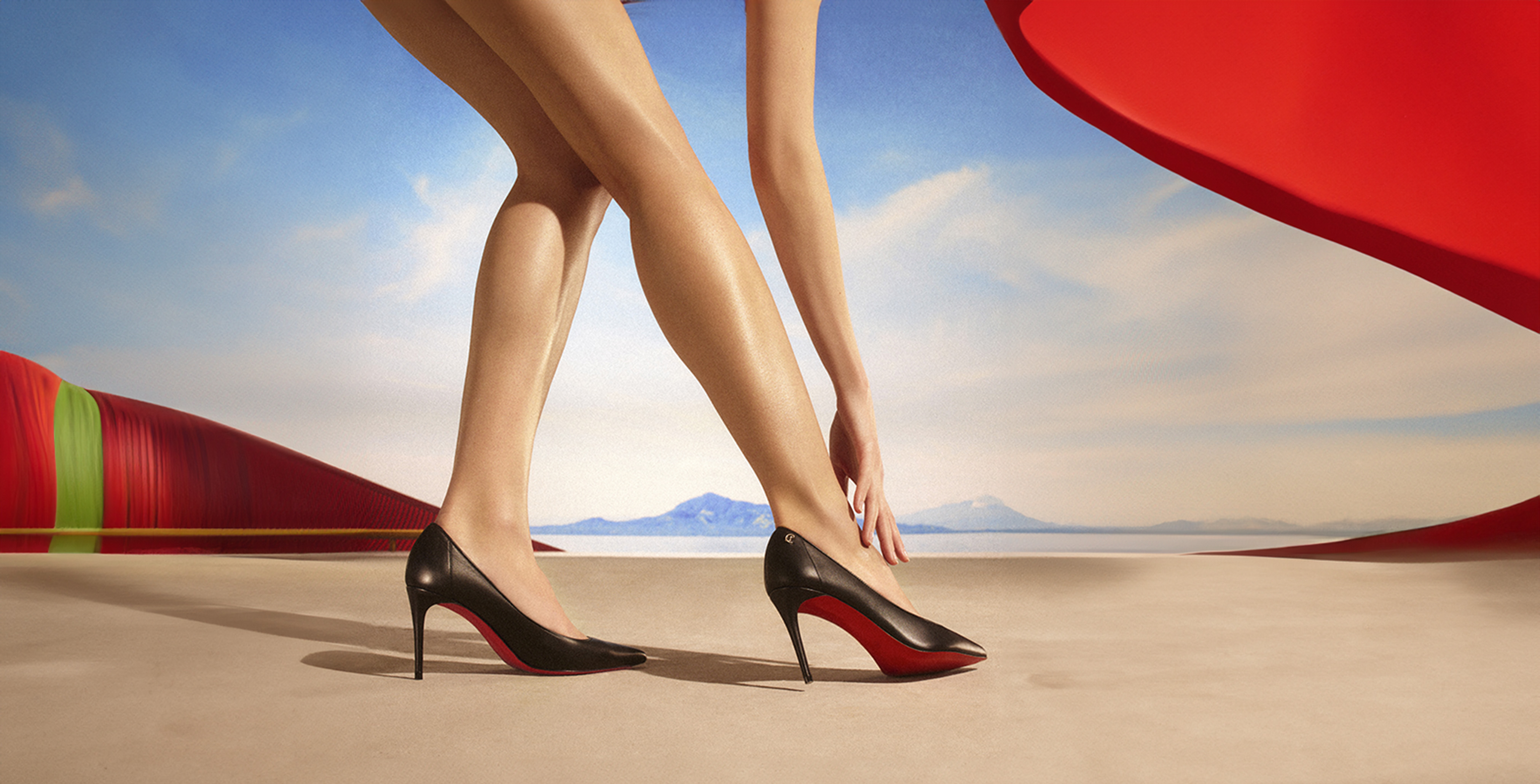
Everything starts with the first look. One cannot help but notice a bright spot of red colored streak cutting through the common boring expanse of the city concrete. The foot on the other hand is held like a piece of art, frozen as it is right now and it is only the light that surfaces and disappears over and under it. There is no doubt, that’s the signature red sole of a Christian Louboutin shoe, which has animated people more than fashion, art and philosophy itself.
Yet, why does a Louboutin create such emotions? Why is it possible to say that these shoes designed quite long ago, which are now not only on catwalks but also in museums, films and millions of imaginations, have something deeper? So, for this, it is not enough just to see the object, you have to penetrate into the head of its author-a fashion designer who knows how to combine all concepts of form, beauty and a sense of rebellion.
The Philosophy of Design: Louboutin’s Shoes as Existential Acts
In the very core of Louboutin’s elaboration, there is a strong appreciation of identity as a principle of philosophy. His creations are a means of the ‘existential’ freedom that Sartre speaks of with such great eloquence. Sartre’s claim that “What is more, so to speak, it is the human being who will create the meaning of existence. There is no accident in the order which T. Attributed to X. Therefore, essence comes only afterwards is that in childbirth, a human is an empty slate. There is no magic wand. The individual must shape himself around actions instead. In much the same logic, the shoe styles of Louboutin further subvert notions of static beauty, femininity, and power.
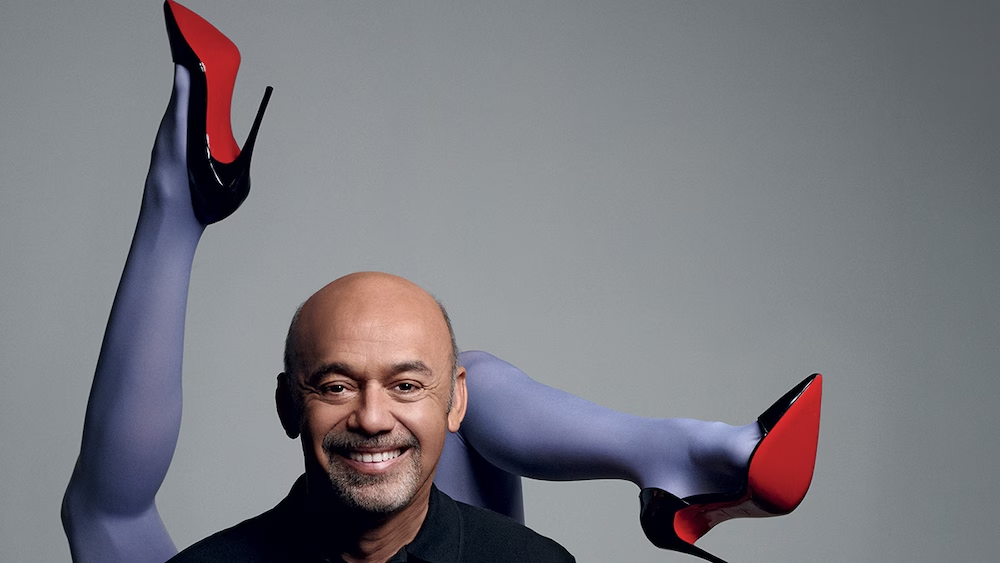
Considering one by one the Louboutins usually provokes any acts of self-discrimination, both for the person who will put them on and for the person from whom they come. This is further achieved when creating the red sole which he did on a spur an impulsive way that there was nothing like it before. It was on this basis that ‘meaning in life or existence in art is not found but made’ It made sure that women acquired a different understanding of them as they wore the shoes or the perception of the shoes shifted with every change in position of the wearer.
Furthermore, the choice against making the viewer comfortable—such as those probably of the 6-inch heels attributed to Louboutin- challenges Sartre’s idea of the human condition where freedom comes with anguish. Strapping on such shoes is purposive in the sense that it is an attempt to try out increased, though uncomfortable, reality. Here, Louboutin is engaging with the philosophical discourse of freedom, the freedom which many will not want to accept that they will have to leave their comfort zone towards the benefits of being empowered, attractive, and undergoing change.
From Shoes to Works of Art: Louboutin as a Sculptor
The Louboutin’s shoes aesthetically speaking – most notably the lower sole shape and pitch – is inventive and has its roots in both fashion and architecture. They are more than just a piece of clothing: they are body architectural elements. Louboutin’s shoes as it seems were inspired by the classically enhanced body sculptures where stylization of the form is exaggerated to emphasize certain body features. Just as these neo classical Greek sculptures incorporated idealized and extra lengthy body features, so Louboutins’s shoes at the legs and make the body an active canvas.
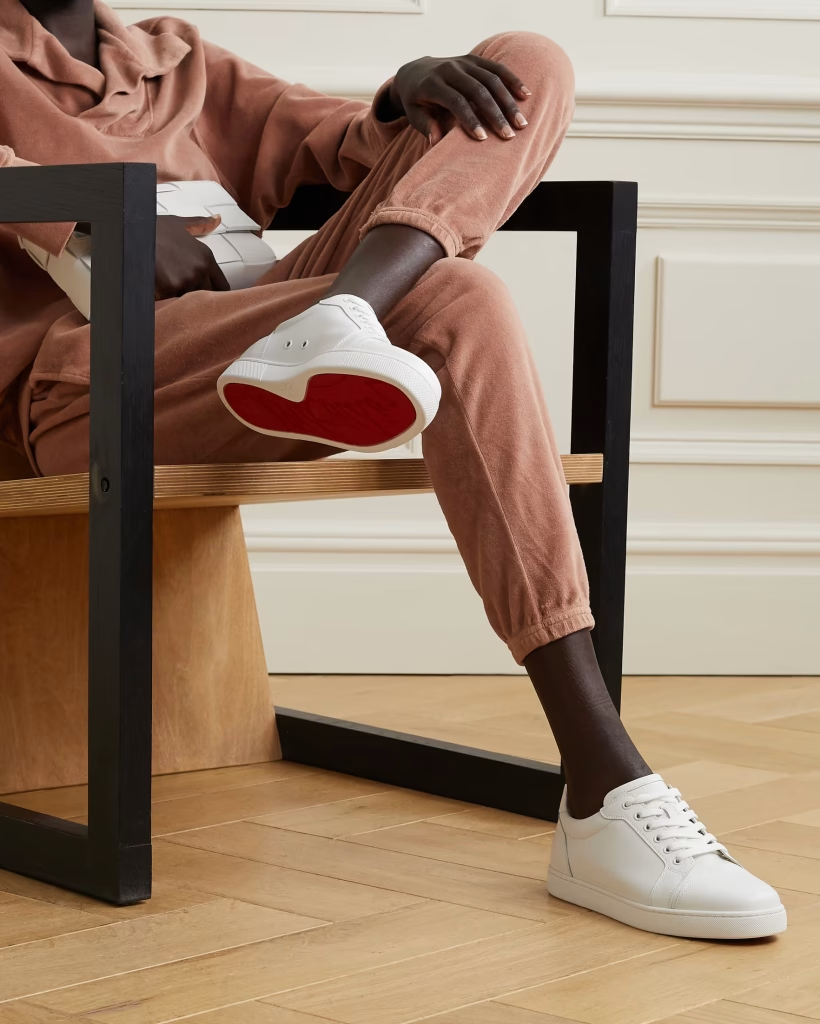
To achieve these goals, Louboutin also considers contemporary and historical art styles. One can place these high-heeled shoes somewhere between the models of Constantin Brâncuși and Alberto Giacometti, both sculptors, who made abstraction of shapes to such a level that their finished product was a mix of simplicity and sophistication, and drama and movement. Quite in the same fashion, the shoes of Louboutin reduce the idea of a shoe to the most extreme features of a shoe — pointed heel, arched opening, and of course the sultry red sole. Thus the combination of aesthetic starkness and dramatic scale makes a wearer both subject and the object of beauty and comes close, albeit in a different manner, to the art of experiencing life.
You can be more commercial than what has been achieved, and that’s where the bold curves and the architectural language of modern design come back. The lupine stiletto it cleverly hint to crisscrossing lines of modernity and unclad forms. In this way, his shoes literally become furniture; a pair of shoes becomes a piece of architecture which contains all the features of a massive series of skyscrapers that refuse to be reasonable in terms of structural principles but instead foster a physical environment in which the oriented bag can be amplified and disappeared.
Pain and Pleasure: The Limits of the Louboutin Dialectic
In his work The Birth of Tragedy, Friedrich Nietzsche asserts that all artist and beauty comes from wrath and pleasure; more specifically, it emerges from the duality of the Dionysian and Apollonian. There are always these contradictions in Louboutins heels. Indeed, even the discomfort associated with wearing such high heels — an often-heard point among the disciples — is part of the order, rather than an unwanted consequence. The discomfort of the shoes is ‘unpleasant’ to the wearer, yet serves the purpose of enhancement in the aesthetics of the shoes, which is in agreement with Nietzsche’s views that humans endure pain with the assurance that it’s purpose is to aid conquest in one irresistible aspect or another.
There is quite the interplay between two things as well. The act of putting on such tight-fitting shoes, in spite of the pain they bring, is some form of Amor Fati – the setting of the daemons to power, a kind of nonstanding and Nietzschean frivolity where one more regards the struggle as a part of the wholeness of experience. Louboutin has also described this. A women’s shoes are about power, he says, absolute power, although it does exact a toll. So too as in Nietzsche’s principles of Übermensch the individual does (in this case, the lack of ho-hum comfort) sort of higher value than the wonders of daily living – that of beauty, power and seduction.
This sadomasochistic aspect of art has been suggested as a critique of the extents to which women—and society in general—go in order to attain the idealized shapes. However, in the world created by Louboutin, the woman has to willingly inflict this on herself and change it to an act of will not of oppression. Concerned with this, Louboutin’s shoes manage to have a conversation with the feminist perspective that addresses itself to the fashion industry which is often accused of aiding in the objectification of the female form. Louboutin bypasses this by letting the user be in charge of her own experience and by taking back the control of the definition of beauty, however, painful it may be.
The Surrealist Influence: It’s Like a Shoe Dimension that’s Out of a Dream
A recurrent motif in Louboutin’s shoes is that it seems like an object straight out of a fairy tale that lies somewhere between the by now bedroom slippers and imagery magic. The artist’s penchant for selection of offbeat materials, creating fanciful shapes and the sprawling geometry of his high-heeled shoes make one think of the surrealist art, show a reality that is stretched, distorted and woven with irrational thinking. The works of artists such as Salvador Dali and Rene Magritte within the framework of surrealism allowed to tackle the routine through the familiar objects held in front of the viewers gaze with a new perspective. Likewise, Louboutin takes an everyday, practical item – a simple shoe – and makes it something effervescent, valiant, and nay, towards the ethereal.

Look at Dalí’s Lobster Telephone for example, there beauty and confusion are content rather than form have been married in this telephone. in the same way, Louboutins heels are employed, they are footwear yet at the same time they are sculptures belonging to the realm of the surrealistic art which wants to be placed on a pedestal as an object that exists in the intermediate realm. With his imagination, he often added shoes with feathers or spikes or forms that looked like there and even claimed on absurd ballistic fitting with globose surface, as if out of some Delvaux’s surrealist musings.
Thus, it can be argued that Louboutin’s creations embody the values of surrealist art: the erotic and the absurd, the beauty and the ugliness. His shoes reside in the ‘real’ and ‘imagined’, ‘wanted’ and ‘unwanted’ incongruity.
The Semiotic on the Red Sole of the Contemporary Pop Culture Icon
With regards to the power of signification Louboutin’s red sole is impossible to understate. No wonder it has come to a point where it is perceived as an icon in the fashion industry, this is a symbol that exudes luxury, exclusivity and sexuality. For the same reason some shades or symbols gain more than plain gastronomic explanations in visual culture (Van Gogh had yellow others had blue and some even registered it …) that is how it goes with red soles of Louboutin, it has become a bilingual vocabulary symbol in its own right about a specific cultural capital.
The red sole are simple and straightforward in branding, however, they are also much more than simple slogans – they are messages exchanged in a complex way – yielding aspects of power, sexuality, and status in a moment of a blink. For the observer where the flash red has been seen it comes underneath the foot and makes a communicative ring and becomes a complementary detail that contains a cosmos of meanings. In this regard, shoes by Louboutin have already left the runway and have drawn the right comparison with Campbell soup cans or the Chanel icon. They address the phenomenon of visual literacy in an increasingly media based society, whereby the societies meaning of an image or an icon can be condensed in an empty shell.
Last seen as Louboutin viewed within the aureole of the art and the philosophical system.
It is not enough to just like Christian Louboutin’s shoes but rather of understanding and appreciating them from a number of perspectives as a work of art, a cultural sign as well as a work of philosophy. It is not only fashion that inspires his shoes, these are works of art and philosophy which make everyone think about what they wear, how they look like, and what they aspire to. His artistic invention goes beyond the shaping of a shoe in red. With this simple change; a fun, beautiful shoe has now become synonymous with weighty history, culture and mankind.
This piece of art creates a parallel with Louboutin’s stilettoes by reminding us that art does not only occur in the confines of gallery walls or on the pages of books. Sometimes, it is in motion, like light that colors the air as it disappears leaving only a streak of signature red, which is easily forgotten for its beauty in this irritating world. There is an artistic design/approach that goes hand in hand with Christian Louboutin shoe wear that indicates that the borders that separate art from life are blurred and that every step we take is an opportunity to change into something remarkable.





Leave a Reply