Last updated on September 15th, 2024 at 08:16 pm
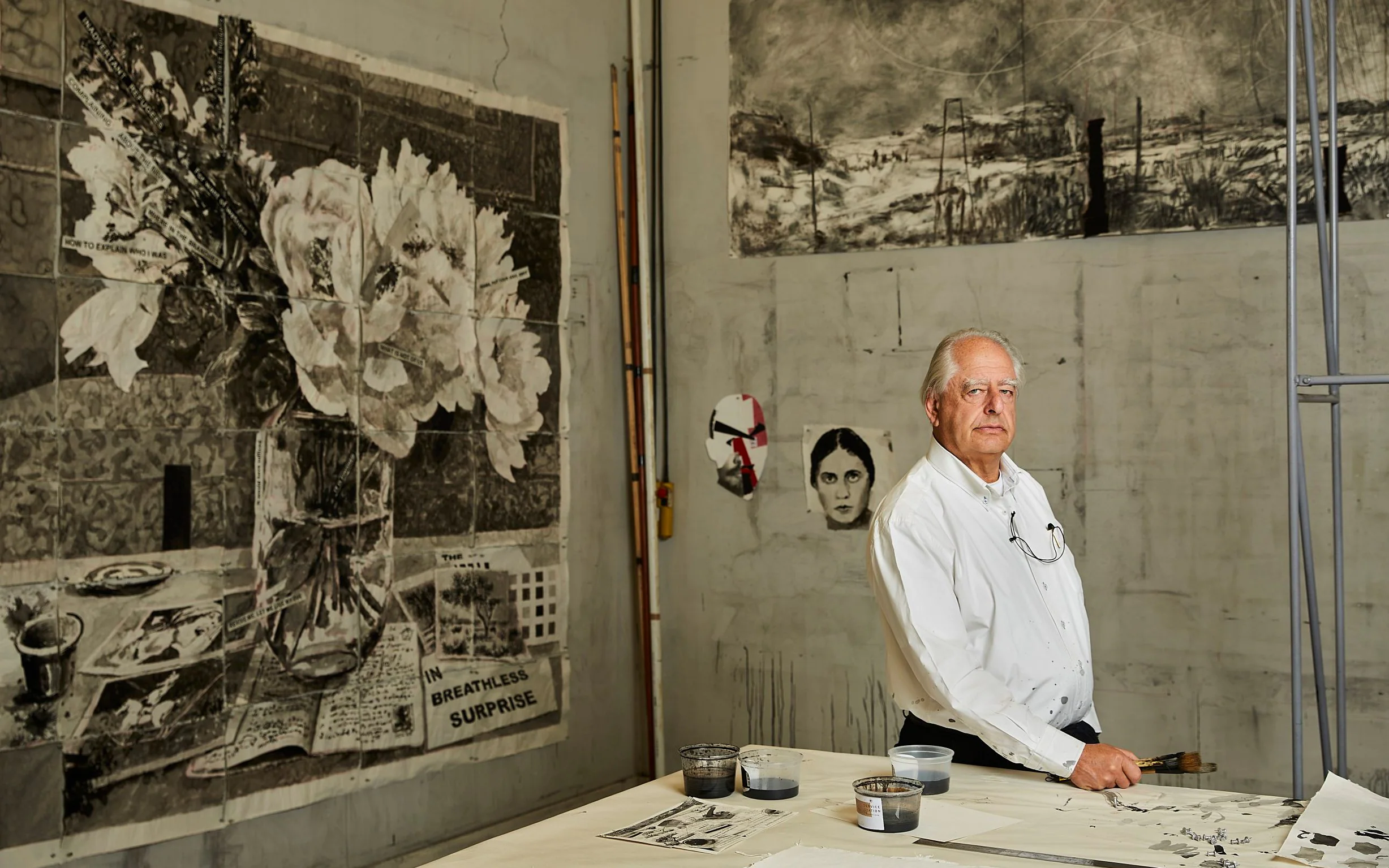
A revered artist, William Kentridge‘s body of work spans the intersections of drawing, animation, and theatre. Known for his insightful exploration of power, history, and the human condition, Kentridge’s newest exhibition, A Shadow of a Shadow, takes a deep dive into his theatre practice—a medium that has played a crucial role in shaping his artistic narrative. This exhibition, running from September 28 to December 8 2024 at the Sharjah Art Foundation, is the first and only exhibition ever exploring the theatres of practice in Kentridge’s evolution as an artist. This isn’t just another exhibition for Kentridge; it was a culmination of decades of experimentation, collaboration, and critical engagement with society’s most pressing issues.
In the discussion that followed, Kentridge unravelled the intricate threads that connect his theatre work to his drawing and film practices. He spoke about the role of shadows in storytelling, the power of collaboration in the theatre, and the ongoing dialogue between art and activism that defines his career. Through A Shadow of a Shadow, Kentridge invites his audience to reflect not only on the art itself but on the broader social implications embedded in each performance and installation.
Sreerupa Sil: A Shadow of a Shadow is your first exhibition dedicated exclusively to your theatre practice. What prompted this exploration, and how does it differ from showcasing your drawings or films?
William Kentridge: Well, it’s an exhibition about the theatre practice, but it’s built from the same materials—drawings and films. Some of them are animated, others are projections used in the theatre productions. These animated drawings are projected behind the performers, acting either as scenery or something more abstract, like thoughts or commentary on what’s happening on stage. So even though this exhibition is about theatre, it remains deeply connected to my drawing and film work. It includes models of theatre sets and is, in many ways, still a visual art exhibition.
Sreerupa: The exhibition title references Ibn Daniyal, a 13th-century Arab playwright. Could you elaborate on this connection and its significance to your work and the Sharjah context?
William: I wish I knew more about Ibn Daniyal myself! What fascinates me is the idea of shadows—how shadow puppetry has emerged in so many different cultures over the centuries. In Greek mythology, there’s this tale of a lover tracing a soldier’s shadow on the wall before he leaves, to hold onto a part of him. Shadows, in both art and theatre, offer a fundamental method of storytelling. With just a performer’s hands, you can create a whole universe of forms—a bird, an old man, a rabbit—simply by playing with light. There’s a magic in our willingness to believe what we see, even when we know it’s not real. That magic of shadows, self-deception, and transformation, I think, is what ties Ibn Daniyal’s world to mine.
Sreerupa: Your work often critiques authoritarianism. How does the medium of theatre, with its inherent performativity and audience interaction, amplify or reshape these critiques?
William: In the theatre, the work is inherently collaborative. It’s not just me in the studio; it’s a whole team—actors, composers, designers, performers. The energy and meaning come from this collective creation. Living in South Africa during apartheid, the absurdities and injustices of the system were so clear that it was impossible not to engage with them. That sense of critique flows into my theatre work too. The audience plays a crucial role here, as theatre provides a communal viewing experience. A thousand people watch a performance together, but each brings their own unique associations. There’s this powerful interplay between shared perceptions and individual reflections. That’s what theatre amplifies—the communal and the personal, coexisting in real time.

Sreerupa: This exhibition spans from the late 1980s to the present. How has your approach to theatre evolved over time, and what threads of continuity do you see throughout your career?
William: My approach has always alternated between starting from scratch—creating new stories and scripts—and working with existing texts, like operas or classic plays. That hasn’t changed much. Even in more recent projects, I move between something entirely original, like The Great Yes, The Great No, and productions based on existing works like The Magic Flute or The Nose. The continuity, I suppose, comes from the collaboration—the discovery of meaning through working with others. That sense of camaraderie with actors, editors, and filmmakers is key. There’s always a pleasure in discovering what the work is about during the process of making it.
Sreerupa: What can audiences expect from A Shadow of a Shadow? Are there any specific performances or elements that you are particularly excited about sharing?
William: The exhibition offers a journey through different theatre productions, and there’s a lot for the audience to dive into. For those with the stamina, there are long video records of performances, but for others, you can catch glimpses—watch a few minutes here and there—and still get a sense of the whole. There are theatre models, films, drawings, and sound pieces that show how these works have been constructed and thought through over the decades. I’m really interested in how audiences will engage with this mix of materials, and how the work, even fragmented, tells its own story.
Sreerupa: How did your collaboration on this exhibition evolve? Were there any unexpected moments during the process?
William: Collaboration has always been central to my theatre work. The exhibition itself is the result of many conversations and exchanges with curators, artists, and performers. There were plenty of surprises along the way, but that’s the nature of working together. Sometimes the most unexpected things come from someone else’s perspective or contribution, which shifts the direction in a way I couldn’t have foreseen.
Sreerupa: Lastly, what are your thoughts on the intersection of art and activism, and how does this exhibition speak to that intersection?
William: I think art always carries the potential for activism because it allows us to see the world differently. In a theatre, especially, we’re experiencing something collectively, and that shared experience can generate awareness, even action. But it’s not always direct. The critique often comes in through allegory or metaphor rather than straightforward activism. This exhibition reflects that subtle interplay. It’s about engaging the audience to question what they see and to think about how those images relate to the world they live in.
In the end of the day, Kentridge shares his eagerness to put up the exhibition and observe how the audience would interact with A Shadow of a Shadow. What comes out in this body of work, collaborated on and critiqued, is not only the stories that are conveyed but the issues that are presented. In Kentridge’s work, theatre occupies the role of giving people a break from individual experience – a point in time where unity of thought can be experienced by an overtly dispersed society.
Featured Image Courtesy: Marc Shoul for the Telegraph


Leave a Reply