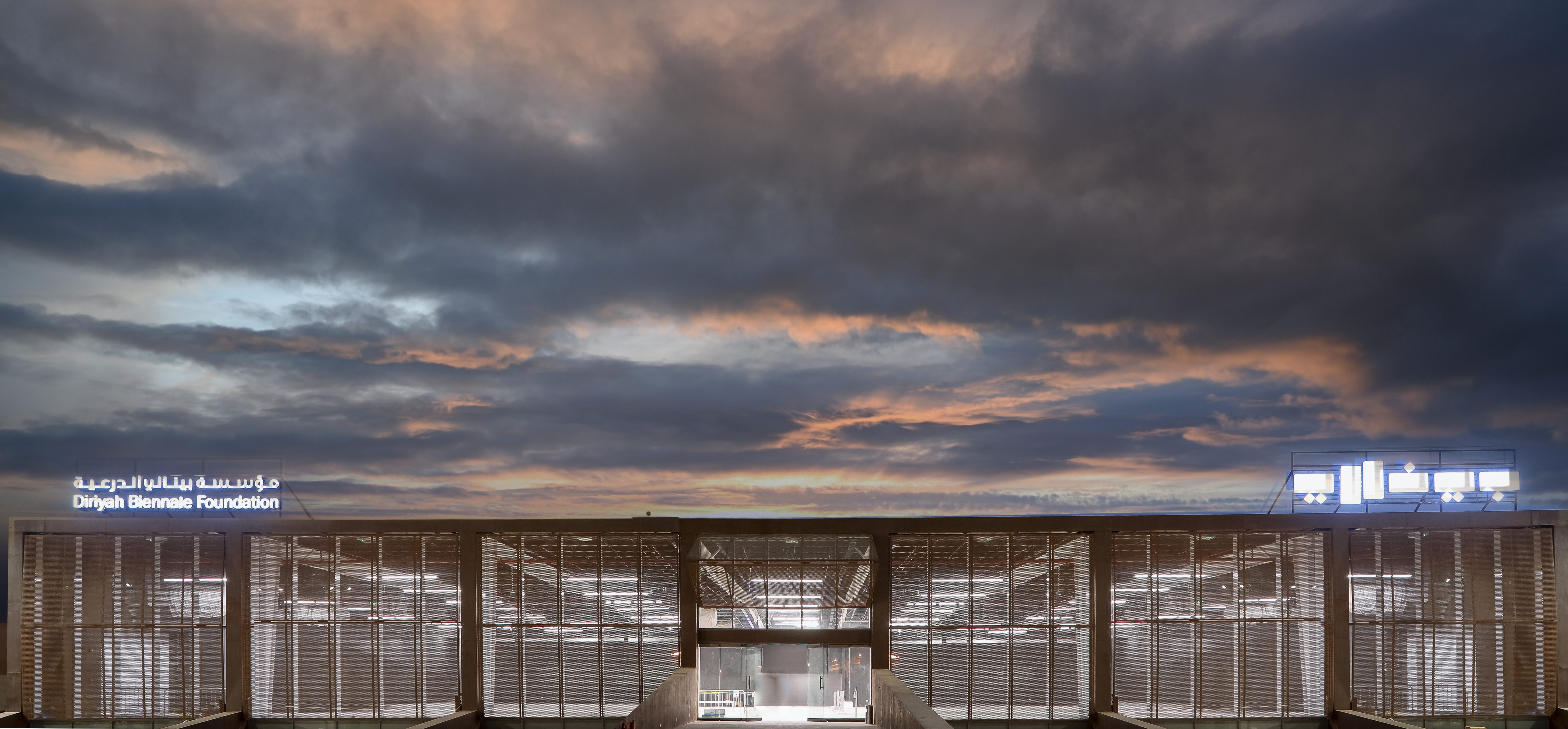
Diriyah, a medieval town west of Riyadh that is home to the UNESCO world heritage site of At-Turaif, is hosting the second Diriyah Contemporary Art Biennale from February 20th to May 24th, 2024 titled “After Rain. The event is free to the public. It investigates how a biennial of modern and contemporary art may function in a nation experiencing tremendous societal upheaval. Present in the Biennale are 92 artists from 43 nations, with 30 hailing from the Gulf area and beyond.
The Biennale commissions a large number of new works, all of which deal with this period of transition. Photographer and filmmaker Armin Linke of Berlin, Germany, and notable Saudi Arabian artist Ahmed Mater have been working together since the 1940s to portray Saudi futurism. Artist Sara Abdu, a Yemeni-born artist residing in Saudi Arabia, builds towers out of handcrafted bars of soap, creating an immersive experience that delves into regional cleaning practices. In his latest piece, Saudi artist Mohammad AlFaraj reflects on the environment of his hometown, Al Ahsa, in Saudi Arabia’s Eastern Province, which is home to one of the biggest oasis in the world. The piece features palm trees and music.
Artistic Director Ute Meta Bauer: “The role of a biennial goes beyond the presentation of contemporary art, as it feeds off and nurtures the cultural ecosystem in which it is embedded. This multifaceted and multi-format Biennale can be seen as a journey, becoming a place for both
interaction and contemplation, as each work becomes a storyteller, a protagonist, or an actor in a play. It brings together artists from different parts of the world with artists from Saudi Arabia and the wider region. Presented through various artistic languages, these works are engaged in shared issues around land, water, food, and healing practices.”
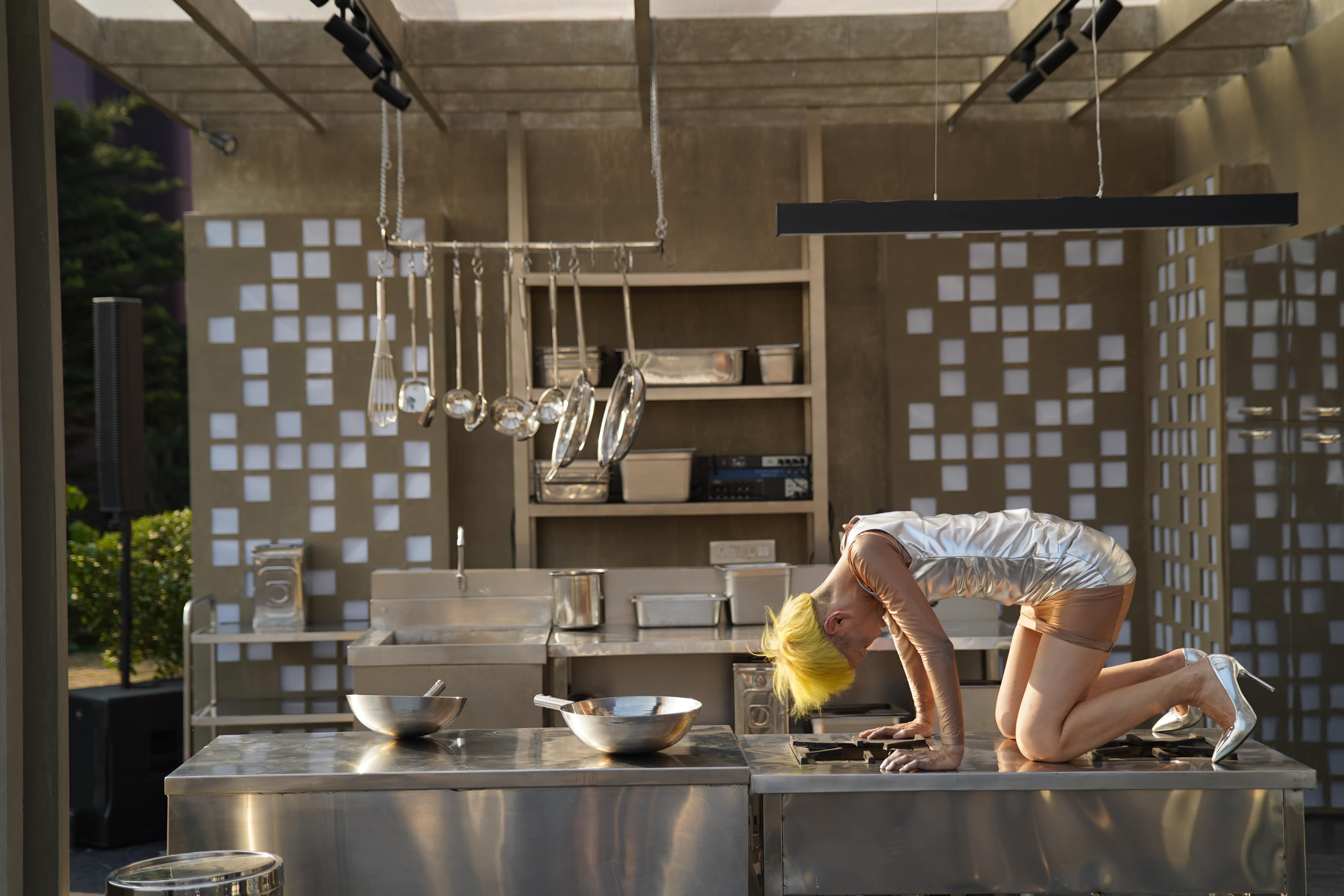
Community meals are a major theme of the Biennale as it takes place during Ramadan, a holy month. Participate in harvesting, cooking, and eating at Britto Arts Trust’s bamboo architectural installation. The juice and tea bar NJOKOBOK, run by Youssou Diop and Apolonija Šušteršič, serves ginger and hibiscus juice that is made locally, as well as mint tea from Senegal. The lanes of the JAX District, which link the Biennale venues with neighboring artist studios and the neighborhood at large, will be the site of a Ramadan dinner that Lucy + Jorge Orta invites the public to partake in.
The outdoor areas of the JAX District are now filled with new spatial installations. Inspired by ancient Al Sadu weaving methods and Saudi fabrics, Bosnian-born Azra Akšamija constructs a 70-meter-long canopy out of recycled felt. A significant component of the country’s heavy industry, the local glass makers provide recycled sheet glass, which Anne Holtrop uses to construct a shade structure.
“After Rain” takes place in the JAX District of Diriyah, along the seasonal watercourse Wadi Hanifa, and spans seven rooms, many courtyards, and terraces. Biennale Encounters, a year-long series that started in April 2023, brings to life a diverse program of performances, concerts, and poetry readings in this specific terrain. Artists and curators collaborate to create “After Rain,” a continual dialogue with new audiences and an artistic research process.
Curatorial staff, local artists, and international visitors have been to various places in Saudi Arabia and neighboring countries for this edition’s research, which is crucial for the creation of freshly commissioned works.
“After Rain” brings together artists from different generations who are exploring the region’s complicated past, maintaining the connection between humans and nature, studying the built environment, keeping an eye on the local landscapes, and urging us to pay closer attention when we listen. A variety of creative fields are involved in these investigations, including literature, poetry, botany, architecture, science, urban planning, and even cooking.

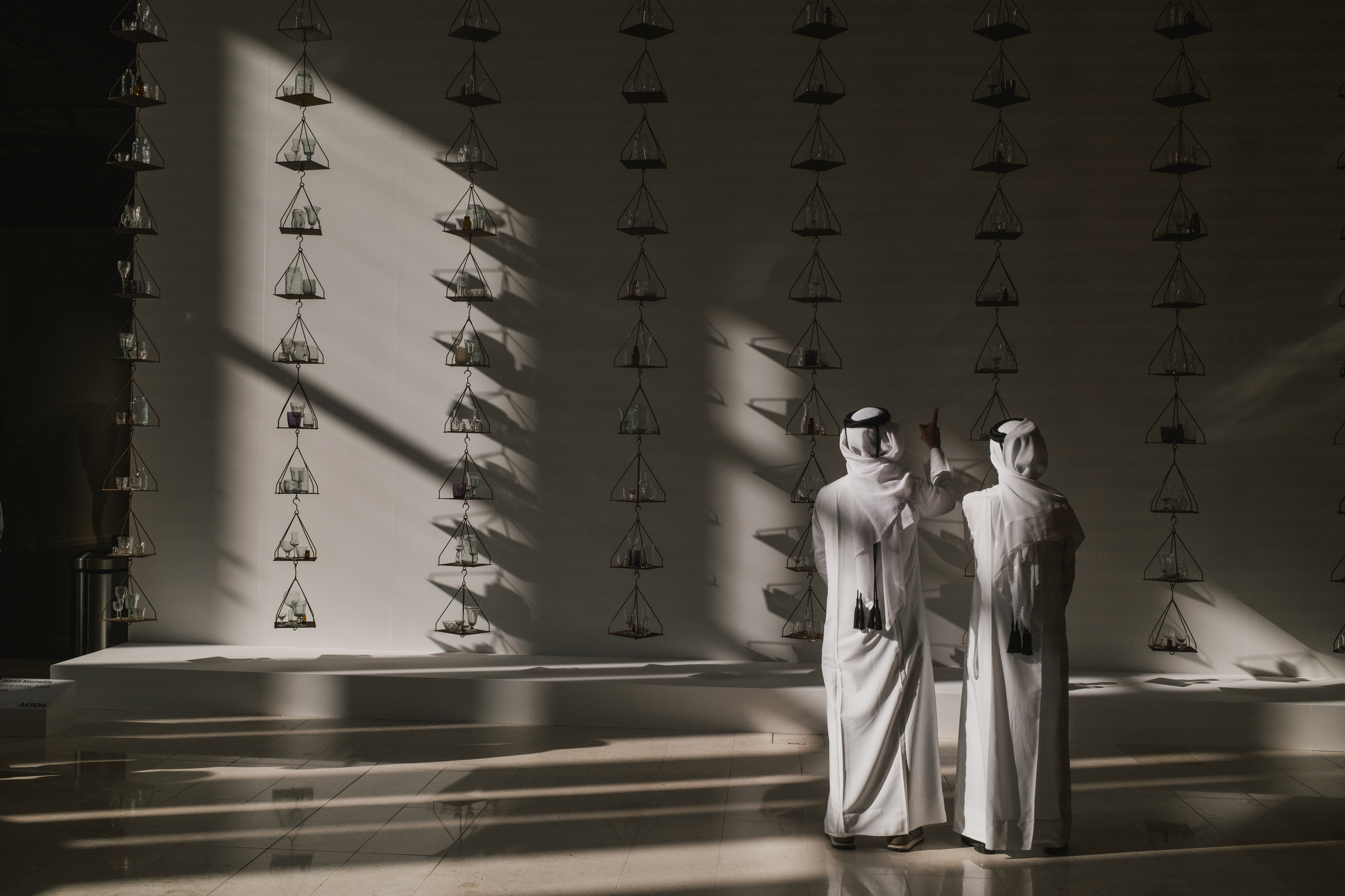
PHOTO MARCO CAPPELLETTI, COURTESY DIRIYAH BIENNALE FOUNDATION
LIST OF PARTICIPATING ARTISTS
Hamra Abbas, Sara Abdu, Irene Agrivina, Alia Ahmad, Azra Akšamija, Nabila Al Bassam, Dhali Al Mamoon, Reem Al Nasser, Rasha Al-Duwaisan, Abdulrahman Al-Soliman, Mohammad AlFaraj, Abdulla Buhijji & Noor Alwan, Aseel AlYaqoub, El Anatsui, Nazgol Ansarinia, Rasheed Araeen, Siah
Armajani, Martha Atienza, Tarek Atoui, Dana Awartani, Asma Bahmim, Sammy Baloji, Zarina Bhimji, Ursula Biemann, Safeya Binzagr, Rossella Biscotti, Britto Arts Trust, Muhanned Cader, María Magdalena Campos-Pons, Liu Chuang, Tiffany Chung, Ade Darmawan, The Migrant Ecologies
Project (Lucy Davis and collaborators Zai Tang, Kee Ya Ting, and Zachary Chan), Priyageetha Dia, NJOKOBOK (Youssou Diop and Apolonija Šušteršič), Ibrahim El-Salahi, Alia Farid, Christine Fenzl, Ângela Ferreira, Alexander Eriksson Furunes and Sudarshan Khadka, Simryn Gill, Anne Holtrop,
Hasan Hujairi, Saodat Ismailova, Joan Jonas, Armin Linke and Ahmed Mater, Mariah Lookman, Taus Makhacheva, Małgorzata Mirga-Tas, Regina Maria Möller, James Morris, Tania Mouraud, Zarina Muhammad, Dala Nasser, Hind Nasser, Hussein Nassereddine, Filwa Nazer, Nguyễn Trinh Thi, Elia Nurvista, Phi Phi Oanh, Lucy + Jorge Orta, Sopheap Pich, Marjetica Potrč, Lala Rukh, Arin Rungjang, Tomás Saraceno, Citra Sasmita, Seher Shah, Liang Shaoji, Hassan Sharif, Shooshie Sulaiman, Tang Da Wu, Paulo Tavares / autonoma, Sissel Tolaas, Anaïs Tondeur, Mona Vătămanu & Florin Tudor, Suzann Victor, Munem Wasif, Ines Weizman, Yeo Siew Hua, Liam Young, Camille Zakharia, Samia Zaru.
THE LEARNING GARDEN
The Learning Garden is an online platform that facilitates learning about and engaging with the physical exhibition of After Rain and the Biennale Encounters programme, which includes various activities and performances. The online structure of the Diriyah Contemporary Art Biennale 2024 serves as a companion to the exhibition and its programmes, allowing for an exploration of the recurring themes and topics presented throughout. The portal emphasises research-based methods and has a curated collection of works commissioned particularly for the platform. These works are created by artists such as Tara Aldughaither & Joe Namy, Circle d’Art des Travailleurs de Plantation Congolese (CATPC), Hiba Ismail, Nidhi Mahajan & Moad Musbahi, Robin Meier Wiratunga, and Feifei Zhou.
The Learning Garden incorporates information from artists involved in the Biennale, which has been modified in collaboration with the curatorial team and the artists. This digital information is often linked with the artworks shown in the exhibition or follows a coherent line of relevant inquiries. These contributions expand the in-person experience of the Biennale by providing alternative ways to access it. The website encourages users to create their own learning paths by using the material available on the platform. It allows the meticulous artistic endeavours of several participating artists to be shown to diverse audiences in Saudi Arabia and beyond.


Leave a Reply