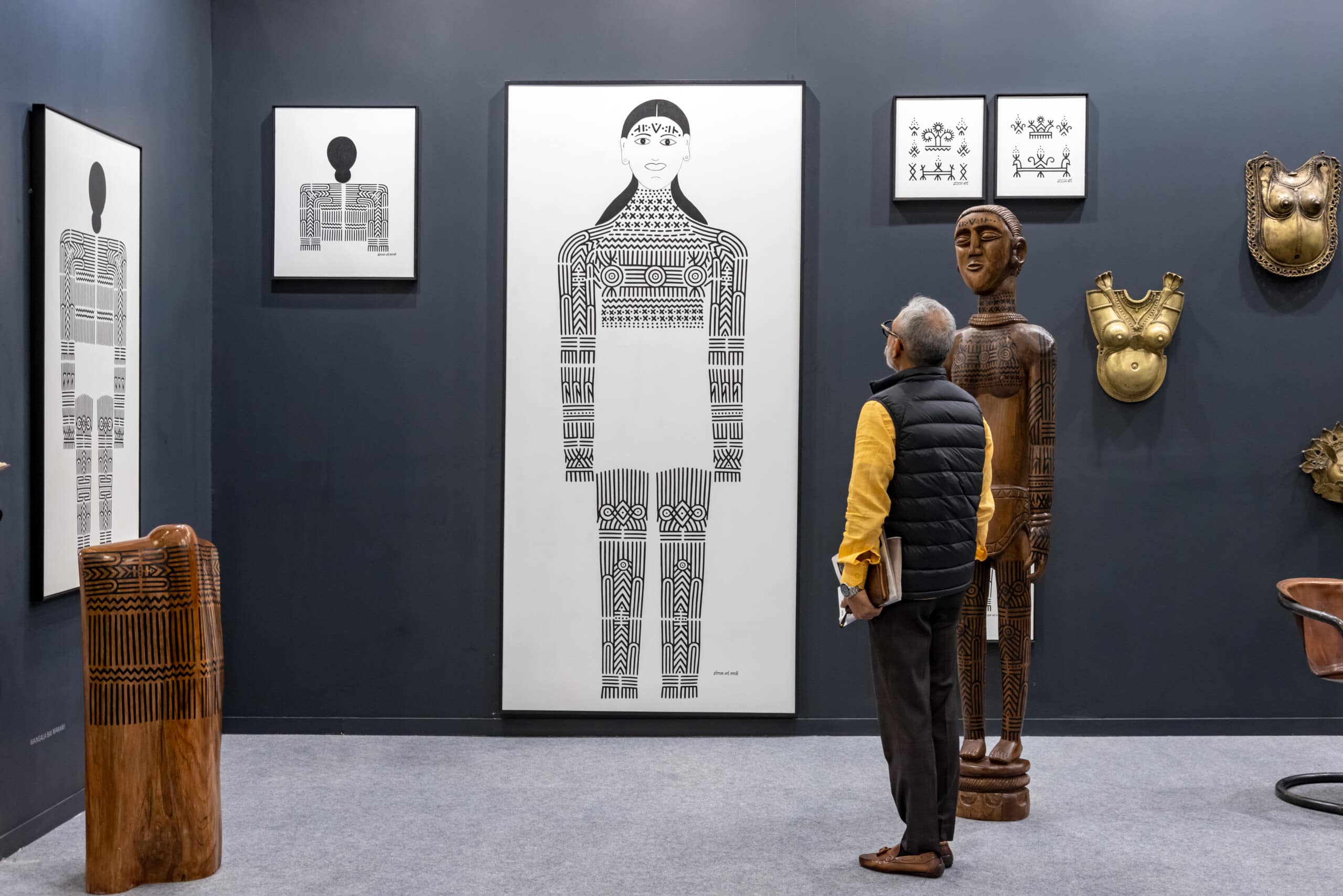
The global art market has been going through a “correction” for the past 18 months. This is a nice way of saying that the speculative frenzies that defined the post-pandemic boom have cooled off. As capital pulls out of risky Western asset classes, a different story is starting to come out of South Asia. India Art Fair 2026, which will take place from February 5 to 8 at the NSIC Exhibition Grounds in New Delhi, is more than just a regional showcase; it’s also a way to test how strong the South Asian art market is.
The 17th edition of the fair is the biggest ever, with 133 exhibitors, including 94 galleries and a newly strengthened institutional section. But for serious investors and institutional collectors, the most important thing is not the square footage but how the market infrastructure is developing strategically. The India Art Fair 2026 is a turning point for the region’s cultural capital and economic goals. This is because the GST on fine art has been lowered to 5%, and there has been a “flight to quality” among domestic patrons.
The Big Picture of India Art Fair 2026
To figure out if this year’s fair is worth investing in, you first need to look at the economy. The global art market had some problems in 2024–2025, but the Indian market showed that it was not affected by Western instability. Analysts say that the current climate leading up to India Art Fair 2026 is one of “steady demand” instead of speculative frenzy. This change shows that the collector base is growing up.
The speculative “flipping” of ultra-modern wet paintings has mostly stopped. Instead, value has settled around paintings with a known history and significance. This was proven by the huge auction seasons that came before the fair. For example, Saffronart’s September 2025 evening sale made INR 355.77 crore, which was a “white glove” result, and M.F. Husain’s Gram Yatra (1953) set a new record for Indian Modernism by selling for more than USD 10 million.
For the global investor at India Art Fair 2026, this means that the market is split in two. On one side, “museum-grade” Modernist works are selling for record-breaking amounts of money. On the other hand, the mid-market segment (INR 5–50 lakh) is seen as a high-growth engine thanks to the GST cut, which has made it much cheaper for entry-level corporate collectors to buy things. The fair’s programming reflects this reality by balancing high-end modernist works with a carefully chosen selection of mid-career contemporary artists whose prices have not yet peaked.
The India Art Fair 2026 has a lot of institutional gravitas.
One thing that sets the 2026 edition apart is that it raises the status of non-commercial organizations. The fair has set up a special “Institutions” section with 24 top cultural organizations. This is similar to the “biennale-lite” models used in Basel and Frieze. For collectors, the presence of an institution is a key sign of the quality of an asset. For example, the closer a gallery’s booth is to a major museum showcase, the more likely it is that the artists on display will be able to last.
The Sabyasachi Art Foundation’s involvement is a big change in how Indian patrons support the arts. Sabyasachi Mukherjee is known around the world for his high-end fashion. His foundation’s first event is a solo show by Atish Mukherjee, an artist whose lyrical reinterpretation of the Bengal School fits with the market’s renewed interest in vernacular modernism. This means that “lifestyle capital” is now in the serious art market, which is a sign that specific artistic schools are about to be reevaluated more broadly.
The Kiran Nadar Museum of Art (KNMA) also helps the fair’s intellectual credibility. They hired Kulpreet Singh to do the Extinction Archive, which is a forensic artistic investigation into the environmental effects of the Green Revolution. This shows that they are dedicated to doing politically important, research-based work. Investors have historically seen a long-term increase in the value of artists supported by KNMA commissions because the museum is a canon-maker in South Asian art history.
Cultural Diplomacy and Soft Power
The British Council, the Australian High Commission, and the Britto Arts Trust (Dhaka) are all examples of international organizations that show how the fair serves as a diplomatic link. Grace Lillian Lee, a First Nations artist who combines traditional weaving with high fashion, is being shown in Australia. This is part of a growing conversation between countries about modern Indigenous art. This focus on the “Global South” dialogue isn’t just for curators; it’s also for business. Collectors are looking for more and more assets that cross borders and challenge the Western canon.
The list of galleries for India Art Fair 2026 shows a smart mix of “local” and “global.” The return of big names from around the world, like David Zwirner, Galleria Continua, and neugerriemschneider, proves that New Delhi is still an important part of the Asian art market. Their ongoing participation shows that international dealerships no longer see India as a small market but as a place where demand will always be high.
The “Ai Weiwei” Effect
Ai Weiwei’s huge presence is a big part of the 2026 edition. His first solo show in India is going on at Nature Morte’s Dhan Mill space at the same time as the fair, but his works will be on display all over the fairgrounds. Neugerriemschneider and Galleria Continua are showing his LEGO series works, which are modern takes on traditional Indian Pichwai paintings and tributes to Indian modernists like V.S. Gaitonde.
For the smart collector, this is a great example of “contextual valuation.” Ai Weiwei’s choice to focus on Indian art history has created a new type of asset: works by a global superstar that are culturally specific to the South Asian market. This level of detail often leads to more liquidity in the area.
Voices of Newcomers and the Diaspora
The fair in 2026 will have 26 new exhibitors, which will add to the variety of items for sale. Rajiv Menon Contemporary (Los Angeles) is a gallery that focuses on South Asian diasporic voices. It is an important addition. Their involvement brings the subcontinent and the wealthy diaspora in California full circle, making it easier for money to flow across borders. The addition of 193 Gallery (Paris) gives the Global South a new focus with the striking, identity-based photography of Thandiwe Muriu.
The Focus Section: Presentations by Individuals with a Plan
The Focus section of India Art Fair 2026 is where smart investors often find the most clear information. This section only allows solo or duo artist presentations, which allows for a more in-depth look at an artist’s work than the “art supermarket” style of group shows.
Bharti Kher (Nature Morte): Kher is still a good indicator of the market. Her solo show, which probably includes her signature bindi works and hybrid sculptures, helps to keep the contemporary section stable. Because she does well at auctions all the time, she is a “safe haven” asset for conservative portfolios.
Thandiwe Muriu (193 Gallery): Muriu’s Camo series uses bright Ankara fabrics to hide people, which is a response to the growing global interest in modern African photography. Her presentation at the fair gives Indian collectors a way to get into this growing market segment at a price that is lower than in Western capitals.
Shailesh B.R. (Vadehra Art Gallery): Shailesh’s mechanical sculptures show the moving and thinking side of Indian art and make fun of ritual and work. These kinds of moving art are hard to show, but more and more museums and private foundations are looking for them to add to their collections of flat art.
The Design Section of Crafting in Continuum
The Design section of India Art Fair 2026 has grown to include 12 design studios and two major design galleries. This shows how the lines between “art” and “collectible design” are becoming less clear around the world. The theme “Crafting in Continuum” is very relevant to the Indian market, where the line between “craftsman” and “artist” has always been blurry.
Kohelika Kohli Karkhana is a new company that stands out. Her Anthropocene Bar, made of clear resin, oak veneer, and recycled yarn, is a good example of the trend of “sculptural utility.” Investors should know that collectible design in India is currently worth less than it is in other parts of the world. Pieces by well-known designers like Vikram Goyal and Gunjan Gupta, who are both returning exhibitors, are starting to see activity on the secondary market that is similar to what happened with early 20th-century French design. This suggests that the pieces could become very valuable.
The partnership between Æquō (India’s first collectible design gallery) and the French Institute’s Villa Swagatam residency also adds value to the limited-edition pieces made by creating a history of cross-cultural institutional support.
Outdoor Projects and Commissions Outside of the Booth
The huge commissions at the India Art Fair 2026 show how big the goals are that can be reached in the area right now.

The BMW Group
Afrah Shafiq won the “Future is Born of Art” Commission, which changes the fair’s facade with Giant Sampler. Shafiq’s work fits with two big investment trends: the revaluation of textile art (which has been seen as “women’s work” in the past) and the use of digital and augmented reality (AR) elements. This commission proves that digital-physical hybrids are a real way for businesses to collect art.
The Quilt by Judy Chicago
Judy Chicago, a feminist icon, brings her project What If Women Ruled The World? to Delhi, thanks to DMINTI. This is not just an installation; it’s a participatory work that uses blockchain. This project connects traditional feminist art collectors with the new generation of crypto-native investors by linking the history of textiles with Web3 technology. It makes the fair a place where people can try out new technologies.
The Hyderabad Pivot: Regional Decentralization
The successful launch of IAF EDI+IONS in Hyderabad in November 2025 is a very important step for the group behind India Art Fair 2026. This planned growth recognizes that making money in India is no longer limited to Delhi and Mumbai.
Hyderabad has a huge amount of collector capital that hasn’t been tapped yet, thanks to its booming tech and pharmaceutical industries. The success of the first edition at RMZ The Loft showed that Tier-1 cities are ready for high-quality modern art. This means that the buyer base for galleries at India Art Fair 2026 is more geographically diverse than ever before. Smart exhibitors will adjust their inventory to appeal to this new type of technocrat-collector, who often prefers works that are bold, graphic, and tech-integrated over the more serious styles of traditional modernism.
Things to think about and risks of investing
The future of the India Art Fair 2026 looks good, but collectors need to be aware of certain risks.
Too many Moderns: The prices for artists like Husain and Raza are going through the roof, which could cause the Modernist market to get too hot. Collectors should be careful when they see B-grade works by A-list masters being sold for A-grade prices just because of the artist’s name. The “flight to quality” means that the resale market will punish things that are average.
Regulatory Compliance: The Indian art market is becoming less forgiving when it comes to paperwork. “Documentation, condition, and honest pricing are more important than ever,” says market analysis. Investors need to ask for strict provenance, especially for works made before liberalization when paper trails can be hard to follow.
Currency and Import: The GST cut is great, but international collectors still have to deal with India’s complicated rules for bringing in and sending out “antiquities” (works that are more than 100 years old). Contemporary works (less than 100 years old) have fewer problems, which makes them a more liquid asset class for cross-border trade.
The South Asian Market Is Now Mature The India Art Fair 2026 is not just a trade show; it is the central nervous system of a market that has grown up and is now in a stage of mature consolidation. The fair does a great job of balancing the needs of 133 exhibitors with the needs of 24 institutional partners who want to teach.
For investors around the world, the chances are different:
Long-term Value: In the “Focus” section, mid-career artists are about to get recognition from institutions.
Undervalued Assets: This is the “Design” section, where the market for collectibles is still new.
Blue-Chip Stability: In the well-known Modernist galleries, as long as you follow strict quality filtering.
The art world is gradually shifting its focus towards the east. The India Art Fair 2026 is the main way to get into the South Asian cultural economy, which is now too big, too rich, and too important to ignore.
Exhibitor Highlights & Booths to Watch
-
David Zwirner: Look for Huma Bhabha and Yayoi Kusama—global liquidity assets.
-
Nature Morte: The Ai Weiwei solo show and booth will likely see high demand; pre-sales were reported as strong.
-
Vadehra Art Gallery: Shailesh B.R.’s kinetic works offer high conceptual value for institutional collections.
-
193 Gallery: Thandiwe Muriu’s photography offers high visual impact and entry into the Afro-centric market.
-
Kohelika Kohli Karkhana: A top pick for the collectible design sector.
India Art Fair 2026 is the definitive arena where these diverse threads—market policy, artistic innovation, and institutional validation—weave together, offering a robust tapestry for the global art investor.

Leave a Reply