Last updated on September 9th, 2024 at 05:04 pm
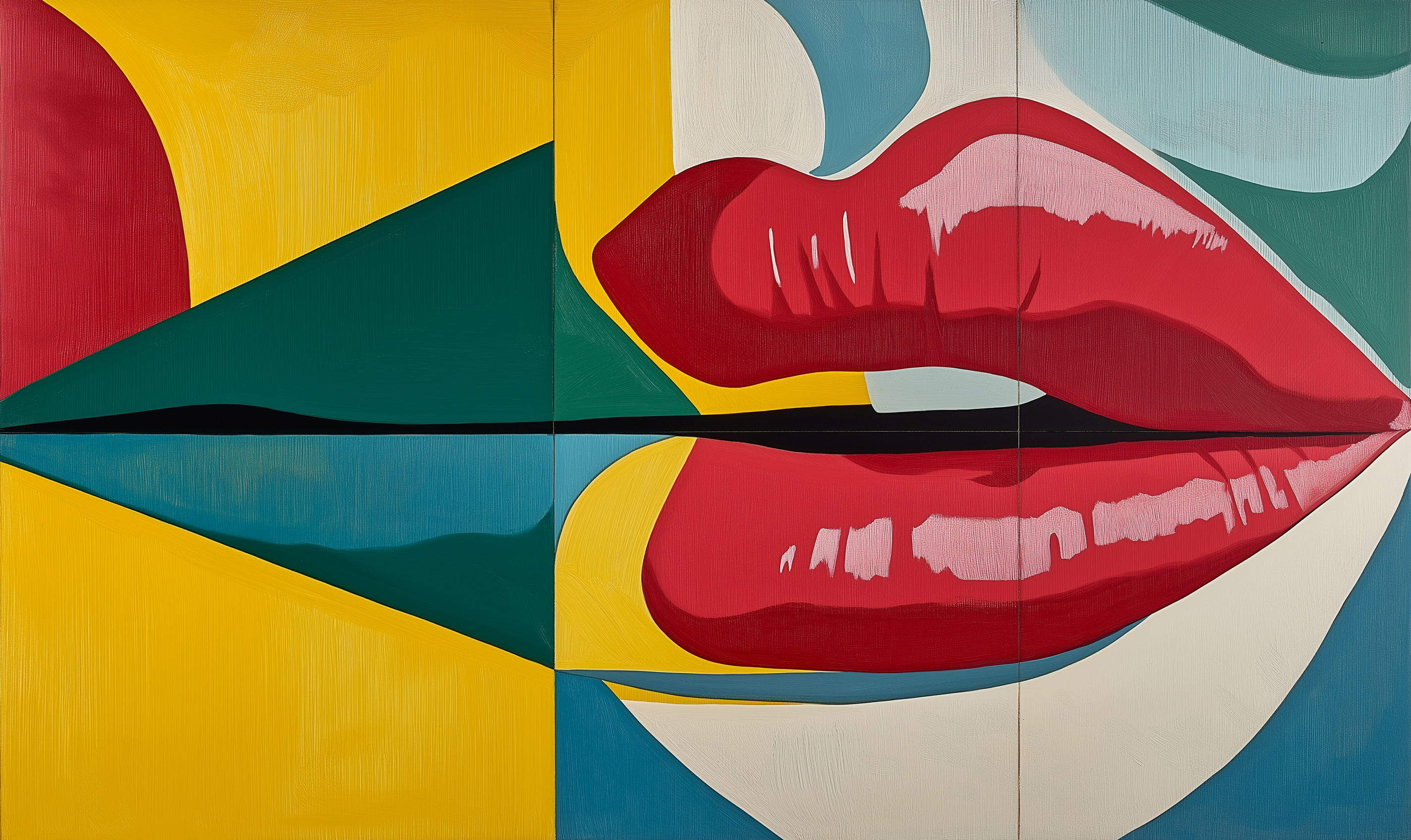
Post-Painterly Abstraction emerged in the 1960s as a reaction against the emotive intensity and gestural brushwork characteristic of Abstract Expressionism. This movement, coined by art critic Clement Greenberg, signified a shift towards a more disciplined, impersonal aesthetic that favored clarity, openness, and uniformity. Among the myriad artists who contributed to the evolution of post-painterly abstraction, Tom Wesselmann stands out, not for his association with the movement per se, but for how his work interacts with its principles, juxtaposing it with his distinctive pop art style.
The aftermath of World War II left a profound impact on the global art scene, particularly in the United States, where artists sought to forge a new path distinct from European traditions. Abstract Expressionism, characterized by its intense emotionality and dynamic brushwork, had dominated the American art landscape. However, by the late 1950s, a sense of fatigue with its emotive approach led to the emergence of Post-Painterly Abstraction. Greenberg, a pivotal figure in this transformation, championed a cooler, more detached sensibility in art. In his 1964 exhibition titled “Post-Painterly Abstraction” at the Los Angeles County Museum of Art, he showcased artists who embraced a more impersonal and disciplined approach, moving away from the gestural techniques of Abstract Expressionism.
Post-Painterly Abstraction arose during a period marked by a desire for new artistic expressions that diverged from the dramatic, angst-ridden works of Abstract Expressionists like Jackson Pollock and Willem de Kooning. Key figures in this movement, such as Ellsworth Kelly, Frank Stella, and Kenneth Noland, emphasized a more detached approach, focusing on formal elements like color, line, and shape. This movement is characterized by hard-edge painting, which involves clean, sharp edges that delineate areas of color without the emotional intensity of brushstrokes; color field painting, which features large swathes of color applied in a flat, consistent manner to create expansive, meditative canvases; and geometric abstraction, which uses geometric forms to construct compositions that are often precise and mathematically inspired. The goal of Post-Painterly Abstraction was to eliminate the artist’s personal touch, presenting a “pure” form of abstraction devoid of the emotional and narrative undertones prevalent in prior movements. By focusing on the formal properties of art, these artists sought to create works that were self-referential and emphasized the medium itself.
Artists like Ellsworth Kelly and Frank Stella exemplified hard-edge painting through their precise delineation of shapes and uniform application of color. These works often featured geometric forms and sharp transitions between different color areas, creating a sense of clarity and order. For instance, Kelly’s “Blue, Red, Green” (1963) showcases flat planes of primary colors arranged in a balanced composition, devoid of visible brushstrokes or emotional content. Color field painters, such as Helen Frankenthaler and Morris Louis, focused on large, unmodulated expanses of color. Frankenthaler’s technique of staining the canvas with diluted paint allowed for a more fluid and spontaneous application, yet the resulting works maintained a sense of calm and expansiveness. Louis’s “Veil” series features thin washes of color that seem to float on the canvas, creating a serene and contemplative visual experience. Geometric abstraction, represented by artists like Kenneth Noland and Josef Albers, relied on the use of geometric shapes to explore color relationships and spatial dynamics. Noland’s “Chevron” series, for instance, employed V-shaped bands of color to create optical effects and emphasize the flatness of the canvas. Albers’ “Homage to the Square” series systematically explored the interaction of color through nested squares, demonstrating a rigorous and analytical approach to abstraction.

Tom Wesselmann, born in 1931, was a central figure in the American Pop Art movement, renowned for his bold, graphic representations of the female form, consumer goods, and domestic interiors. His work, characterized by bright colors and clean lines, often paralleled the formal concerns of Post-Painterly Abstraction, despite differing in subject matter. Wesselmann’s early work was heavily influenced by Abstract Expressionism, the dominant movement in the 1950s. However, he soon became disillusioned with its emphasis on personal expression and emotional intensity. The burgeoning Pop Art movement, with its focus on popular culture and everyday objects, provided a refreshing alternative. Wesselmann was particularly inspired by the work of Jasper Johns and Robert Rauschenberg, who incorporated commercial imagery and materials into their art.
Wesselmann’s breakthrough came with his “Great American Nude” series, which he began in 1961. These works are characterized by their bold use of color, flat planes, and stylized representations of the female form. The series challenged conventional representations of the nude in art by placing the figures within vividly colored, often patriotic, settings. The use of American flag motifs, Coca-Cola logos, and other symbols of American culture infused the works with a distinct Pop Art sensibility.

In addition to his distinctive use of color and form, Wesselmann experimented with various techniques and materials. He often incorporated collage elements, such as cut-out images from magazines and advertisements, into his paintings. This approach added a layer of immediacy and relevance, connecting his work directly to contemporary culture. Wesselmann also utilized shaped canvases, breaking away from the traditional rectangular format to create more dynamic compositions.
Wesselmann’s exploration of everyday life extended beyond the nude to include still lifes and interior scenes. His still life paintings, such as “Still Life #30” (1963), feature household objects like telephones, radios, and food items, rendered with the same bold colors and crisp lines as his nudes. These works highlight the beauty and significance of mundane objects, elevating them to the status of high art. His interiors often combined elements of still life and the nude, creating complex, layered compositions that reflect his keen interest in domestic environments. In the 1970s and 1980s, Wesselmann continued to expand his repertoire, exploring new themes and techniques. His seascapes, for example, depicted idyllic beach scenes with simplified forms and bright, flat colors. These works maintained the formal clarity and compositional precision of his earlier pieces while introducing a more relaxed, playful subject matter. Wesselmann also experimented with three-dimensional works, creating mixed-media sculptures that further blurred the line between art and everyday life.
Wesselmann’s later career saw him revisiting and reinterpreting earlier themes with renewed vigor. He continued to innovate, experimenting with laser-cut steel drawings that combined the spontaneity of drawing with the permanence of sculpture. These works, like his earlier paintings, are characterized by their clean lines and bold forms, underscoring his commitment to formalism throughout his career. Wesselmann’s influence on contemporary art is significant. His work has been exhibited in major museums and galleries worldwide, and he is regarded as one of the leading figures of the Pop Art movement. His ability to combine the formal concerns of abstraction with the imagery of popular culture has inspired countless artists, blurring the boundaries between high art and commercial art.
Wesselmann’s work has elicited diverse reactions from critics and scholars. Some have praised his ability to capture the essence of American culture with wit and precision, while others have critiqued his focus on the female form, viewing it as objectifying. Regardless of these differing opinions, Wesselmann’s contributions to the art world are undeniable. His innovative use of materials, bold color palette, and unique perspective have cemented his place in art history. Post-Painterly Abstraction and Tom Wesselmann’s art, while originating from different artistic impulses, share a common ground in their formal concerns. The movement’s focus on color, form, and clarity found a unique resonance in Wesselmann’s Pop Art, illustrating how different artistic languages can converge and enrich each other. This confluence not only underscores the diversity of the post-war art scene but also highlights the enduring relevance of formalist principles in contemporary art. Through their distinct yet complementary approaches, both Post-Painterly Abstraction and Tom Wesselmann have left an indelible mark on the evolution of modern art.



Leave a Reply