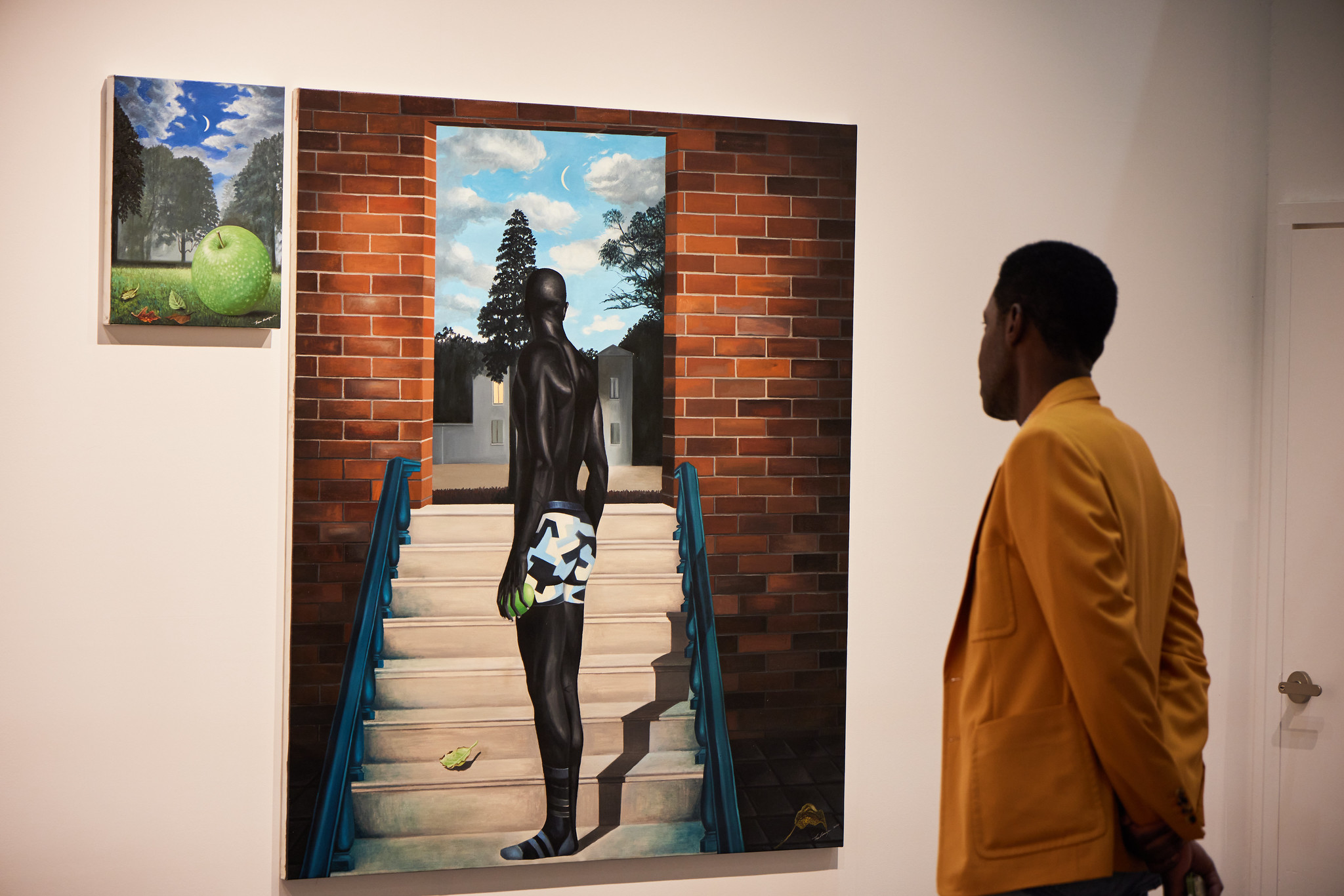
Hundreds of art lovers, advocates, and dealers marched inside the COEX Convention Centre on a pleasantly warm September day. This was more than just another event in a city with an active art scene; it was Frieze Seoul, South Korea’s emerging presence on the world’s art canvas. Local and foreign artists adorned the walls, sparking a conversation between Korea’s traditional culture and its modernized counterparts in other nations. The event not only symbolized the return of the shooting art world to its previously occupied locations following the coronavirus, but also established Sieoul_CA as a central hub in the global art market. It was no longer a question of whether it was right to put Seoul on the global art map, but rather how quickly this paradigm shift would transform the South Korean art ecosystem in the coming decades.
The opening of Frieze Seoul in 2022 was a bold and calculated gamble that reflected the increased prominence of Asia in today’s art market. Despite Seoul’s status as a cultural epicenter and home to modern and contemporary cycles of culture, it failed to achieve the same level of prominence as other cities like Hong Kong, Singapore, or Tokyo. However, for those who understood the Korean perspective in art, this was a long-awaited opportunity. The Frieze location in Seoul was not just a business strategy to enter a new market; it was rather representative of South Korea becoming a rapidly emerging player in the world cultural market, influenced by art, film, and music.
The Immediate Boom: Frieze as a Market Accelerator
The launch of Frieze Seoul caused a huge and thrilling excitement for the Frieze Group and the South Korean art market. The fair brought in more than 110 galleries, including important participants such as Pace Gallery, David Zwirner, and Gagosian, as well as respected local galleries Kukje Gallery and Gallery Hyundai. The presence of both local and international galleries reinforced efforts to enhance Seoul’s growth as an up-and-coming center for contemporary art in Asia.
Frieze piqued the interest of international customers, many of whom were newcomers to the Korean art market, while others operated on a purely remote basis. There is no doubt that the majority of these users do not intend to come to Seoul for such ‘one-time’ events. They want to develop long-term relationships with the Korean galleries, collectors, and artists. This international interest fueled a reversal in valuing Korean contemporary art not only at the fair but also in auction houses. In fact, after the first edition of the fair, the local market was crowded with auctions. Christie’s and Sotheby’s started including more Korean artists’ works in their international auctions, and Park Seo-Bo, Lee Bae, and Kim Whanki began to fetch higher prices, depicting a newly found faith in South Korea’s art.
If Frieze caused shelters to gain immediate monetary benefits, the effect did not stop at numbers. It changed South Korean art’s image from being a mere niche in a regional market to always being in contention in the global arena. This rebranding strategy has very useful purposes for the local gallery owners, collectors, and the artists themselves, as it creates a bargaining power for them to enjoy negotiating more serious opportunities in future exhibitions, gallery representation, or collaborations with institutions all over the world.
Cultivating a New Generation of Collectors
Among the distinctive achievements of Frieze Seoul has been the emergence of a new group of South Korean art collectors. In the past, many wealthy individuals and families in South Korea had an interest in art collections, such as Lee as Samsung and the family of Hyundai; however, the post-pandemic period came with a new breed of younger collectors. This is particularly true for those who use their resources to propagate standard art forms and historical footprints of Korean modernism. Rather, they seek provocative and abstract pieces of art that align with the state of art in the 21st century.
Most of these young collectors are part of the younger generation of professionals and entrepreneurs, as well as the second and third generations of wealthy business clans like the Chaebols, who are actively investing in local and foreign art. The advent of Frieze Seoul energized this younger collector group by giving them access to some of the leading galleries and contemporary artists. It also helped them create a networking platform in which they could interact with other collectors, curators, and dealers, many of whom regard South Korea as a dormant prospect in the global collection market.
This increasing interest in local collecting trends is essential to the future of art in South Korea. In many markets, an excessive reliance on international fans can be beneficial, provided that the international market remains relatively stable. However, it can also pose a burden to the few domestic collectors who may quickly diminish as the market changes. Therefore, cultivating a local collector base is crucial to sustain the South Korean art scene amidst shifting global demand. Due to their exposure to international art fairs, biennales, and auctions, the new generation of Korean collectors aggressively expands their reach beyond Korea.
Institutional Strengthening: Museums and Educational Initiatives
Frieze Seoul has generated not only commercial activity on the market, but also encouraged institutional involvement. Now, as everyone is paying attention to South Korea again, its cultural institutions are trying to use this newfound interest to enhance their activities and create international collaborations. Institutions like the National Museum of Modern and Contemporary Art, Seoul, the Seoul Museum of Art, or the Leeum Samsung Museum of Art have become aggressive in attracting international exhibitions to South Korea in order to actively participate in the international discourses.
Frieze’s engagement with the enhancement of curatorial exchange programs and artist residency programs has narrowed this ensuing gap, enabling Seoul to transform into an important art center. Local curators are leveraging their existing networks and knowledge to explore new sources of local and international ideas, aesthetics, and curatorial practices from foreign artists and curators. Due to the presence of global art institutions at Frieze Seoul, numerous international museums have begun to acquire and display Korean contemporary art, thereby introducing more Korean artists to the global arena.
Some educational institutions, such as Hongik University or Seoul National University, actively influence the formation of the South Korean art market, harking back to the prospects for its development. A number of artists featured at Frieze come from this kind of institution, which encourages the study of traditional Korean art as well as modern criticism from abroad. The fair has also opened up new avenues for students and young practitioners in the art field to expose themselves to the international art community through internships, residencies, and partnering with visiting artists and galleries.
The road ahead: challenges and solutions for development and sustainability
In spite of Frieze Seoul’s great achievements, South Korea’s frantic art market growth has highlighted the importance of addressing fundamental questions about sustainability and inclusivity at the national level. Some critics express concern that the influx of overseas galleries and collectors may overshadow local talent, force more mid-scale galleries out of business, and destabilize the art scene. The international prices for art, which are encouraged from all over the world, could severely restrict the chances of the new generation of artists being noticed in their own homeland, thereby preventing inward creation that dilutes traditional trends instead of focusing on the market.
Also, the newness of this development is the fact that if the attempt to make Seoul as serious and global as new real estate developers in this city strives, unfortunately there is a danger of a bubble burst in the inflated counterpart where the current market is dominated by factors that are unlikely to remain for long periods of time. However, if the local orthodoxy, which includes galleries, museums, and education, does not grow at the same pace as this country’s specialization in expansion, the novelty of Frieze Seoul may eventually fade away as opportunities arise.
Nevertheless, South Korea has sturdy ground to build on. Cultural industries such as K-pop and cinema, for instance, have been able to draw foreign interest over time without stifling local creativity. Long-term success in the South Korean art market hinges on fostering tensions that allow global-oriented activities to flourish without compromising local investments, thereby enabling local Korean practitioners to maintain their dominance rather than succumbing to global forces.
Conclusion: From Emerging to Established Art Capital: Seoul’s Experience
There is no denying that Frieze Seoul has helped to develop the South Korean art market, which until then operated as one region within the global art map, into a core region. It has promoted the work of South Korean artists to various audiences, helped develop the local art audience, and attracted international attention to Seoul’s galleries and institutions. However, the future success of this transformation hinges on the restructuring of the local art ecosystem to accommodate and capitalize on these new opportunities.
The capacity to develop a distinctive ethos that combines both history and modernity in equal measure will determine the likely proportions of Seoul’s continued development into a global art center. And whether it is in terms of developing the talent at home and institutions, or in relation to the global art scene, Frieze Seoul has already set off a change that will not only alter the landscape of South Korean art but culture as a whole in the 21st century.
Feature Photo by Lets Studio. Courtesy of Frieze and Lets Studio.


Leave a Reply