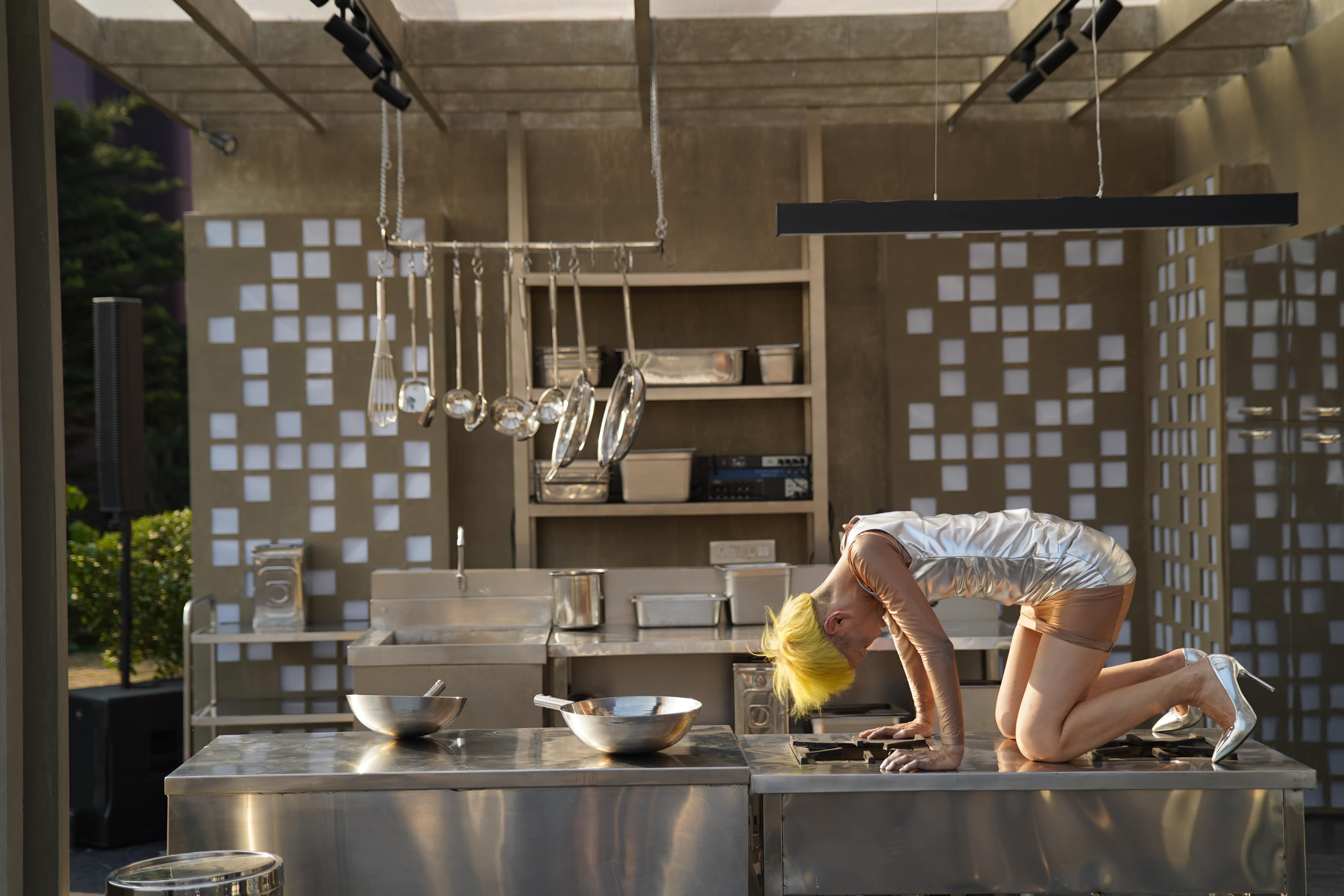
The cultural economy of South Asia has created a successful, highly capitalized separation, even though global markets are cautious, inflation is high, and the economy is shrinking across the Atlantic. The India Art Fair 2026, the 17th edition of the biggest art event in South Asia, took place at the NSIC Exhibition Grounds in New Delhi and was planned down to the last detail. It was a turning point. Fair Director Jaya Asokan has been in charge of the event’s strategic direction, and it has fully transitioned from a small, emerging market that relied on outside Western validation to a highly liquid, self-sufficient, and internally driven cultural powerhouse.
The 2026 event brought together a record-breaking 135 exhibitors, including 94 commercial galleries, 24 major art institutions, and a larger design section. It was a key meeting place for curators, private foundation directors, and ultra-high-net-worth individuals from around the world. The commercial speed and the huge amount of money spent over the four-day event show beyond a doubt that the Indian art market is currently at its highest level of activity. This in-depth analytical report breaks down the main market sales data, changes in collector demographics, changes in macroeconomic policy, correlations between secondary market auctions, and trends in institutional acquisitions that shaped the India Art Fair 2026.
Macroeconomic Factors Driving the India Art Fair 2026
The India Art Fair 2026’s unprecedented commercial success cannot be examined in isolation; it is the direct result of multiple converging macroeconomic and fiscal factors that have fundamentally transformed the purchasing power, transactional psychology, and risk tolerance of the South Asian collector demographic.
The main reason for the art market’s current structural liquidity is India’s overall macroeconomic path. The International Monetary Fund (IMF) and the Reserve Bank of India have raised their forecasts for India’s gross domestic product (GDP) growth to between 7.3% and 8% for the 2025–2026 fiscal cycle. This means that India is creating private wealth much faster than traditional global economic centers like the US and China. The Hurun Rich List says that India is making a new millionaire household every thirty minutes and that it gained 24 new billionaires in the past year alone. This unprecedented buildup of disposable income is actively looking to diversify into other asset classes, which effectively protects the domestic market from the transatlantic economic volatility that has recently hurt major Western art hubs.
The domestic real estate boom is a major result of this economic growth. It was a quick, high-volume driver of primary market art purchases at the India Art Fair 2026. The rapid building of sprawling luxury homes, corporate headquarters, and private estates in both major and minor cities makes it necessary to buy high-value aesthetic assets. As a result, galleries saw a big increase in demand for large contemporary works, huge outdoor sculptures, and functional objects that are ahead of the curve in design and mix fine art and interior architecture.
The most important regulatory boost that helped sales at the India Art Fair 2026 was the important change to the Goods and Services Tax (GST) on fine art. As of September 22, 2025, the GST on buying fine art dropped from 12% to 5%. Tax laws have a big effect on how capital is allocated, how markets work, and how collectors act in high-value alternative asset markets. This 700-basis-point drop changed the way domestic collectors did business, effectively taking the place of a standard buyer’s premium or gallery margin. Dealers said that during the VIP preview days, this structural advantage was often used to close deals worth six or seven figures. Buyers used the lower tax rate as a mathematical reason to raise their total acquisition budgets for multiple artists.

The India Art Fair 2026 is backed by the Secondary Market Synergy.
The high level of liquidity at the India Art Fair 2026 is constantly interacting with the secondary auction market in a way that benefits both markets. In the art asset class, secondary market auction records set the overall pricing structure, set baseline insurance values, and give collectors the confidence they need to make big purchases in the primary market.
The Indian auction market reached its highest point in history in 2025, setting the stage for the success of the 2026 fair. A single huge auction held by Saffronart, a top auction house in India, in New Delhi brought in $40.2 million in sales. A later evening sale in September sold all 85 lots, bringing in INR 355.77 crore and showing that the high end of the market is very liquid when items have perfect provenance and are rare. In addition, the sale of a 1954 painting by Maqbool Fida Husain for a record-breaking $13.8 million at Christie’s in New York solidified the international recognition of Indian modernists.
The Hurun India Art List 2025’s data backs up this growth in the system’s structure. According to the report, the total sales of the country’s most successful artists reached a record INR 310 crore (about $37 million), which is a 3% increase in total value from the previous year. The number of lots sold in the auction sector rose by 26% year-over-year, reaching 995 lots. This is more important for the overall market ecosystem. This data from the secondary market shows how the buyers at the India Art Fair 2026 thought about buying things. When a collector sees a painting by Francis Newton Souza, Syed Haider Raza, or M.F. Husain setting multimillion-dollar records at international auction houses, the asking prices for contemporary peers or younger emerging artists seem very low.
Demographic Changes at the India Art Fair 2026
The transactional data and observational metrics from the India Art Fair 2026 demonstrate a significant and enduring transformation of the buyer demographics supporting the South Asian art market. The historical paradigm, in which 60% to 70% of high-value Indian art was purchased by international buyers or the Western diaspora over two decades ago, has been completely reversed. Most of the money coming into the fair today comes from Indian bank accounts, Indian businesses, or newly formed regional family offices.
Art market professionals and gallery directors said that an amazing 60% to 80% of current buyers are brand new to the market. This means that the consumer base is growing a lot, not just that money is being recycled among old customers. People who come in this way tend to be very sophisticated and do a lot of research before buying. A major transfer of wealth between generations is changing people’s tastes and when they buy things. A new group of millennial and Generation Z collectors has the money to buy a lot of art by people their age. These younger clients are different from older collectors in that they use digital provenance to prove the authenticity of their art and use social media to promote the artists they collect, creating and maintaining their own micro-markets.
Also, the concentration of wealth in certain areas is quickly becoming less centralized. New Delhi and Mumbai are still the most important business centers in the Indian art world. However, the India Art Fair 2026 saw a lot of money come in from very rich collectors living in Tier-2 and Tier-3 cities all over the country. The fact that these collectors came from smaller towns shows how deeply art has become a desirable asset class across the subcontinent, going far beyond the traditional cosmopolitan elite.
The 135 exhibitors at the fair sold a lot of things, which shows that the market is working at full capacity. The Post-War Progressive Artists’ Group and established modernist masters are still the mainstays of the South Asian art market. This part of the market is like gold because it has low-volatility assets that have been shown to have good secondary market liquidity and a strong historical consensus.
Delhi Art Gallery (DAG) put on a museum-scale show called “Past and Present” at the India Art Fair 2026. It covered the 18th to the 21st centuries and was a masterclass in how to preserve and make money from heritage. DAG said that the responses on the first day were very good. They were able to successfully place works by well-known historical figures like Radha Charan Bagchi, Sewak Ram, S.K. Bakre, Jamini Roy, Shanti Dave, Sohan Qadri, S.G. Thakar Singh, and Meera Mukherjee. The prices for these placements ranged from INR 50 lakh to an amazing INR 12 crore ($60,000 to $1.4 million), which shows that institutional-grade capital is moving around on the fair floor.
Kumar Gallery also used the India Art Fair 2026 to show a full, well-researched look at Indian art after World War II. They were able to buy and sell important modernist works, such as a Kalighat-style painting from the 1950s by Jamini Roy with bold outlines and almond-shaped eyes and a huge pastel portrait from the 1960s by K.S. Kulkarni and a stylized portrait by the 100-year-old Krishen Khanna. The historic Dhoomimal Art Gallery also showed big names like Francis Newton Souza and M.F. Husain, who caught the attention of legacy collectors looking to build up their portfolios over generations. Even though there are more young buyers coming in, the top of the wealth pyramid is still very committed to preserving heritage and investing in blue-chip assets.
The India Art Fair 2026’s Contemporary Liquidity and the Diasporic Sector
The main market for contemporary domestic and diasporic art at the India Art Fair 2026 moved at an unprecedented speed, acting like a highly liquid asset exchange where inventory was absorbed at an astonishing rate. This segment’s explosive growth can be measured best by the Vadehra Art Gallery. The gallery said that by the end of the first VIP preview day, an amazing 80% of all the items in its booth had been sold. The quick sale of works by Atul Dodiya, N.S. Harsha, Manjit Bawa, Anju Dodiya, and Sudhir Patwardhan, with prices ranging from $6,000 to $600,000, shows that collectors are very sure of what they want and have done a lot of research.
Nature Morte, the biggest contemporary art dealer in India, also had a lot of success. They put on the long-awaited first solo show by Chinese contemporary art giant Ai Weiwei, which covered 30 years of his work. The presentation included his big toy-brick works, like Surfing (After Hokusai) and Water Lilies, which got a lot of attention from institutions.
The strong commercial validation of diasporic visibility was an important part of the India Art Fair 2026. Rajiv Menon Contemporary, a new gallery in Los Angeles, almost sold out its booth. By pricing its inventory in the very accessible $5,000 to $35,000 range, the gallery was able to sell all but one piece of art by the end of the VIP preview. Five of these purchases were made by institutional collections, which is interesting. The gallery’s success was based on works that explored identity through materials, like Melissa Joseph’s Future Heirlooms (2025), a large-scale industrial felt and wool piece that shows gems falling from a plastic bag, and Maya Seas’s gold-leaf infused Lightworks (2025), which imagines places of comfort for women to dance.
Jhaveri Contemporary also made the most of its strategic connection to major institutional events at the India Art Fair 2026. The gallery said that many of its positions were sold out at the Kochi-Muziris Biennale, where five artists showed their work at the same time. The market quickly absorbed works by Sayan Chanda, which had detailed stitching and red fabrics in “All the Boons You Want,” and Shiraz Bayjoo’s “Pa Bliye Mwa (Don’t Forget Me) Three – Pilea Balfouri,” which looked at themes of agriculture and colonization. This shows how directly and profitably biennial validation is linked to primary market liquidity.
Mumbai-based Akara Contemporary did a great job of explaining how important materiality, form, and structural dynamics are. The gallery showed a lot of faith in its curatorial guidelines by choosing a carefully planned presentation that put spacing and material presence ahead of visual abundance. The New York-based, Mumbai-born sculptor Tarik Currimbhoy had a successful year because he sold out all of his editions. Currimbhoy’s steel sculptures, which he calls “stories of structure and gravity,” are trained in architecture and industrial design. They create an illusion of weightlessness and fluid geometry, exploring the unseen forces that shape objects. Currimbhoy’s editions sell out quickly, which shows that more and more people in the US want complex, cross-disciplinary sculptures that combine mathematical precision with formal beauty.
Global mega-galleries are coming to the India Art Fair 2026.
International mega-galleries had a much bigger presence at the India Art Fair 2026, and they were very successful in business as a result. As the number of collectors in the US and Europe grows, Western galleries are finding it easier to make money in these markets. This is because the collectors have a lot of money and are becoming more global in their thinking.
David Zwirner’s highly anticipated and strategically perfect debut at the India Art Fair 2026 was a masterclass in transcultural curation. The gallery knew that Indian collectors had different tastes, so they didn’t show off their Western inventory in a generic way. Instead, Zwirner set up a booth that was spiritually charged and full of symbols that spoke to the subcontinent’s myths, material culture, and religious beliefs. This plan paid off right away in terms of business. At the VIP preview, David Zwirner sold two huge sculptures by Huma Bhabha made from a mix of cork, clay, wire, styrofoam, and iron, as well as a big abstract painting by Suzan Frecon and a chromogenic print by the German photographer Wolfgang Tillmans. The gallery also drew in a lot of people by showing works by Marcel Dzama, Chris Ofili, and Yayoi Kusama’s famous Infinity Dots painting. The gallery’s very successful opening shows that Indian collectors have a huge, well-funded appetite for top-notch international contemporary art when it fits with their taste.
Galleria Continua took advantage of its long-standing connections in the area by setting up one of the fair’s largest booths, which allowed for direct communication between local and global heavyweights. The gallery did a great job of bridging the gap between the local and the global by putting works by well-known Indian artists like Anish Kapoor, Shilpa Gupta, and Nikhil Chopra next to huge works by international giants like Michelangelo Pistoletto, Daniel Buren, and Ai Weiwei.
At the same time, the Berlin-based Neugerriem schneider drew a lot of attention at the India Art Fair 2026 with a strong presentation that included Olafur Eliasson’s The collective consequences of focus on focus (2022). This impressive installation, which had more than 200 glass orbs, attracted a lot of institutional collectors. It was shown with works by Andreas Eriksson, Ai Weiwei, and Shilpa Gupta. Additionally, the Carpenters Workshop Gallery, which is based in London and Paris and focuses on design, had a lot of foot traffic and engagement all week long. This was in line with the real estate-driven demand for high-end, functional design objects.
Changes in Indigenous Aesthetics and Curatorial Practices
The acquisition patterns at the India Art Fair 2026 reveal significant changes in the thematic and material preferences of collectors, beyond just the raw numbers. One of the most important changes at the fair was the aggressive move of Indigenous and tribal art from the edges of ethnographic interest to the very center of high-value contemporary collecting. South Asian indigenous practices are getting a lot more attention and money because of a global market trend that has successfully turned indigenous aesthetics into money. The Aboriginal art market in Australia is a good example of this.
At the India Art Fair 2026, the Inherited Arts Forum, a joint project of the New Delhi galleries Blueprint 12 and Exhibit 320, put together a very successful show of indigenous practices that used complex dotted visual languages and cosmic geometries. Artists like Bhuri Bai, Balu Jivya Mashe, Mangala Bai Marawi, Suraj Chawla, and Vijay Sadashiv Mashe were able to connect with the market in a meaningful way at the booth. The gallery was able to turn regional knowledge into global asset value by connecting these artists’ ancestral rituals of cosmic connection to modern aesthetic standards.
The New Delhi-based Ojas Art also showed a well-researched, multi-generational survey of Muria Mandavi artists, such as Belgur Mandavi, Pisadu Ram Mandavi, and Pandi Ram Mandavi. These works are strongly connected to the legacy of Bharat Bhavan, a state-sponsored project that first recognized and trained artists from remote tribal areas. They are very popular with modern collectors who want authenticity, ecological awareness, and new ways of living that are based on memories of the forest.
Also, the market wants a lot of socio-political nuance. The global emphasis on marginalized voices has created a significant trickle-down effect in the domestic market, resulting in a unified, industry-wide directive to promote Dalit artists. These practitioners have raised awareness in such a way that it has become a structural requirement for leading contemporary Indian galleries to include Dalit communities in order to stay institutionally competitive and critically relevant.
Technological Convergence and Digital Frontiers
The India Art Fair 2026 showed a lot of real-world proof that the market has a long-lasting, well-funded need for digital art, AI integrations, and new media. The fair took place at the same time as the “Are You Human?” exhibition by the Khoj International Artists’ Association, which featured generative VR works about environmental destruction. This was part of a larger cultural conversation. There was a lot of commercial and critical interest in technology-driven aesthetics at the fair.
The Method India presentation with Berlin- and New York-based artist Alida Sun at the India Art Fair 2026 is a great example of this synthesis. Her solo show, RITES, brought together daily coding practices and traditional textile craftsmanship in a very new way. The presentation successfully brought the digital world to life by turning algorithms and infrared light captures into real-life hand embroidery and mirror work done with the help of women artisans from the SSMI community. This plan brilliantly eases the traditional collector’s reluctance to buy purely digital art by tying the code to physical objects that people can touch and that have cultural significance. It also addresses the erased history of women in computational heritage and shows that technology can be a way to free people instead of spying on them.
Also, the fair’s institutional and outdoor programming saw AI as a way to work together instead of a threat to the system. The Charpai Project, which Ayush Kasliwal came up with in 2018, was completely reimagined with the help of an AI artist named Goji. It was supported by Serendipity Arts. This installation, which moves through a lattice of stacked traditional woven beds that look like a Snakes and Ladders board, shows how committed the fair is to showing how technology can be used to improve traditional Indian furniture design and craftsmanship.
At the same time, the photography industry showed a lot of growth at the India Art Fair 2026. Photography has long been seen as a secondary medium in the domestic market. However, it got top-tier recognition when the photography-only gallery PHOTOINK won the fair’s first “best booth” award from an independent jury. Devika Daulet Singh, the gallery’s founder, said that the medium has grown quickly in the last five years, mostly because private museums have been buying works that are very specific to their needs and because older, highly educated collectors want more archival depth.
The India Art Fair 2026’s Growing Institutional Matrix
A strong institutional framework that supports non-commercial validation, large-scale acquisitions, and public education is a sign of a globally competitive art market. The India Art Fair 2026 went beyond anything that had ever been done before, bringing together curators from around the world, directors of private foundations, and museum acquisition committees.
The Kiran Nadar Museum of Art (KNMA) is a big part of the ecosystem. KNMA is India’s largest private art museum, and it has a scale and acquisition budget that effectively supports big parts of the modern art market. The museum was very busy on the fair floor because it is currently getting ready for the opening of a huge 100,000-square-meter campus designed by Sir David Adjaye. By 2027, this campus will be South Asia’s largest cultural center. During the India Art Fair 2026, KNMA actively looked for works from new galleries like Rajiv Menon Contemporary. This initiative helped keep diasporic and emerging artists financially stable.
KNMA has a big impact on big commissions and retrospective programming. At the fair, KNMA hired Kulpreet Singh, a visual artist from Patiala, to show the Extinction Archive. This deep ecological commentary showed how the Green Revolution destroyed the environment through 900 separate paper works that were treated with pesticide and mixed with the ash from burning stubble in the Punjab region. These works served as a physical memorial to species on the IUCN Red List. At the same time, the museum put on a huge, 120-work retrospective of the modernist master Tyeb Mehta’s birth centenary, which pretty much took over the historical conversation of the week.
The Institutions section of the fair was redesigned, turning the event into a “living laboratory.” The fair created an important non-commercial space by bringing together first-time institutional participants like the Sabyasachi Art Foundation Gallery, the Ardee Foundation, and the Mapin Foundation with returning entities like the Australian High Commission and Serendipity Arts. This space makes the commercial pavilions more intellectually rigorous. A strong talks program put together by Shaleen Wadhwana added to the intellectual depth. It included big names like Sir Tristram Hunt (Director of the V&A Museum) and Dr. Alexandra Munroe (Guggenheim Abu Dhabi) talking about the collaborative cultural economy and the public sphere.
The India Art Fair 2026 edition put a lot of emphasis on the fair’s legacy as a springboard for the success of international institutions. Fair Director Jaya Asokan talked about how the fair helps new artists get their start and then go on to show their work at major international exhibitions. She specifically mentioned the artists chosen to represent India at the Venice Biennale’s third national pavilion. Amin Jaffer put together the Venice show, which includes Skarma Sonam Tashi, Sumakshi Singh, Alwar Balasubramaniam, Ranjani Shettar, and Asim Waqif. Most of these artists have already done big solo shows or huge outdoor commissions at the India Art Fair. This path shows that doing well at the fair is now closely linked to getting the highest levels of global institutional approval.
The Unprecedented Path of the India Art Fair 2026
The comprehensive data, sales metrics, and demographic changes derived from the India Art Fair 2026 indicate an ecosystem that has fundamentally finalized its transformation from a frontier market to a globally integrated, yet vigorously domestically sustained, cultural economy. The South Asian art market is no longer at risk of losing money to Western collectors. This is because 60% to 80% of buyers now come from within the subcontinent or its diaspora, which protects the market from outside influences.
The GST cut was a win for the rules; the growth of institutional infrastructure like KNMA; the move into AI and indigenous practices, and the success of Western mega-galleries like David Zwirner all show that the value of provenance and transcultural nuance has never been higher. In conclusion, the India Art Fair 2026 is the best proof that the South Asian cultural economy works. By successfully designing a platform that balances deep regional authenticity with elite international participation, the fair has created a highly resilient, hyper-liquid market that is ready to take over the Asian cultural scene for the foreseeable future.
all images courtesy of indiaartfair.in


Leave a Reply