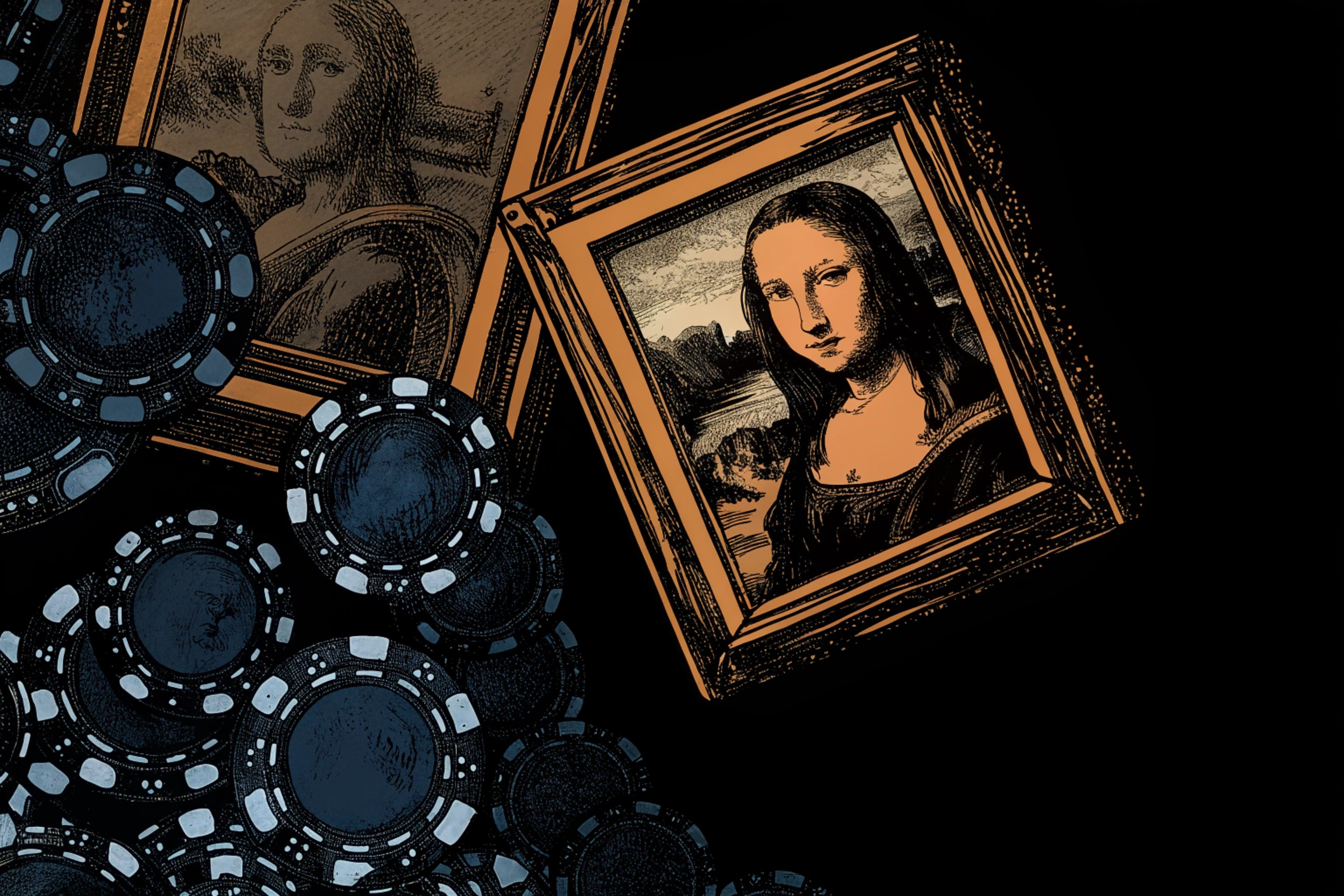
The art market isn’t just a website where you can buy paintings– it’s an intricate art that combines history and investment. The different categories in the art market include blue chip, which stands as the most prestigious. In this case, blue chip means reputable artists whose work is significant to society and culture and always maintains demand. As a financial term, blue chip means a company’s stock is noted to have stable earnings and robust market performance.
In this article, we discuss the ins and out dynamics of blue chip art along with market principles, criteria of blue chip status, and profiles of blue chip artists defining them as contemporary or classical. This article is intended for graduate-level readers who have a clear grasp on investments and cultural economics.
Defining Blue Chip Art and Its Market Significance
What is Blue Chip Art?
Blue-chip art encompasses pieces from seasoned artists whose reputations span decades or even centuries. Added to this is their unparalleled artistry and the status of iconic landmarks like museums; they add them as part of their collection, leading to verified and marketable assets. With an emphasis on emerging and mid-career artists, volatile market trends have made blue chip art
Proven Value: Predictable auction and private sale prices position blue-chip works in the upper echelons of their respective markets..
Institutional Endorsement: The permanent collections of globally recognized museums award blue-chip art. Collection funded by institutions.
Cultural Influence: A notable impact on the history of art and the development of art movements.
Market Stability: Known value as a “safe haven” investment during economic downturns.
The Historical Context of Blue Chip Art
Blue chip art emerged alongside capital investments in modern art markets during this period. In the past, obstacles of Western art were mastered by old trabs artists like Leonardo da Vinci, Michelangelo, and Rembrandt, among others, who were adored for their technical skills along with their influential culture.
However, in the 19th and 20th centuries, modernism, along with subsequent art movements, caused a shift in artistic values, which brought forth people like Vincent van Gogh, Pablo Picasso, and Claude Monet. These painters not only revolutionized aesthetics but also established a market for art, leading to the creation of the high-end art we are familiar with today.
Key Characteristics of Blue Chip Art
To understand why blue chip art is held in high esteem and considered priceless, we must examine its defining features:
1. Established Market Value and Strong Price Stability
It is evident that blue-chip artworks are routinely sold for multi-million dollars during auctions and in private trade deals. And as is the case with many prized works by deceased artists, there is always persistent demand from collectors and institutions, leading to price resilience for the limited availability of works. A classic example is da Vinci’s Salvator Mundi, which fetched $450.3 million at Christie’s in 2017, a record at the time.
2. Acknowledgment by institutions and cultural authorities
Having a piece in the collections of the Louvre, MoMA, or the Tate Modern is sufficient evidence of its high-quality status. Such endorsements not only validate the artist’s work but also add to its provenance. Museums are the custodians of defined taste and history, and they lower the public’s faith in blue-chip art.
3. Rarity and limited availability.
Due to disease, age, and estate planning, many blue-chip artists have historically had a limited catalog of works. Such scarcity increases the value of the available pieces as collectors try to own a slice of art history.
4. Long-Term Value Appreciation
In the long run, Blue Chip artwork has shown sustained incremental value appreciation. This characteristic makes it appealing, especially in periods of economic turbulence. The physical asset of art, with its cultural relevance, makes it an investment that has low correlation with traditional financial markets.
5. Current Global Interest and Market Activity
Although a specialized market, Blue Chip artwork has international interest. Affluent collectors in Europe, Asia, North America, and the Middle East add liquidity to the market and ensure that blue-chip artworks, unlike other luxury goods, can be resold with relative ease.
Market Dynamics: How Blue Chip Art Works

Supply and Demand in the Artistic World
The value of blue Chip Art is primarily determined by supply and demand. The intrinsically limited availability of works, particularly by older, historical artists who no longer actively create new art, ensures that even slight changes in demand can cause drastic changes in price. On the other hand, the considerable demand is fueled by:
Passion of collectors: Collector’s deep-rooted love for the beauty and historic significance of these pieces.
Interest of investors: Viewing art as an uncorrelated asset that offers diversification to investment portfolios.
Institutional Acquisitions: Museums and other cultural institutions are ever-eager to procure pieces that enhance their public image and bolster their existing collections.
The functions of auction houses
Auction facilitators like Sotheby’s, Christie’s, and Phillips are instrumental to blue-chip art. These institutions do not only manage the sale of artworks but also serve as custodians for their authentication, market pricing, and benchmark setting. The media frenzy over high auction records and resetting industry standards at premier auctions deepens the blue-chip status of the featured artists.
Confidence from Institutions and Collectors
Alongside auction houses, the market is buoyed by prominent collectors and institutions. The purchase of an artwork by a reputable museum serves as quiet validation for the artist’s relevance and expected value. Identifiable collectors such as François Pinault or Bernard Arnault also enhance demand when they selectively buy and shelve the pieces, which makes other buyers confident thanks to the halo effect the pieces get.
Global Market Integration and Economic Trends
Unlike traditional financial markets, the market for blue chip art exhibits minimal vulnerability to economic fluctuations. To illustrate, during recessions, art tends to fetch appealing prices, which prompts the wealthy to invest their money in art. Additionally, globalization opens up access to a new pool of buyers, including new collectors from Asia and the Middle East, which helps sustain growth in the market. This internationalization has the effect of increasing prices and improving the cultural exchange and appreciation of art.
Blue Chip Status Determination: Guidelines for Artists
What qualifies an artist for the title of “blue-chip artist”? More often than not, it is the culmination of an intricate checklist to qualify for this status.
1. Sales Records and Auction Performance
Having a good standing auction performance is one of the most obvious factors that determines blue chip status. Sale figures over the years should ideally be commanding, often reaching tens or hundreds of millions, which signals high demand for the artist’s work. As an example, Jean-Michel Basquiat’s Untitled (1982) sold for $110.5 million, ; this is more than enough to warrant being commensurate with Basquiat’s contemporary.
2. Endorsements from Academics and Museum Representations
The significance of contemporary forms of art is addressed when they are featured in the permanent collections of exceptional museums. Not only does this institutional recognition acknowledge the artist’s work from a scholarly perspective, but it also makes certain that it is sufficiently studied and appreciated by posterity. Such academic recognition greatly increases the value of blue-chip art.
3. Market Infrastructure and Gallery Representation
Blue chip artists are best professionally managed through leading galleries. These galleries include Gagosian, Hauser & Wirth, Pace, and David Zwirner. In addition to organizing exhibitions that uphold the artists’ reputations, they also guarantee the preservation of the value and standards of high-quality art. Their vast knowledge of the market is what enables them to close exorbitantly priced deals, strengthening the brand image of the gallery.
4. Artistic and Cultural Legacy
The most famous artists shaped the art world and influenced future generations. Blue chip artists typically initiate movements in art, such as Picasso’s revolutionary Cubism or Warhol’s groundbreaking Pop Art. Their works mark crucial shifts in society and contribute to different philosophical discourses, thereby cementing their position in the art historical canon.
5. Scarcity and Origin
An artwork’s rarity is one of the most important factors for valuation. This is particularly true for many blue-chip artists, especially those from earlier periods, as a well-documented provenance and a limited surviving body of works increase both demand and price. A mere sale can become a high-stakes deal with significant monetary value when there is a well-documented chain of ownership and context.
Profiles of Blue Chip Artists: From Classic Masters to Contemporary Icons.
Example Classic Blue Chip Artists
Leonardo Da Vinci
Leonardo da Vinci is known for a handful of notable pieces and is considered a timeless artist. His work, Salvator Mundi, demonstrates the zenith of blue chip art value after selling for a staggering $450.3 million. Due to his significant role during the renaissance period, da Vinci’s masterful techniques, and the development of paradigm-shifting sfumato, it is no wonder that his work continues to interest institutions and collectors deeply.
Vincent Van Gogh
Van Gogh’s emotionally concentrated brushwork has made his paintings like The Starry Night and Portrait of Dr. Gachett highly sought after. In spite of doing his best to promote himself in life, van Gogh goes unacknowledged until after his death, resulting in the artist receiving multi-million dollar posthumous acclaim. Van Gogh acts as the embodiment of a cultural phenomenon for how impactful the history of a person’s journey is and the legacy created through sheer willpower.
Claude Monet
The very first Impressionist, Monet, changed the way light and color were perceived, claiming the title of blue-chip art cornerstone. Monet’s extensive collections serve as synonyms for seasonal natural beauty, and this series of paintings, the best-known of which is Water Lilies, Monet being featured in prominent museums, Gleason as the impressionist, and the symbol of insatiable demand for his works further solidify his claim of being a blue-chip impressionist.
Pablo Picasso
In the world of art, not many names stand out like Pablo Picasso. He was the pioneer of Cubism and worked in many different styles throughout his life. Paintings like Les Femmes d’Alger and Guernica have not only made history but also achieve jaw-dropping price tags during auctions. The fact that he was able to reinvent himself time and time again is what keeps him relevant and increasing in value even today.
Example of Modern and Contemporary Blue Chip Artists
Andy Warhol
Andy Warhol is a prominent figure in the realm of Pop Art. He was the first to turn mundane objects and famous people’s culture into pieces of fine art. Warhol’s bold renditions of Campbell’s Soup Cans, Marilyn Monroe, and other cultural icons questioned the basic principles of art and business. With his legacy as an artistic and commercial visionary, Warhol is sure to remain one of the most valued artists on the blue-chip market, with his shot at the Sage Blue Marilyn auction being a multimillion- dollar testament.
Jean-Michel Basquiat
Jean-Michel Basquiat became well-known during the 1980s as a result of his immense success and untimely death. Widely recognized as one of the most important contemporary artists today, he is known for his expressive street art, which highlights issues of race, identity, and politics. Combining graffiti with high culture, Basquiat emerges as one of the most sophisticated and financially lucrative artists of his time. His work commands exorbitant prices and captures the attention of investors from all over the world.
Yayoi Kusama
Widely regarded as one of the most important living artists, Yayoi Kusama has created iconic installations that feature polka dots and signature continuous patterns. She has expanded art beyond painting by integrating sculpture, performance, and installation, which get several visitors at her global exhibitions. Kusama’s unique interpretation of infinity has propelled her to become a household name in the elite art world.
Banksy
The anonymity of Banksy, the infamous street artist, allows him to approach the art world from a unique perspective. His pieces are often laced with humorous social commentaries that challenge the public’s perspective on art and even politics. Often regarded as a contemporary blue-chip artist, Banksy’s artworks aggressively increase in value and capture the attention of prospective investors, making the most of his elusive persona.
Damien Hirst
A contemporary art figure, Damien Hirst remains known for his extravagant and often controversial works. Hirst’s conceptual installations, including the infamous For the Love of God, a skull encrusted with diamonds, combine art and commerce. There is no denying that Hirst’s ventures into unconventional media and formats have caused significant market interest and remodeled the scope in which blue chip art is defined.
Jeff Koons
Known for his combination of high culture and popular taste, Jeff Koons stands with his sculpture Rabbit that was sold for 91.1 million dollars in 2019. This sculpture epitomizes his ability to transform everyday objects into luxurious and high-value art pieces. As one of the elite blue chip artists of the contemporary era, Koons has earned that title with his consumer-centric themes and rigid craftsmanship.
Gerhard Richter
Blue chip artist Gerhard Richter is known for his critically acclaimed, commercially successful and multi-faceted artworks such as his abstract or photorealistic paintings. The technical precision of his works alongside the complexities of modern existence make them timeless pieces celebrated by many. Richter stands out among the elite artists due to his constant experimentation with various styles and the high demand for his paintings.
The change in blue-chip art throughout history.
Transforming history and the market
The change in blue chip art mirrors the shifts in social priorities, technology, and even in the economy. During the earlier times, the old master’s work was only available for the aristocracy and the church. The modern art market, which changed the dynamic in the 19th century, marked the creation of seeing art as an item whose value could be stored and traded. The change surfaced because of art galleries, auction houses, and later private collectors turned art into a high-class asset.
Globalization’s Effects
Across the world, globalization is rapidly transforming the blue chip art market. There’s new wealth in Asia, the Middle East, and Latin America, which has expanded the market as new investors and collectors join the fray. Auction houses today frequently organize specialized functions in all major international cities, and art fairs have lost their regional mantle, becoming international. This demand not only raises the price but also broadens the definition of art, incorporating non-Western yet powerful global voices.
Emerging Technology and the Blue Chip Art World
Blue-chip art, like other forms of artwork, is gradually adapting to technological advancements. Digital galleries, e-auctions, online marketplaces, and even blockchain systems of art registration are revolutionizing art sale and purchase processes. In addition, NFTs, or non-fungible tokens, are slowly but surely becoming part of the ownership and claim conversation in blue- chip circles as collectors and art enthusiasts delve into the possibilities these new technologies offer alongside traditional works. There are persistent arguments about digital art possessing the same gravity of permanence as physical art pieces, but one cannot deny the fact that technology is expanding the limits of blue chip art.
Business Strategy for Blue Chip Art Investments
Why Invest in Blue Chip Art?
Remember to include in the blue-chip art investment an information-related piece.
If you want to write an essay or create an article, here are some tips. For starters… Please ensure you conduct thorough research, as it is essential for all tasks. You need to make sure to write everything down, gather notes online, and follow related articles for inspiration.
Take, for example, Blue-chip art is more of a status symbol than actual art. I mean, look at Donald Trump. He’s sporting all these sculptures and massive wall hangings of his face. It’s truly heartbreaking, yet it’s also incredibly beautiful. If I were wealthy, I would not only settle my debt but also purchase high-quality artwork, with the exception of pieces featuring the faces of world leaders. Mania is such a thing that definitely tilts.
What Are Blue Chip Artworks and Why Invest in Blue Chip Art?
Don’t get me wrong; blue-chip artworks are wonderful pieces of creativity; they deserve every penny of the price. They don’t even need to change the image on the painting because I know every season it’s going to be my favorite simply because people will mourn inside their heads.
Investing long-term in the Blue-chapped artworks will surely benefit not just the creators but also the enhancers.
Liquidity Concerns: Unlike stock, a piece of blue chip art has a certain level of illiquidity due to the lengthy and niche marketing process involved in selling it.
Due Diligence and Expert Guidance
For any potential investor, due diligence is absolutely necessary. Using art advisors, tracking auction histories, and going through a considerable amount of academic literature pertaining to the artist and work are some of the best measures to optimize risk. Having an expert’s help not only guarantees a dependable investment but also extends to the shifts in the market and evolving interests of the collectors.
Future Outlook and Emerging Trends
The Changing Landscape of the Economy Along With Art as an Investment
Due to the concentration of wealth, art is anticipated to surge with the demand across emerging markets. Art is being perceived as a dependable alternative investment to hedge against market changes and currency risks. The volatility of the economy, geopolitical conflicts, and fast-paced technological advances increase the attractiveness of art as an investment to be preserved over time.
Technological Integration and Market Transparency
The adoption of digital platforms is transforming the art industry by adding greater transparency, lowering transaction costs, and expanding the audience for expensive works of art. Particularly, blockchain technology is expected to improve provenance verification, which may lessen fraud and strengthen buyer confidence in the blue chip art segment. It appears that the increasing integration of technology into art transactions will lower the barriers to entry and allow more investors to partake.
Shifting Cultural Paradigms
Contemporary cultural dynamics are actively augmenting notions of art and value. Street art, performance art, and other forms of digital installations are actively redefining the boundaries of blue chip art. Younger people’s increased focus on diverse and fluid cultural phenomena may lead to a change in the criteria for identifying blue chip artists. This transformation may result in many being identified for their contributions as well as their market value.
Final Thoughts: The Enduring Allure of Blue Chip Art
Blue-chip art is a blend of various elements, such as culture, history, and finance. Its appeal is rooted in the ability of the works to capture the spirit of the times and offer investment returns. Blue chip art, from the masterpieces of Leonardo da Vinci and Vincent van Gogh to the contemporary works of Banksy and Yayoi Kusama, stands as a testament to the evolution of artistic expression and the investment opportunities in a global market.
Investors, art lovers, and collectors are drawn to blue-chip art because of its unmatched value:
- It provides a dual benefit of aesthetic delight and investment protection.
- It serves as a document of history and a cultural artifact that goes beyond value.
- It shows the ongoing need and value of creativity that needs to be preserved.
The blue chip art is probably the most primal form of investment still left in modern society. It is undoubtedly a marker of wealth when compared to other forms of investment that blue chip art has to offer.
Having determined the value of the economy, blue- chip art serves as both a mark of wealth and a cultural investment. The ever-growing society of sophisticated economists brings forth the delicate intersection that exists between art and finance and marks the crucial point to understanding blue-chip art.
Would you think of adding blue-chip contemporary art pieces to your investment collection? In what way might the incorporation of digital art redefine future blue chip benchmarks? These are questions that provoke discussions among art professionals, financial experts, and cultural scholars. While speculating on the future, one thing is evident: blue chip art will not only change with the evolving artwork and society but will also serve as a hallmark of beauty, stability, and investment value.





Leave a Reply