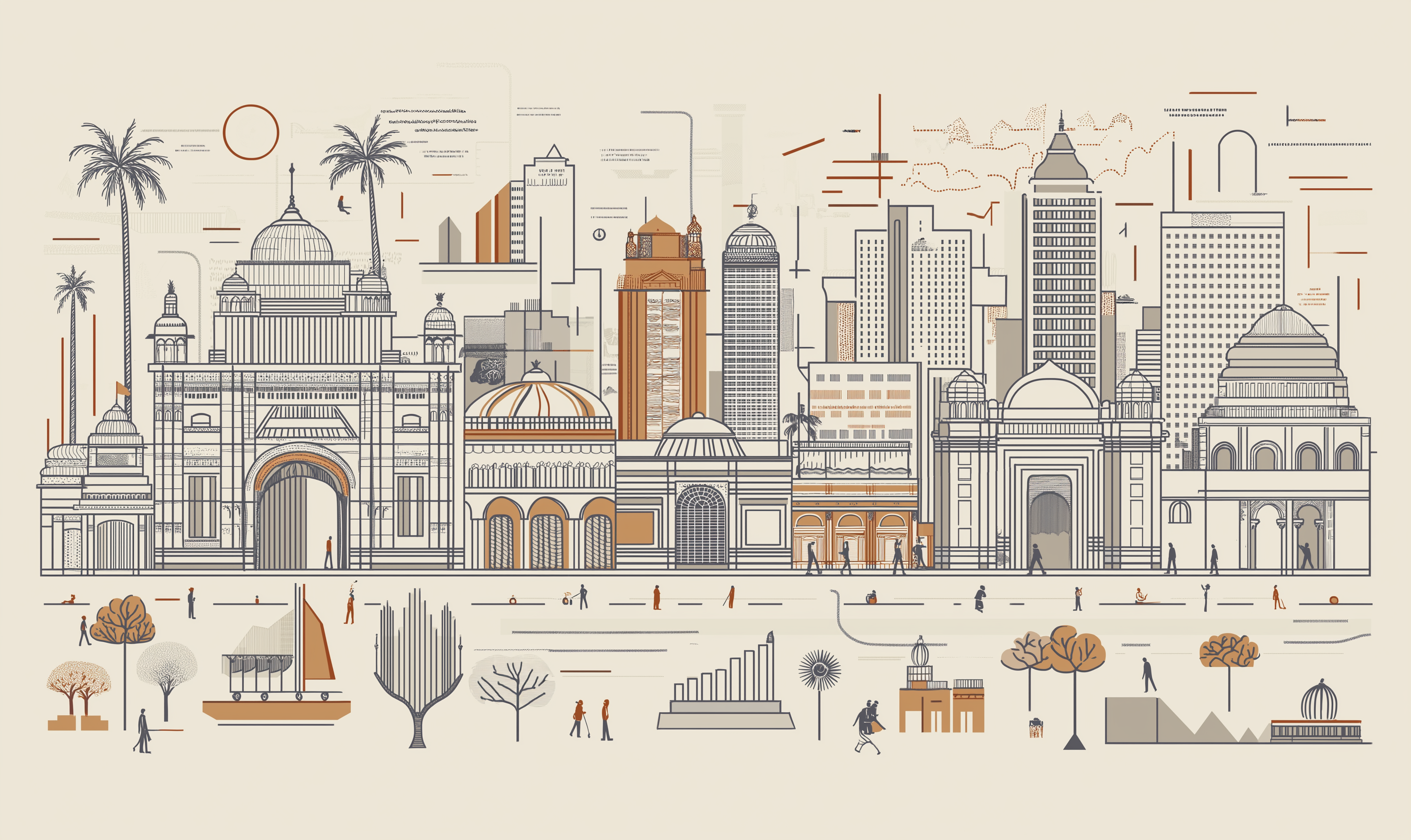
While Indian art has an ancestral history and plays an active role in the present, it is still grossly underappreciated and a side note within the larger conversation in forums such as Art Basel, the Venice Biennale, and Frieze. It is true that earlier Indian modernists such as S.H. Raza, M.F. Husain, and F.N. Souza paved the way for international collectors to start taking Indian art seriously, but recent Indian artists fail to enjoy the same opportunities. But then again, this is not an indication of a lack of skill since the Indian art market has good enough rational male structures, infrastructure, and culture to be able to harness global appeal. Furthermore, I shall also discuss the scope of Indian artists on the world stage, the impact of art organizations in India, and finally the challenges of technology penetration in India regarding the global art community.
A duality of tradition and modern defiance
The Indian art marketplace can be described as having a strong historic past that coexists with a fast-growing present. It has a history dating back to ancient times steeped in the art of miniature paintings, temple creations, and tribal creations. Despite the fact that these art forms are popular, especially among ethnographic and historical exhibition centers, how they gel with the contemporary Indian art world is often a challenge. Modern Indian art finds itself in two opposing worlds—one that wants to wear the Indian label and one that contains a global aspiration—a combination very few artists have managed to achieve.
Art critic and historian Geeta Kapur argues that Australian art has Indian art that at times resides within western restrictions of ‘truth’ or ‘exotic’. This becomes a deficient framework in which Indian art is at times criticized or removed from appeal for not adhering to the Western concepts on how the art labeled as `Indian’ ought to look or the themes it ought to express.
Limited infrastructure and market determinants across India
One of the major reasons why the Indian art market has not quite been able to earn recognition on a global scale is the inadequate infrastructure supporting contemporary art within the country. Very few large galleries are able to advance artists and their works across major geographies. In India, the rudimentary system of private endowments, few public contemporary art museums, and irregular patron engagement often make it impossible for new Indian artists to get help locally as well as internationally.
Again, there has been some effort from the houses—Christie’s and Sotheby’s do feature Indian modernists in their South Asian art auctions, but this is more a tribute to early modern Indian art rather than a reflection of the current context of the art market. The absence of institutional support also inhibits more emerging voices from different sectors, which ends up making Indian art more muted instead of developing a clear, unified artistic voice that can work internationally.
The viewpoint of value perception in the art market in an Indian context also has certain peculiarities. Given an immature domestic art market, the valuation of Indian contemporary artworks tends to be lower than that of Western. As a result, Indian art loses its appeal to international patrons and galleries as somewhat of a lower rank or investment grade even when high praises are offered to select Indian artists. Yamini Mehta, an art consultant, pointed out that in a domestic market dominated by low-priced art that fails to meet the test of demand, prospective buyers of Indian art tend to shy away from international art markets.
Furthermore, there is still a lack of considerable Indian private collectors who are able or willing to alter such impressions by bidding on highly profiled items. Compared to Indian collectors, which are small in number, they are generally more aggressive than international ones. With fewer private and institutional individuals who are willing to back new forms of Indian artworks, the Indian art market suffers from a lack of international recognition.

A Complicated Dynamic with Western Galleries
The Western art sphere is an additional hindrance to most Indian artists. When it comes to Indian artists, galleries in the West mainly seek to find individuals who speak the same tonality and story instead of capitalizing on the variety that Indian art has to offer. It can be very overtly said that this approach further makes the interaction of the art aspects solely with a crust of Indian post-colonialism or political ideas while neglecting the multitude of identities and ideas that are in abundance in contemporary India.
For instance, fusion artists such as Anish Kapoor and Bharti Kher are well known, but they hardly fall into the norm; many argue that they are “fusionists’ with one leg in the west. Kher has pointed out in interviews that western galleries are very shrewd in terms of putting money on Indian art as it is considered to have a narrow client base and low market depth. This is in sharp contrast to the situation with Chinese or Japanese pieces of art, which have an entire ring of audiences and a well-known network of galleries to support them both within and abroad.
The Global Relevance Dilemma: Content, Audience, and Cultural Translation
The Indian art in itself has a specific meaning in terms of understanding in the global context. Most of India’s contemporary art is related to localized Indian culture, religion, and politics, which, though globally significant, may not be easy for foreigners to appreciate. The westerners are more likely to speak about their identity and heritage in a context that is more palatable for an international audience, whereas the Indian artists have to deal with aspects that are much more complicated to comprehend from a cross-cultural perspective.

Geographical Diffusion in Indian Art Market—Delhi as the Core and Mumbai as the Peripheral Node
The Indian art market is characterized by a geographical division that separates the art hub of Delhi from Mumbai. New primary sales happen mostly in Delhi, but subsequent ones are generally staged in Mumbai. This is one such characteristic of the Indian art market that determines the socioeconomic and cultural features of any region, let alone the way it is produced and valued.
Due to its status as the political center of India and its importance to Indian culture, Delhi is home to a number of major galleries, cultural institutions, and foundations that help launch the careers of artists. Most of the galleries in the city focus on the emerging artists enacting debut showcases and the established ones. It is through galleries such as Nature Morte, Vadehra Art Gallery and Gallery Espace that Delhi becomes the hub of activity for artists and collectors/institutions and new abstracts of art are presented. The presence of state and private patronage of arts in all their forms constitutes the cultural ecology of the city and, as such, provides an ideal environment for the development of emerging artists and their first contacts with the markets.
India’s art capital, Mumbai, is the only place where the secondary art market exists—a place where artworks are bought and then sold at an increased value. As a result, the city has a sizable and economically powerful collector community, rendering Mumbai crucial in terms of pricing and the reselling of Indian art. A large part of the secondary market is tied up with auction houses and art investment firms that are located in Mumbai, adding to the speculation of an artist’s work being an investment. Artists’ long-term market existence is affected by this scenario, as once secondary market penetration is achieved in Mumbai, it improves an artist’s status as well as income considerably.
Nevertheless, this geographic separation poses challenges for a substantial number of artists. On the one hand, apart from Delhi galleries, which aid an artist in kick-starting his career, Mumbai secondary market exposure is essential for them to grow and stay relevant in a competitive marketplace. Such atypical division of a market curtails the smooth progression of the artists’ careers and results in a cluttered market setting that may be challenging to navigate for domestic and foreign buyers intending to have an all-inclusive experience with Indian arts.
Art Foundations in India: Nurturing Talent, But Lacking Market Savvy
As far as nurturing and supporting emerging talent is concerned, it is safe to say some of the Indian art foundations have come forward to the cause even though they struggle with knowing how to help the artists commercially. Important pillars of India’s art infrastructure, such as the Kiran Nadar Museum of Art and the Kochi Biennale Foundation, are helpful in enhancing the practices of young artists by providing them venues through which they can showcase and promote their work. These institutions nurture practices such as creative experiments, curatorial assistance, and resource allocation, which help sustain a good artistic system. Regrettably, a significant number of these institutions fail to offer adequate support for market engagement and sales strategies, resulting in artists facing unfair disadvantages in the business side of the art industry.
For instance, even when they manage to get curatorial support from foundations to be able to exhibit or go for a biennale, these foundations do not provide them with opportunities to establish contacts with collectors and learn of the prices prevailing in the market and the workings of galleries. In other countries, such as the US, China, and others, foundations and institutions do not only encourage artists but also assist in selling their works to buyers and collectors by getting them into galleries and developing their market image.
Lack of commercial training can prove to be a bane for Indian artists in the long run. While many such artists have potential, it appears that not many of them have exposure to selling their work or estimating its worth. This in turn prevents them from being financially well off or from generating a consistent interest from potential buyers. Such a disconnect further inhibits Indian artists from growing on a global level since potential buyers on foreign shores want artists to have a high level of financial understanding as well as commercial awareness. In comparison, countries where art markets have matured and professionalized offer institutional frameworks that prepare artists not only on the artistic side.”
Art and Technology: An Indian Perspective
An Indian perspective of the art world is incomplete without touching on the barriers that technology forms for artists. It is no surprise that technological amenities are not widespread within Indian art galleries, which in turn reduces the outreach of art produced in the country. For Indian art to flourish in light of a global market, it is essential for art galleries in India to adopt a more target-centric approach when marketing. As evident in this time and day, a predominant number of galleries worldwide focus on a larger target market of buyers segmented digitally. In contrast, Indian art galleries have been wary of such tools. Even this pandemic proved the importance of having digital infrastructure. Virtual exhibitions, online auctions, and digital viewing rooms became more than just helpful facilities; they became necessary components, but many Indian galleries had difficulties making that leap.
As a report by FICCI in 2021 states, only 20% of Indian galleries had an online selling platform as opposed to more than 60% in the galleries in Europe and North America, which is worrying. The in-personing of the majority of Indian galleries revolves around exhibitions, in-person private purchasing, and conventional promotion. Personal interaction is important; however, the global art market is beginning to depend more and more on technological solutions that can offer a wider reach, close deals, and engage collectors across the globe. So as it stands now, Indian collectors do not have many options given their galleries do not have strong coverage, as buyers are now demanding that they have access to exhibitions, forums and even walkthroughs of the galleries.
In a global art market in which stylistic online markets such as Artsy and Artspace and 1stDibs claim international reach and direct interest from buyers, Indian galleries are underrepresented. Thus, Indian art suffers from a lack of demand among foreigners because of the absence of digital engagement. The current flux is not only a barrier to the expansion of Indian galleries but also alienates the younger generation of collectors who are more tech-savvy and found in India, as the space devoted to contemporary Indian art seems unapproachable to them or out of sync with trends.
A Good Development: Art Fair From Delhi to Now Mumbai in 2024
The India Art Fair is an important event in the Indian art market where collectors, artists, and galleries across the world come to New Delhi each year. However, this will not be the case starting 2024, as the fair will now also take place in Mumbai, which is an important milestone for India’s art market. This will help close the distance between Delhi’s primary art market and that of Mumbai’s secondary market. Such an outcome will harmonize the art firmament by creating a single marketplace for both Delhi- and Mumbai-based collectors, galleries, and artists.
Bringing the event to the country’s financial hub would most likely enable the fair to attract a wider and more varied audience, which includes investors. The Delhi Fair is expanding to Mumbai, and with it, a large portion of the investor-driven collection base, such as those interested in contemporary and investment-grade art, is moving with it. This is expected to have the opposite effect by encouraging a higher number of Mumbai collectors to take a more hands-on approach to the rest of India’s financial and artistic potential.
The development of the India Art Fair, in turn, may help the city of Mumbai’s art market receive greater international marketing because all the major media in the world, a large number of curators and collectors, focus their attention at the event. This might help in the embedding of the art market in India, where the creators have the potential to build a link between their works in the primary as well as secondary markets and, more so, work closely with a diverse range of collectors. In addition, the relocation to Mumbai is likely to result in the local galleries adopting online marketing elements; more art fairs, as time goes on, will integrate online images of their exhibitions, catalogs, and even live programs.
Strategic solutions for enhancing the art market in India
In order to take care of these issues, a well-planned blueprint should be set in motion to take into consideration the fact that the Indian art market is one that brings together artists, gallery modernization, oceanic residents, and digitally secure lawyers.
Transitioning from the Primary to Secondary Market: To tackle this disconnection that exists across the primary and secondary industries, the possibility of strengthening the connections that exist between the collection network based in Mumbai and the galleries available in Delhi can be explored. Creating primary and secondary sale networks that are more interlinked enables the market to be more cohesive, not only for the artists but also for the collectors.
Being able to understand how the art world functions includes knowing how to market yourself and your artwork. Foundations and art organizations have the responsibility to exhibit the true potential of an artist by providing them with training on art business, marketing, and sales techniques. Such initiatives, like artist workshops, which cover the key elements of engaging with the market, pricing, and collecting, would enable the artists to better combine the act of producing art with the commercial aspect within a given society. Collaborative efforts can be developed with art business schools or art commercial advisors who can help the artist survive in a tough market.
Government Aid or Private Nonprofits: E platforms + Wagnerian Approach = Workable Fusion: The Indian galleries need to adopt and, most importantly, integrate themselves within the digital era. Some of the factors, such as government aid or industry grants and even collaborations, can aid in the integration of a digital first approach within galleries and thereby make Indian art more marketable to global consumers. The readers must understand at this stage that the use of digital technology is to enable galleries to engage foreign clients through the use of the viewing rooms of Artsy and Art Basel and target younger and Indian clientele who are used to engaging in the digital world.
India Art Fair And Its Expansion It’s sometimes said that art has the power to unify these nations. India represents a tremendous opportunity because the Indian art market is characterized by a strong national identity that’s still evolving. The new trend to establish the India Art Fair in Mumbai is an opportunity well worth seizing, but bringing the same sort to other metropolitan areas is also bringing diversity and growth. Plentifully organized, this two-tier fair brings an opportunity for networking and integration, strengthening the Indian art market and making it more appealing to global collectors.
The Indian art market is to be given a large boost given the amount of talent and cultural heritage that India has, as it can be a great addition to the world art stage. Although that is not the case in its entirety since there is present an internal structural divide to its full unlocking, weak self-support, gone mid-level tech issues, and non-synchronized outfitting. Once these issues have been rectified (that is, there is a successful bridging of the regional gap, a strengthening of the digital front, arming artists with business knowledge, and introducing initiatives like the India Art Fair), Indian art could easily create an ecosystem whereby there could be an influx of modern art locally and globally. The efforts to showcase the India Art Fair in Mumbai are encouraging. With wise investments and strategic planning, the Indian art market has the potential to endure over time.




Leave a Reply