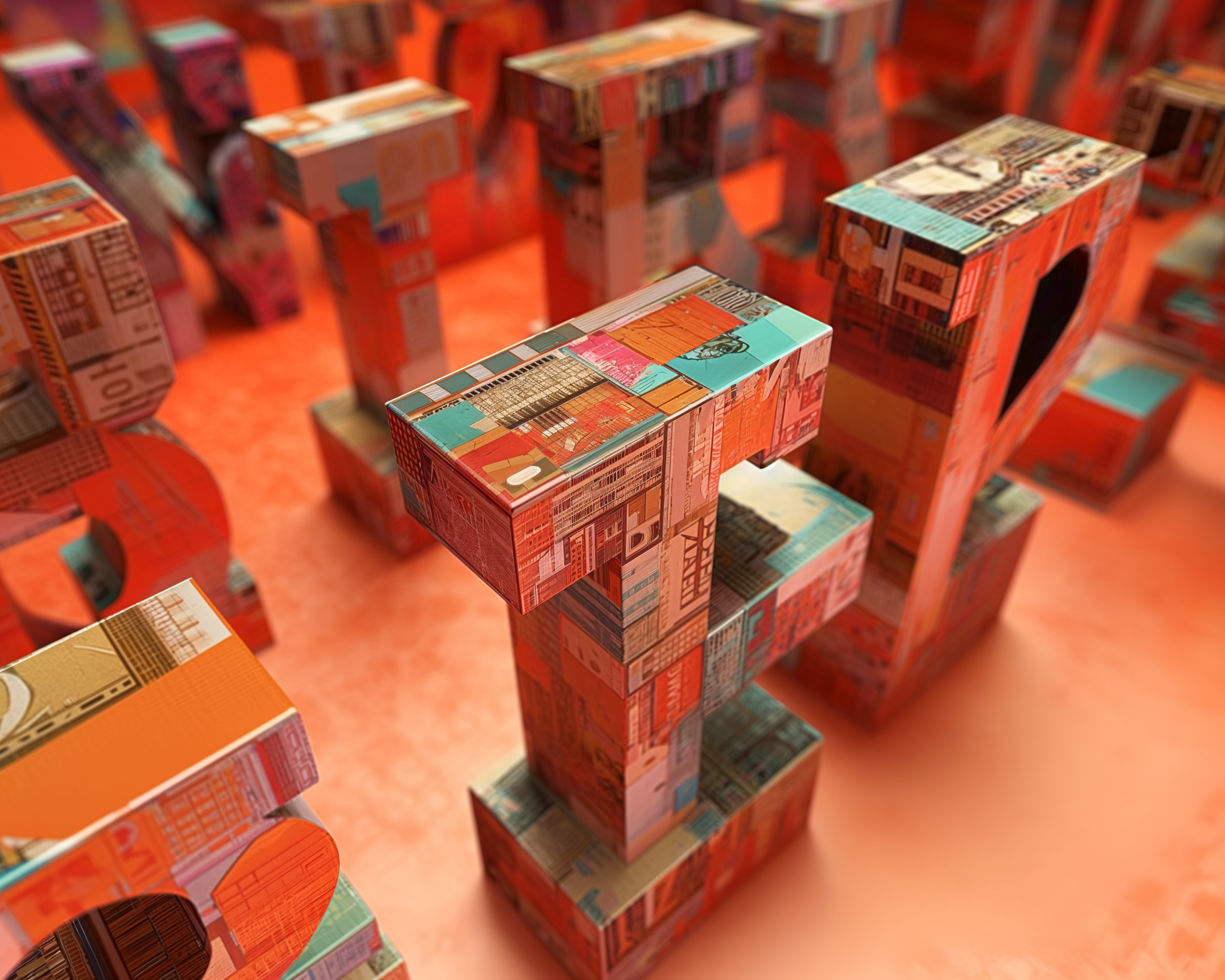
Digital typography is more than just a way to present text; it’s a captivating blend of technology and artistry that has evolved over decades. Its journey began in the 1970s with the rise of personal computing. Imagine those early days when computers were just starting to make their way into homes and offices. Back then, text on screens was composed of simple bitmap fonts. Each character was a grid of pixels, quite basic and limited in versatility. Yet, these rudimentary fonts set the stage for the incredible advancements that would follow.
In the 1980s, the world witnessed a revolution in typography with the introduction of vector fonts. This was a game-changer. Unlike bitmap fonts, vector fonts use mathematical equations to define the shape of each character. This meant fonts could be scaled to any size without losing quality. Adobe’s PostScript technology took this further by enabling high-quality text rendering, revolutionizing digital printing and typesetting. This was a period of immense innovation, and it laid the groundwork for what would come next.
The late 1980s and early 1990s saw Apple and Microsoft introducing TrueType, a new font standard that combined vector outlines with advanced hinting techniques. Hinting adjusted how fonts displayed on screens, improving legibility at low resolutions. TrueType quickly became the dominant font format, offering designers greater control over how their work appeared across different devices.
As the internet grew in the 1990s and 2000s, typography faced new challenges. Web designers initially had to rely on a limited set of “web-safe” fonts to ensure consistency across different browsers and operating systems. However, the introduction of web fonts, facilitated by the @font-face CSS rule, was revolutionary. Designers could now embed custom fonts directly into websites, leading to richer and more diverse online experiences. Services like Google Fonts and Adobe Fonts democratized access to high-quality typefaces, making it easier than ever to create visually stunning websites.
The mobile era brought its own set of challenges and opportunities for typography. Smartphones and tablets required fonts that were highly legible at small sizes and adaptable to different screen resolutions and orientations. Responsive typography became crucial, adjusting font size and layout based on the device being used. Apple’s San Francisco typeface, designed specifically for its devices, exemplified the importance of custom typography in creating cohesive user experiences. Similarly, Google’s Roboto, the default typeface for Android, highlighted the role of typography in defining brand identity and enhancing usability.
As digital technology advanced, typography began to be recognized not just for its functionality but also as an art form. The design of each letterform, the choice of typefaces, and the arrangement of text on a page or screen became crucial elements of visual expression. This artistic dimension was particularly evident in the resurgence of hand-lettering and calligraphy. These traditional art forms blended with digital technology to create script and decorative fonts that mimicked the fluidity and variability of hand-drawn letters.
Typographic posters are a perfect example of typography as an art form. Designers like Josef Müller-Brockmann created minimalist, grid-based posters that emphasized clarity and order. His poster for the Zurich Town Hall is iconic, using typography as the primary visual element to communicate information effectively. In contrast, Paula Scher’s bold and expressive use of oversized, vibrant text in her posters for the Public Theater in New York created a powerful visual impact, showcasing the artistic potential of typography.
Expressive typography further blurred the lines between text and image. Stefan Sagmeister’s work often used handwritten text to add personal and emotional dimensions to design. The album cover for Lou Reed’s “Set the Twilight Reeling” is a prime example. Similarly, Neville Brody’s work for “The Face” magazine challenged conventional typographic design, using bold and unconventional typefaces and layouts.
Typographic installations brought text into the physical realm. Fiona Banner’s large-scale typographic sculptures transformed text into physical objects. Her piece “The Nam,” featuring entire books rendered in massive text, created a spatial and immersive reading experience. Jenny Holzer’s LED installations used scrolling text to convey powerful messages in public spaces, exploring themes of power, violence, and social justice.
Lettering artists like Jessica Hische and Dana Tanamachi brought a personal touch to typography. Hische’s intricate and whimsical letterforms have been used in book covers, branding, and advertising, showcasing the artistic potential of hand-drawn typography. Tanamachi’s large-scale chalk lettering murals transformed everyday surfaces into works of art, both detailed and ephemeral.
Kinetic typography added motion to the mix, creating dynamic and engaging visual experiences. Saul Bass’s work in film title sequences, such as “Psycho” and “North by Northwest,” used kinetic typography to great effect. Today, kinetic typography is widely used in digital advertisements and explainer videos, with Apple’s product videos often featuring animated text to highlight key features.
Interactive typography took things a step further, making text a participatory art form. Projects like Jonathan Harris’s “I Want You to Want Me” used interactive installations to visualize data from online dating profiles, creating immersive and interactive experiences. Websites like “Type Scale” and “Fontjoy” allowed users to experiment with different typefaces and layouts, making typography accessible and engaging.
In book design, typography played a crucial role in storytelling. Jonathan Safran Foer’s “Tree of Codes,” with its die-cut pages, created a three-dimensional reading experience that merged visual art with literary text. David Carson’s groundbreaking book design for “Ray Gun” magazine challenged traditional layout and typography rules, making a significant impact on graphic design.
Street art and murals brought typography into public spaces. Artists like Ben Eine and Banksy used large-scale typographic murals to transform urban environments, turning text into powerful visual statements. Eine’s bold, colorful letters and Banksy’s use of typographic elements to convey messages showcased the artistic potential of street typography.
Technology has continued to push the boundaries of typographic art. Tools like Adobe Illustrator and FontLab allowed designers to create and refine typefaces with unprecedented precision. Variable fonts, a recent innovation, enabled a single font file to contain multiple styles and weights, providing greater flexibility and control. Artificial intelligence and machine learning began to influence type design, automating aspects of the process and enabling new forms of typographic expression.
Augmented reality (AR) and virtual reality (VR) opened new frontiers for typography. AR applications like Craig Ward’s “AR Typography” overlaid dynamic typographic elements onto the real world, creating new dimensions of interaction and engagement.
Typography, as an art form, is a dynamic and integral part of contemporary design and communication. By blending aesthetic judgment with technical expertise, type designers and artists create works that are not only functional but also visually compelling. From typographic posters and expressive lettering to interactive installations and kinetic text, the art of typography continues to push the boundaries of visual expression. As digital technology advances, the possibilities for typographic art expand, ensuring that typography will remain a vital and evolving form of artistic and communicative expression. The future of typography promises even more innovative and immersive experiences, making it an exciting field to watch and explore.



Leave a Reply