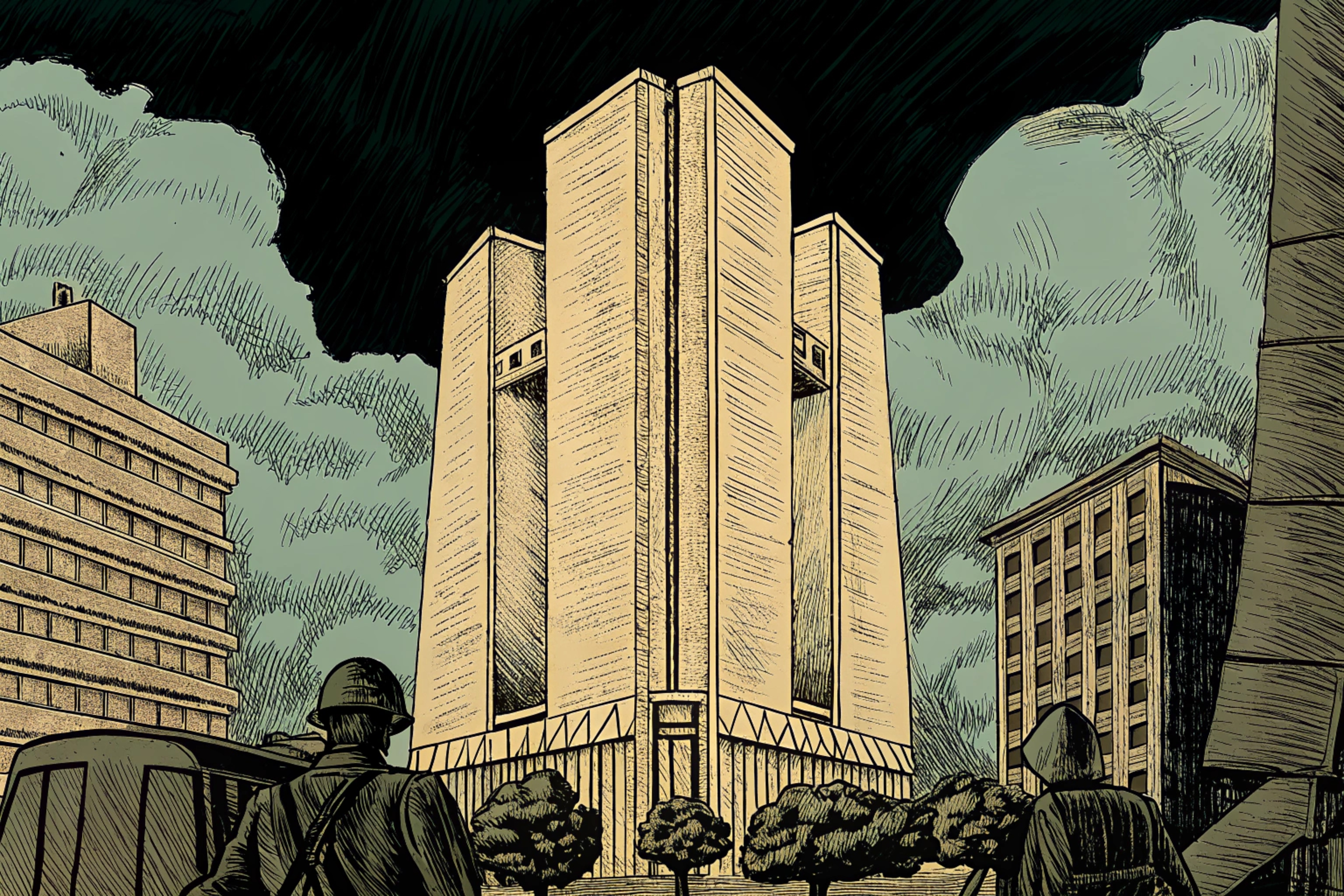
Brutalism is a solely architectural style that communicates the social, political, and economic environment of the twentieth century. The style started in Europe after the Second World War and expanded around the world, with powerful designs that celebrated resilience, advancement, and extreme ideas. In this case, we highlight five different ways in which brutalism shaped the world: reconstruction, politics, housing, culture, and legacy. This explorative approach is useful in allowing us to understand whatever challenges the brutalist ideologies faced in society.
1. Reconstructing The World: The Inception of Brutalism
As a result of the Second World War, cities in Europe were left in a state of extreme destruction that needed a well-thought-out architectural response. The style was born in the UK as a response to this crisis, having realized that there was a shortage of skilled labor and materials, and so designs had to be reasonably intelligent, seek to be completed quickly, and, at the same time, be cheap.
Creating and Delivering at a Functional Cost
One of the men who inspired brutalists is modernist architect Le Corbusier, who suggested the use of raw concrete and that architecture could be designed to improve people’s lives. His example includes Unité d’Habitation Marseille, France, 1952, where he was able to achieve the above concept of living while only using atrocious close ratio settings for Aeroscape. The building included shops and spaces for people to interact together, and given that the war had created an extreme shortage of shelter, this made the structure an innovative way to resolve the issues.
The Smithsons on Brutalism
Alison and Peter Smithson are, in his words, “precursors of New Brutalism.” And, as if that isn’t enough, the couple also established the foundation of British brutalism, their contribution reaching its peak around the 50s. Their earlier works, like Hunstanton School, built in Norfolk, remain a classic testament to the brutalist era. The focus on the materials and the strength of the structure was at the core of their effort. The Smithsons’ philosophy was in line with the world at the time, as it was practical—it was a world emerging out of chaos in which architecture needed to be functional.
2. A Political Manifesto in Concrete
Brutalism was not just a building style; it was a political statement that gave out an identity. With its ballistic forms and utilitarian focus, it gave a sense of dominance that many governments were eager to acquire.
Previously, socialism and its themes were closely linked. As the state intervened more in economics, brutalist architecture became representative of them. The ostentatious installations expressed the absence of decor and matched perfectly with the ideology of accessibility and practicality that was socialism.
• A brutalist structure built in Poland in 1955 is known as the Palace of Culture and Science. This even needless to say, served the purpose of a demonstration of socialist expansion and its significance.
• The Buzludzha Monument, situated in the heart of Mount Danglesh in Bulgaria, was in fact a raving tribute to the Bulgarian Communist Party. It remains in ruins to serve as a reminder of the trials of the old regimes.
Brutalist architecture in civic spaces with an emphasis on democracy
The Eastern Bloc’s brutalist structures were essentially neighborhood centers that fostered democracy and emphasized community responsibility. Public structures that stressed ease of access and use were commissioned by the governments.
• “No more fascist city”: This building that dominates the landscape of America is free of any complex designs. A sign in the lobby proclaims, “No more fascist city.” The phrase and the building underscore brutalist ideals with such grace and beauty.
• “Cubitt Gardens”: The purpose of this contest was to design a brutalist apartment complex. The goal was to express brutalism as a combination of forms that served a single purpose in Greater London. The center is focused on brutalism, bringing life to London and serving as the new utopia.
3. Democratic Spaces The Social Purpose of Brutalist Structures
Many brutalist structures catered to the post-war housing issue in Europe, including slums in Covent Gardens. Architects associated with the movement attempted to design effective buildings that would cost less and meet society’s needs.
Architectural Imaginations of Soviet Experts in Family Housing.
There were numerous buildings built throughout history, beginning from the Soviet Era, which targeted the working population by providing modern buildings that served household needs. Such buildings were accompanied by shared spaces where people could engage with each other.
• Grand designs sleeve: These buildings were equipped with elevated terraces connected to stairs as part of their grand design. These projects kickstarted a revolution and created an entirely new approach to family housing along with the rise and spread of severe capitalism.
• Habitat 67, Montreal, Canada (1967): Moshe Safdie’s modular housing complex reflects a new turn in urban lifestyle by juxtaposing brutalism and understanding architecture differently. Today, Habitat 67 is viewed as a remarkable realization of innovative and socially responsible architecture.
Cultural and Educational Applications
It encompassed universities and cultural spaces that were designed to increase people’s interest in the general public and ordinary people’s education.
• University of São Paulo’s Faculty of Architecture and Urbanism, Brazil (1969): This work, designed by João Batista Vilanova Artigas, attempted to attain the social aims of brutalism by letting people of all walks of life use and enjoy it.
• National Arts Centre, Ottawa, Canada (1969): This establishment’s art collection, coupled with its bold geometric forms, was a fine example of how architectural brutalism was able to complement art with functionality.
4. Global Influence: Brutalism Outside Europe
The combination of functionality and durability, in general, broadens the fierce brutalist theme out to places all over the world, regardless of their cultural or environmental context.
Asia and the Middle East
• National Assembly Building, Dhaka, Bangladesh (1982): Louis Kahn’s iconic brutalist structure synthesized regional elements and monumental concrete forms, while a combination of sunlight and water enveloped the site, almost creating a religion for it.
• Iran Center for Management Studies, Tehran, Iran (1970s): Another result of Arthur Erickson’s brutalist design, wherein thickened concrete supported the campus to protect it against harsh desert conditions, exemplifying the movement and its persistence to change with a fast-evolving world.
Post-Colonial Africa
In Africa, after colonialism, brutalism emerged as a unique architecture and a break from the commissioned local architectural designs.
Kenya International Conference Centre, Nairobi, Kenya (1973): A cylindrical brutalist structure, the center epitomized Kenya’s dreams of becoming modernized and interconnected to the world.
The Americas
Boston City Hall, USA: Another civic landmark that stressed brutalism’s ability to reify the tenets of democracy.
Habitat 67, Montreal, Canada: Prominently recognized for its futuristic visions of brutalism.
5. Aesthetic Debate and Enduring Legacy
The style and form of brutalism, throughout history, have always remained contentious issues. Proponents of this style, some for its brutal honesty and ruggedness and structure, while others for its sheer strong character, opponents see it as utterly bleak and eroding humanity’s innate instincts.
Criticism and decline.
Brutalism in housing architecture enjoyed its period in the 1970s but then suffered criticism throughout the 20th century because it was associated with neglected housing estates and bureaucratic institutions.
– In the 1970s, the Pruitt-Igoe Housing Complex in St. Louis, USA, was demolished, becoming a representation of the defeatist ideals of utopian development of architecture.
– As many leveled accusations that they were cold, unfeeling, inhumane designs, countless numbers of brutalist structures and designs were sanctioned for demolition or simply abandoned.
Revival and Reappraisal
Recently, there has been a revival of interest in the principles and styles of brutalism. Architects, conservationists, as well as culture fans, have started appreciating it for the aggressive aesthetics and its importance.
• Barbican Conservatory in London, UK: The Barbican, once viewed with disdain, is today regarded as a work of art in relation to its brutalist style and as a cultural center.
• Habitat 67 in Montreal, Canada: Its new construction can still be seen shaping the social construction of cities—a brutalist amenity in constructing solutions for the onset issues.
The Brutalism That Won’t Let Up
The modernist infrastructure, along with materiality seen in brutalism, crystallized visions, and the ability to capture the paradoxical nature of socio-political schemes, witnessed in the 20th century. Whether it be the rebuilding of Europe after World War II or the newly colonized African states, this style embodied the quest for health, equality, and progress around the globe.
Regardless of its polarizing view in terms of how it looks, brutalism remains a powerful reminder of the capability that architecture has with regard to how it acts and puts forth society. As it makes a comeback, the renewed interest that people have in it forces them to contemplate the connection between design, function, and ideology. Brunalism was and is a bold statement that unapologetic about its time and shaped architecture and humanity, whether you like it or not.





Leave a Reply