The announcement of Art Basel’s newest fair, which will take place in Doha from February 5–7, 2026, is much more than just a new location for the world’s most famous art fair brand. It means that there will be a planned, radical, and possibly necessary experiment at a time when the global art market is at a very important turning point.
Art Basel Qatar 2026 is not a chance to make money in a rich new market; it is a high-stakes response to the systemic pressures, rising costs, and widespread “fair fatigue” that threaten the very sustainability of the traditional art fair model.

The art world has had an “always-on” calendar for years. This means that galleries have to deal with a never-ending stream of international events that are very expensive and hard to plan. Fairs are still a very important way to make sales, but the model has become more and more risky. Costs for everything from shipping and booth fees to travel and hospitality are going up, which has made profit margins very thin. This is a make-or-break situation for many, especially small and medium-sized galleries. As a result, the market has shrunk, and 129 fairs have closed in the last five years alone, which is like Darwin’s theory of evolution. The global art market is still strong in terms of the number of transactions, but the value at the top end has dropped a lot, which has changed what people expect.
Art Basel is putting its flag in Qatar against this stormy background. The leaders of the group have made it clear that this new project is all about “pushing the boundaries of the art fair model.” Art Basel is using the “blank slate” of a new territory to test a possible solution to the existential threats facing its core business by moving away from the traditional, commercially driven booth structure and toward a new “open format” based on “artistic vision and conceptual rigor.” This means that the Doha edition is not just another stop on the global circuit; it is also a test bed for the future of the art world. This big experiment in the Qatari desert could have a big impact on the international art fair for the next ten years, making it a bellwether event for the whole industry.
Breaking Down the Fair: The “Open Format” and the Curatorial Theme of “Becoming”
Art Basel Qatar’s revolutionary identity is built on two pillars that are closely related: its structure and its theme. Giving up the traditional booth is a big change in the market, and the first theme, “Becoming,” is a smart way to frame cultural and political issues. Together, they express a new idea of what an art fair can be: a place for deep curatorial research and meaningful interaction, not just business.
The Vision for Art Basel Qatar 2026: More Than the Booth
The most important new thing about Art Basel Qatar 2026 is that it is very different from the usual art fair layout. The fair will have an “open-format” exhibition instead of the usual maze of booths where galleries show a selection of works. This new model will have galleries giving solo presentations, each based on a central theme set by the fair’s artistic leadership. This structure changes the fair’s dynamic in a big way, turning it from a market of separate businesses into a single, curated exhibition.
This method effectively breaks down the long-standing barriers between the commercial art fair, the curated biennial, and the institutional exhibition. These three types of events have been coming together as the worlds of trade and curatorial discourse become more and more intertwined. The goal is to make the environment for collectors, curators, and dealers more “resonant” and less “sterile and high-pressure,” which will help them connect more deeply with the art on display. This step recognizes that people in the market want to have more meaningful experiences with art, going beyond the simple buying and selling that happens at regular fairs.
Art Basel’s new idea in Qatar isn’t the first of its kind, but it is the biggest. It can be seen as the institutionalization of an “alternative” philosophy that smaller, more experimental platforms started. Italy’s city-wide Panorama exhibition and New York’s Future Fair are two examples of fairs that have already looked into models that focus on collaboration, site-specificity, and curatorial ideas as a way to fight the high costs and sameness of the mega-fair system. Art Basel is showing that these new ideas have now become mainstream by adopting a similar attitude.
This change, on the other hand, brings a new set of problems and chances for the galleries that are taking part. They will be asked to give up some of their curatorial freedom and make their presentations fit with a single vision instead of doing a self-contained branding exercise in their own booth. In return, they get to show an artist’s work in more depth and context, which is good for them because it adds to the intellectual and critical weight of the whole exhibition. This changes what fair participation is worth. Galleries are no longer just renting space; they are competing to be in a high-end, museum-quality show. This gives you a different kind of return on investment, one that isn’t just based on immediate sales but also on a better reputation for the artist and the gallery, which is a type of cultural capital that may last longer in a market that changes quickly.
Reading “Becoming”: The Gulf as a Living Palimpsest

The theme for the first edition of the fair is “Becoming,” which is a strong and complex idea that means “a meditation on humanity’s ongoing transformation and the evolving systems that shape how we live, believe, and create meaning.” The official literature for the fair calls the Gulf “a living palimpsest—a region where oral traditions intersect with digital networks, and ancient trade routes are reimagined as contemporary flows of culture and capital.” This theme makes the Gulf the main subject of study. In this context, art is seen as a “vital conduit, translating systemic shifts into form,” and it is not only a witness to history but also an “active force in the continual redefinition of human identity.”
This choice of theme is a brilliant example of cultural framing. It directly engages with, and arguably takes from, the critical discourse that has surrounded the Gulf’s rapid development for the past ten years. Artists Sophia Al-Maria and Fatima Al Qadiri came up with the term “Gulf Futurism” to describe an artistic movement that criticizes the existential effects of this rapid, oil-fueled modernization, which has turned the region into a “consumerist dystopia” through “Dubai-ification.” Gulf Futurism, especially when done by the artist group GCC, often uses parody and cynicism to break down the “ridiculous theater” of state-led nation-branding and the “uncanny vernacular” of late global capitalism mixing with tribal structures.
Art Basel Qatar chose “Becoming” as its theme to avoid being accused of being just a soft power tool that shows a clean, government-approved view. One possible weakness of any big cultural event in the area is that people will think it’s just propaganda. The fair, on the other hand, is a place for critical conversation because it makes the process of change and identity building the main subject of artistic investigation. It encourages artists to look into the exact tensions, contradictions, and changes in systems that ideas like Gulf Futurism have tried to bring to light for a long time. This move changes a possible weakness into a conceptual strength by framing the fair not as a celebration of a finished product but as an open-ended investigation into a complicated and ongoing process.
The Artist in Charge: Wael Shawky’s Story-Driven Vision

The choice to make Egyptian artist Wael Shawky the first artistic director of Art Basel Qatar is probably the strongest sign of what the event is all about. It is very unusual for an artist to run a major commercial fair instead of a curator, dealer, or museum director. This choice institutionalizes the fair’s critical-curatorial premise. Shawky’s whole artistic practice, which includes strict and poetic reimaginings of history and myth, serves as a methodological model for the fair’s theme of “Becoming,” giving the whole event an intellectual authenticity that a more traditional appointment could not.
Shawky is known for doing a lot of different types of art, like film, performance, drawing, and installation. His work is known for doing a lot of deep research into how historical and mythological stories are made, shared, and fought over, often going against the dominant Eurocentric views. His most important works are examples of the kind of research the fair wants to encourage. The huge film trilogy
From 2010 to 2015, Cabaret Crusades told the story of the medieval Crusades from an Arab point of view, using 200-year-old Italian marionettes to act out the story. This brilliant idea uses the puppets’ visible strings to look at ideas of control, power, and historical determinism, asking who really controls history. The work is very similar to what the fair is trying to do: to shift the focus of the cultural narrative away from the traditional Western art capitals by giving a voice to people from the Middle East, North Africa, and South Asia (MENASA) region.
His Al Araba Al Madfuna trilogy (2012–2016) is similar in that it shows children from a village in Upper Egypt acting out local parables and myths, with adult actors dubbing their voices. This “poetic inversion” makes a deep meditation on how cultural memory is passed down, the space between innocence and experience, and the blurry line between myth and reality. Both trilogies show a smart way to take well-known stories and break them down using a carefully chosen medium. This process fits in perfectly with the fair’s theme of “Becoming.”
It’s important to note that Shawky is not an outsider who has been dropped into the area. His appointment is backed up by the fact that he is really committed to the local and regional art scene. He started MASS Alexandria in 2010, an independent studio and study program for young artists in his hometown. He was named artistic director of the Doha Fire Station, a top contemporary art space run by Qatar Museums, in October 2024. He has already started the Arts Intensive Study Program (AISP) there. This program is meant to help a group of up-and-coming Qatari and international artists improve their critical thinking and professional skills. This dual role gives his leadership a unique legitimacy because it combines the prestige of being a leader in the global art world with a proven, on-the-ground investment in developing regional talent.
Shawky has said that working on this new format is “extremely meaningful” to him, and he has stressed that it is focused on “research, narrative, and experimentation.” His appointment makes sure that Art Basel Qatar is not just run by an artist but is also seen as an extension of an artistic and intellectual project.
by an artist, but it is meant to be an extension of an artistic and intellectual project. It connects the fair’s business and cultural goals with the well-known critical work of one of the region’s most important contemporary artists, making the whole project make sense and be artistically sound from the start.
The Global Context: Art Basel’s Strategic Move to the Middle East
Art Basel’s opening in Qatar is not just a one-time thing; it’s a major move in a global chess game. Strong economic and cultural changes are changing the map of the international art world. The choice to move into the Middle East shows a planned strategic shift in response to problems in established markets and huge chances in new ones.
Why Qatar? The New Global Art Map and Art Basel Qatar 2026

Art Basel’s move into Doha is a direct and planned response to a changing global market. The MENA region is going through an unprecedented cultural boom, while traditional art centers in the US and Europe are going through a period of cooling and consolidation. High-end sales are down, and galleries are facing economic headwinds. The art market in this area is growing at an impressive rate, thanks to big investments from institutions and the rise of a new, more sophisticated generation of collectors.
Recent market research shows that this is not just a passing trend but a change in the way things are done. A new group of tech-savvy collectors from Qatar, the UAE, and Saudi Arabia are buying art with the intention of keeping it for a long time. They are interested in both regional and international art. For example, sales of modern Middle Eastern art in the UAE tripled between 2020 and 2024. Now, Middle Eastern collectors make up a huge 23% of the world’s demand for contemporary art that costs more than $1 million. This growing group of collectors is a very important new audience for Art Basel. It’s important for the fair’s long-term growth because its traditional audiences are starting to get full.
The way the Qatar fair is set up also shows that Art Basel is starting a new chapter in its global strategy. Art Basel Qatar is different from past expansions because it is meant to be a deep partnership. It is a unique collaboration between Art Basel’s parent company, MCH Group; Qatar Sports Investments (QSI); and QC+, a creative group that works for the state-run Qatar Museums. This “joint venture” model is a big step forward from the “franchise” model. It is a more mutually beneficial and politically savvy way of globalization. The local partner provides the money, infrastructure, and regional legitimacy, while the global brand provides the network, prestige, and operational know-how. This structure makes the venture safer for Art Basel in both financial and political terms by putting the fair in the local power structure and directly supporting Qatar’s national development goals. It suggests a new, more advanced playbook for Western cultural brands that want to grow in new markets. This playbook is based on strategic alliances instead of just being there by themselves.
.
The Local Landscape: Qatar’s Cultural Investment Over the Years
Art Basel isn’t starting from scratch in Qatar; it’s joining a high-tech cultural grid that has been carefully built over the course of almost 20 years. The fair’s arrival is the last step in a multi-billion-dollar national project to make Qatar a cultural center for the whole world. This strong infrastructure gives the fair a strong base for success and sets its launch up as the end of a long-term strategic plan.
His Highness The Amir, Sheikh Tamim bin Hamad Al Thani, started Qatar Museums (QM) in 2005, and its powerful Chairperson, Her Excellency Sheikha Al Mayassa bint Hamad bin Khalifa Al Thani, is in charge of it. The goal of QM is to make Qatar a “vibrant center for the arts” and to use culture to help the country become “innovative, diverse, and progressive.” QM is the “nation’s preeminent institution for art and culture.” This isn’t just about art for art’s sake; it’s a key part of Qatar’s national strategy for diversifying its economy, gaining global influence, and developing a unique national identity.
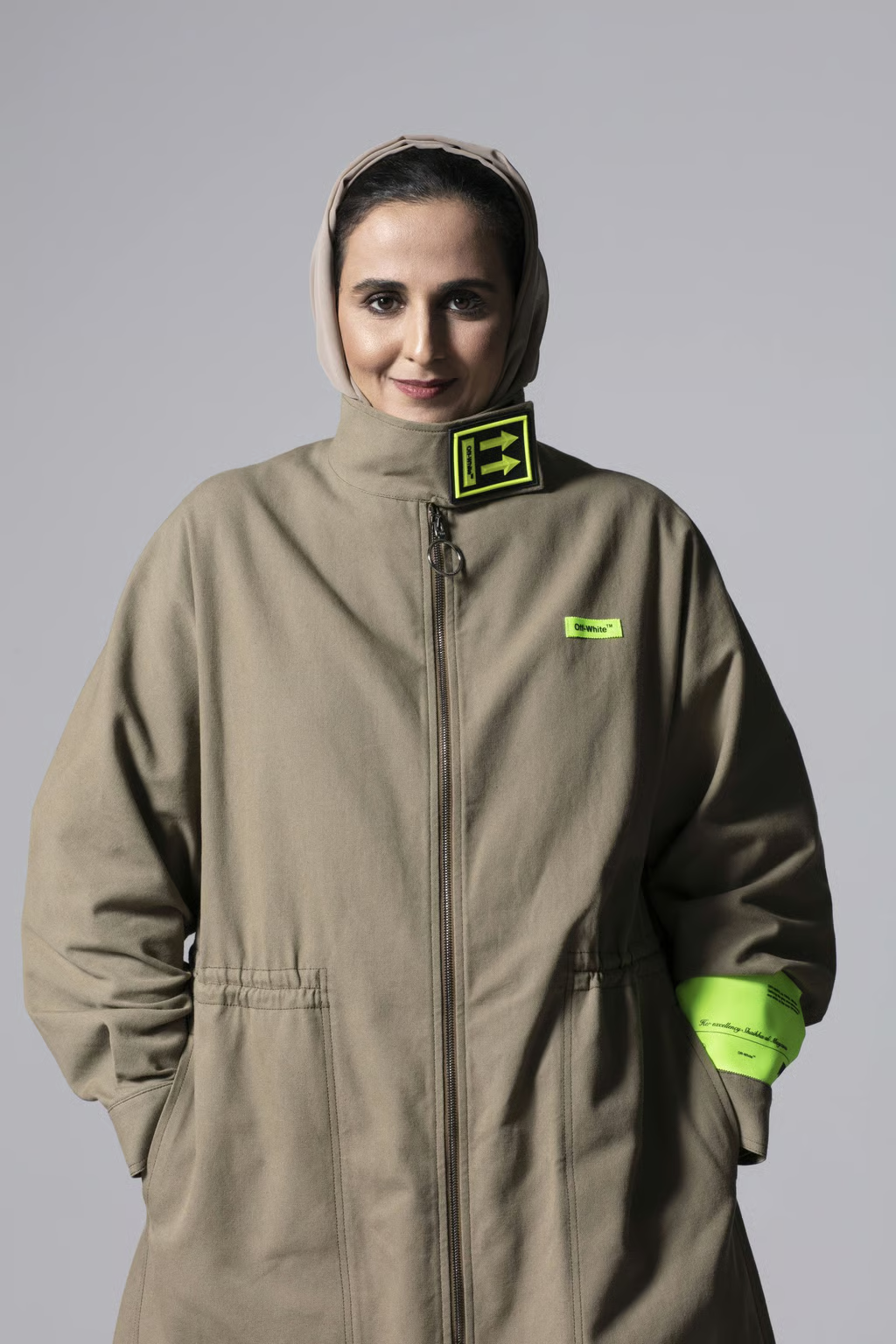
Qatar has built an unmatched network of world-class institutions under QM’s leadership. This includes the famous Museum of Islamic Art (MIA), which I.M. designed. Pei; the National Museum of Qatar (NMoQ), which Jean Nouvel designed to look like a desert rose; and Mathaf: Arab Museum of Modern Art, which has the world’s largest collection of modern and contemporary Arab art. The Art Mill Museum and the Lusail Museum are two big projects that will make this cultural landscape even bigger in the future.
QM has built a thriving network of creative hubs that go beyond museums to support local talent. The M7 and Doha Design District are two great examples of this investment for Art Basel Qatar. M7 is a QM-created “epicenter for innovation and entrepreneurship in design, fashion, and tech” in the heart of Msheireb Downtown Doha. It has incubation programs, co-working spaces, and world-class exhibitions. It is part of the larger Msheireb development, which is a groundbreaking project in sustainable urban regeneration that shows how Qatar wants to combine its history with modernity.
The arrival of the world’s most famous art fair brand is the most logical and final test of this two-decade-long investment in cultural soft power. Qatar has built a world-class airport and is now welcoming the world’s most important airline to make it a central hub. People all over the world will see the success of Art Basel Qatar as proof that the country’s whole cultural project is a success. Not only will ticket sales and hotel bookings show how well this huge investment paid off, but also how relevant Qatar’s culture is to the rest of the world and how well it does on the world stage.
The future of the art fair is curated.
Art Basel Qatar 2026 is going to be more than just a new fair; it’s going to be a major event that could change the way international art fairs work for the next ten years. It comes from a perfect storm: the global art market is facing a systemic crisis of cost and relevance, and the host country has the ambition, resources, and strategic foresight to support a completely new model. The fair’s new format, a curated, artist-led, thematically driven “fair-ennial,” goes against the transactional “art mall” that has taken over the industry.
This experiment is possible because of a unique set of circumstances. The MENA art market is growing quickly, which means there is a new audience that is eager to see it. Qatar has also made a huge, long-term investment in world-class cultural infrastructure, which is the perfect setting for this. The fair’s very DNA is made up of the deep intellectual credibility that comes from hiring Wael Shawky, an artist whose work is based on critically re-examining stories. This is not how things usually go. It shows a deliberate shift away from a model that has grown too big and isn’t working anymore toward one that is more logically sound, experience-based, and possibly more durable.
The stakes are very high. If Art Basel Qatar is successful, it will do more than just create a new market. It will support a new hybrid model by showing that putting “artistic intention” and “conceptual rigor” first is not only good for culture but also good for business at the highest level. This could set a new standard for quality and engagement that other big fairs in Basel, London, New York, and other places may have to follow to stay relevant. It could lead to a change in the way the art world works, making it more organized, less chaotic, and more environmentally friendly.
On the other hand, if the experiment fails—if galleries think the model is too limiting or if collectors don’t care about its conceptual goals—it could make the traditional commercial format even more popular, showing that the market, at scale, prefers commerce over curation. It would seem that the art mall model is the only one that can keep an industry of this size going, even though people are tired of it and are criticizing it.
In any case, the effects will be huge. For the first time in a generation, a real, large-scale alternative to the way things are now is being tried out. It is possible that the future of the international art fair will be decided not in its traditional centers, but in the sands of Doha. It could become something more meaningful or stay the same because of its commercialism.


Leave a Reply