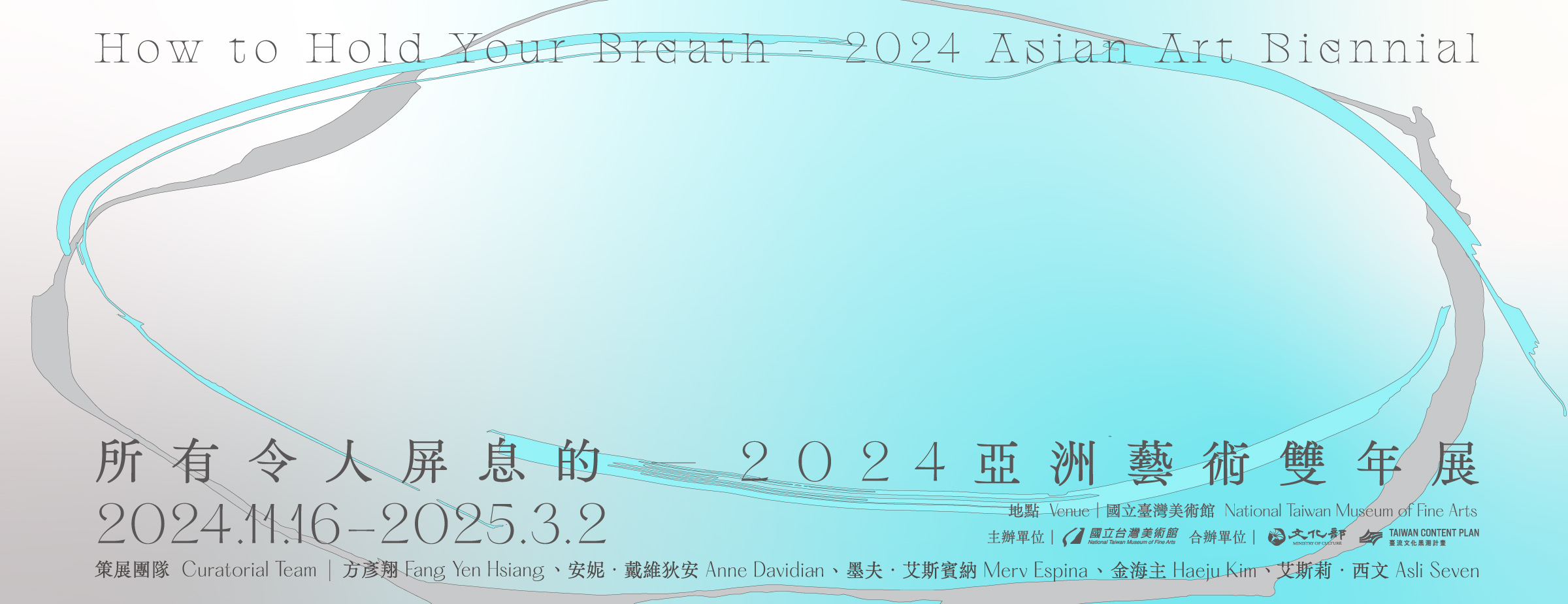
The 2024 Asian Art Biennial—How to Hold Your Breath. This title can easily capture anyone’s attention. The reason is simple: it’s the 2024 AAB, and many artists and curatorial voices from various parts of Asia as well as international will contribute. The theme this time comes closer to the modern times: it deals with such phenomena as displacement, ecological crisis, and anarchy of late capitalism. It focuses on the mechanics—the act of holding on to one’s breath. The event is scheduled to be unveiled on November 16, 2024 and is expected to end on March 2, 2025. The 2024 Asian Art Biennial takes place at the National Taiwan Museum of Fine Arts (NTMoFA Taichung), where its aim is to facilitate important discourses regarding survival, hope, and speculative futures.
Curatorial Team: Connecting Territories and Temporalities
The fourth explicit dimension of the Asian Art Biennial, in this case the 2024 edition, are the curators with whom the exhibition is being prepared. Originally from Taiwan, Fang Yen-Hsiang has now settled in Berlin and not only heads the 2024 Biennial as a curator but has also been involved in several other exhibitions. Other members of the curatorial team who live in various locations across the world are Anne Davidian, situated in Paris; Asli Seven, in Istanbul; Haeju Kim, based in Singapore; and Merv Espina, hailing from the Philippines. Such a diverse team of curators makes the عطاء accrue depth as it integrates multiple regions, each with their own perspectives, making the 2024 Asian Art Biennial a truly multidimensional experience. The inclusion of such a diverse set of regions obviously speaks to the artists involved, but in this case it helps further expand upon the ideas present in the exhibition itself.
From the 35 artist groups to the numerous countries that participated, including almost all parts of the continent, such as East Asia, Central Asia and parts of its outskirts, the main focus was on the Pacific. The choices from countries included 19 new works. For that purpose, by pulling apart such a varied audience, the 2024 Asian Art Biennial will now be known as a fluid space aimed to promote cross-country dynamics centered around common problems of migration, colonization, and decomposition of the ecosystem.
The Asian Art Biennial 2024 Part: Featured Artists with Some of Their Best Work Displayed
An amazing group of artists forms the backbone of this exposition, much like the other aspects that relate to the themes of change, defiance, and optimism in the 2024 Asian Art Biennial. As many as 83 works are “presented” in the Biennale; this included sound and video installations, photography, painting, sculpture, etc. This type of artistic engagement makes it possible for the Biennial to take on the challenges of modernity from different angles, and in so doing, every act of breath-holding becomes an edifice in its own right.
An outstanding work is Andrius Arutiunian’s piece “Under the Cold Sun,” which inverts the stereotypical bore of Western pipe organs into a nauseating, other-worldly frieze. The frequency of sound used within this installation, which is evocative of contexts beyond the installation itself, seems to have no beginning or end and encourages a rethinking of one’s perspective toward both time and space, a motif that runs throughout the Biennale.
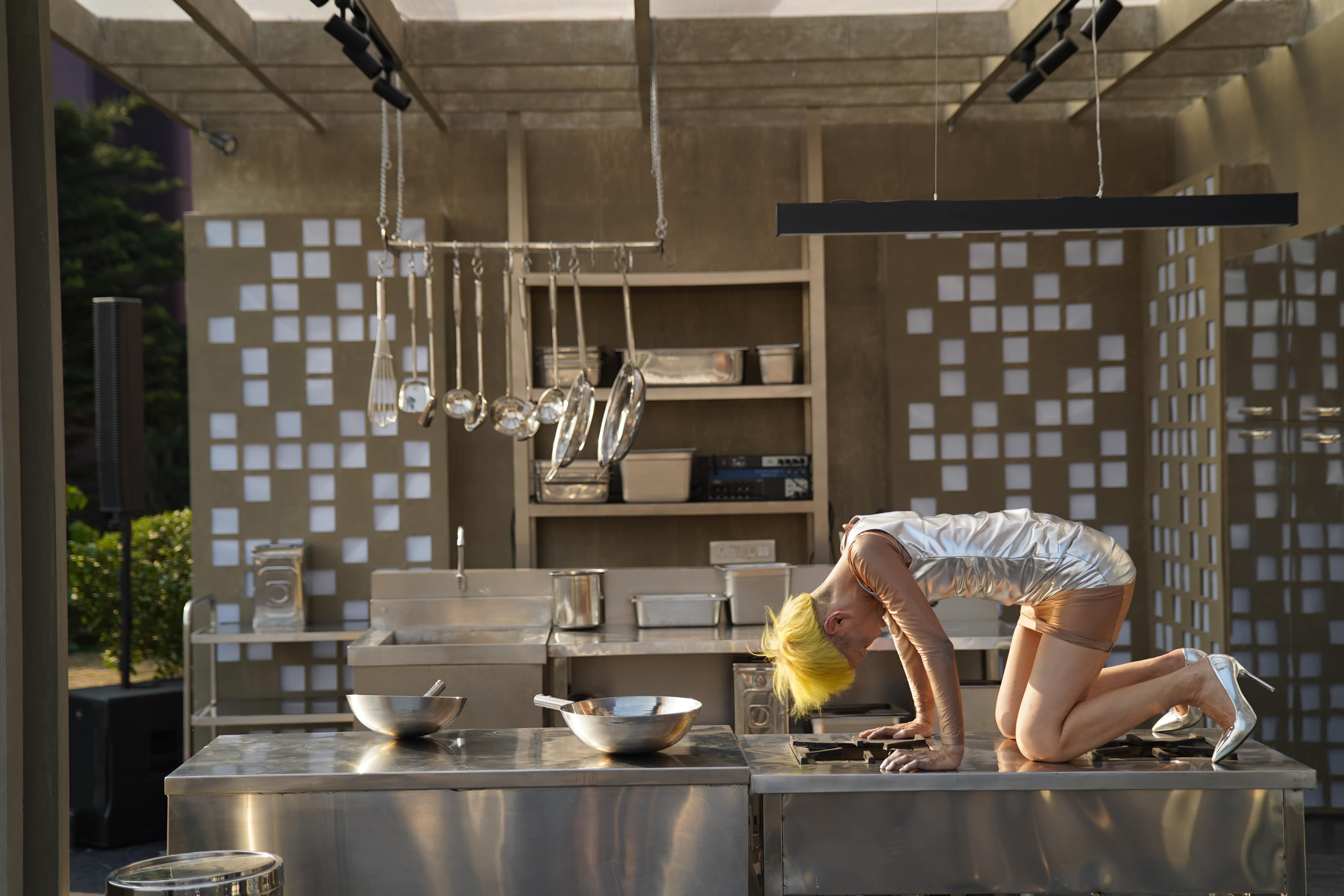
The work of Sharon Chin, “Portal,” which was commissioned afresh, is an installation and performance piece that depicts ecological destruction of Port Dickson, Malaysia. The oil refineries and coal power plants’ repercussions on the community are the central focus of her work. In this, Chin contemplates the possibilities of united action by mankind toward tackling ecological disasters—a subject that is close to the curatorial narrative of the “2024 Asian Art Biennial.”.
In addition, Saodat Ismailova adds a dimension to the story of the diligently called the Biennial, which is her ongoing film project, “A Seed Under a Tongue: Arslanbob,” which recalls the memories of history into a have-been forest of myth or the indelible mark of hallucination on a man. In her work, she investigates the bodies of people who hold ancestral memories and also non-human intelligences, placing the exhibited works within the scope of the exhibition perspective further engaged in the consciousness override effects.
These peculiar artistic practices communicate indeed with the themes of breath and, or cycles of time out of which merges, life as a phenomenon. Geographies and communities attach their histories to their past, and Can Asian and Asian art historians continue to understand how our contemporary world is shaped by colonialism, imperialism and many more entanglements.
A Breath of Hope: The How to Hold Your Breath Theme
War and a global pandemic, the content of works participating in the How to Hold Your Breath exhibition speaks to such urgency that the audience cannot remain indifferent to them, the audience emphasizes. The title of the 2024 Asian Art Biennial, How to Hold Your Breath, not only showcases the artistic creativity of the organizers; it is a slogan for holding your breath, waiting for the art world to change on its own. The Biennial highlights the need to stay ‘passive but dynamic’, of sorts, allowing communities enough space so as to breathe, creating the condition for practice and thought of their distinct future. This vision extends beyond the art presented at the Biennial because the possibilities of the bloody systemic worldwide colonization are lit through artistic or craft lenses that interweave all dimensions of the human.
Remembering the “dose” of attention given by the curator to the theme of breathing and the cinema works that allow the body to ‘experience’ breathing makes sense. The ongoing screening program, How Breath Moves, includes a number of multilayered works that involve images as breath that moves across people and places. It is explicitly stated by Alda that when employing breath while moving images, sounds and memory are translated, initiating the very scope of traversing colonized spaces, which is essential to creation practices. Colonization was and remains a horror, yet it persists and continues to be felt in audiovisual form in order to emphasize that breath is for all and that it is due to constant reinterpretation and mobility.
Displacement, ecology, and new imaginations
The theme of displacement is emphasized in the ongoing “2024 Asian Art Biennial.” In particular, there are two types of displacement: ecological and cultural. There are urgent questions posed by the Biennial as global capitalism continues to dislocate people, animals, and environments. In her video work Because Watching Pacifies, which connects Taiwan’s hilly landscape with Zomia Highlands, Cetus Kuo Chin-Yun, among other artists, asks how different domains are affected by regional authority and control. These works do not solely convey dislocation, as the diasporas or other forms of forced removals do. Rather, they are concerned with the transformations of people, cultures, and landscapes that the abandoning process produces.
In addition, the ecological crisis is also prominent, as the audience will witness the efforts of most artists in the process of destroying the landscape. Such works help the audience to see, as the phrase goes, a “worlded” logic that is centered around multiple actors that are both human and nonhuman at the 2024 Asian Art Biennial. However, in representing such destruction, the exhibition also depicts hope, where new forms of relationality and belonging are found in weird places. Such communities, forged through processes of dispossession and ecological violence, are central to the Biennial’s imagination of speculative futures.
Imagining Futures Together
The 2024 Asian Art Biennial, presented as it is in the Asian context, is in essence a reflection of the possibilities of changing the collective. The exhibit suggests the audience cast their thoughts to the possible futures, which are not burdened by despair but rather focus on possibilities of hopefulness built on constructive interrelationships and caring relationships. The Biennial does not offer any groundbreaking solutions, but it does offer imaginative and pragmatic beliefs that can be valued for different ways of coexistence. For it is in the trivialities of daily life, the connections that we make with others, that there can be a possibility of an alternative view that encourages movement towards a more progressive outlook.
As such, the Biennial interprets art only as a means of visual communication but as a more comprehensive expression. It is an activist statement, an unshakeable conviction, if one exhaled it together, inhaling everything unknown in anticipation of better opportunities from what is already present. Along these lines, the “2024 Asian Art Biennial” attempts to assert the need to alter the perceptions that we are familiar with and to provide space for unconventional ideas of power, identity, and optimism.
The 2024 Asian Art Biennial is a central art concern
One of its specialties, the 2024 Asian Art Biennial, is one of the most essential events that make the art of today and the global discourse pertinent and critical. The title of this year’s Biennial, *How to Hold Your Breath*, raises issues that are very pertinent in today’s time, dealing with the constant narrative of the world’s ecological destruction, increased political unrest, and mass uprooting of people. The 2024 Asian Art Biennial centers on breath as both concept and reality and asks us to breathe into the process of thinking towards the future that we want to build together. Simply put, the Biennial poses questions about the representation of the future and ways of existing in it, which are particularly dramatic and timely today due to the growing crises that civilization is facing.
The full list of participating artists
Noor Abed, Asian Feminist Studio for Art and Research (AFSAR), Marwa Arsanios, Andrius Arutiunian, Sharon Chin, Chu Hao Pei, Kiri Dalena, Fang Wei-Wen, Tao Leigh Goffe, Hit Man Gurung, Mashinka Firunts Hakopian, Emre Hüner, Saodat Ismailova, Maiko Jinushi, Cetus Kuo Chin-Yun, Woosung Lee, Milay Mavaliw, Nathalie Muchamad, Hwayeon Nam, Yoshinori Niwa, Pak Sheung Chuen, Nefeli Papadimouli, Natalia Papaeva, Ri, Julia Sarisetiati, Kirill Savchenkov, Aziza Shadenova, Yehwan Song, Trương Quế Chi & Nguyễn Phương Linh, Wang Yu-Song, Apichatpong Weerasethakul, Jasmin Werner, Cici Wu, Nil Yalter, Gary Zhexi Zang
Artists in the screening program
Bani Abidi, Noor Abuarafeh, Chingiz Aidarov, Richard Fung, Rojda Tugrul, Pallavi Paul, Sanaz Sohrabi, Your Bros. Filmmaking Group (So Yo-Hen, Tien Zong-Yuan, Liao Hsiu-Hui).
2024 Asian Art Biennial
Exhibition Period: November 16, 2024, to March 02, 2025
National Taiwan Museum of Fine Arts(NTMoFA)
Website: https://www.ntmofa.gov.tw/
FB: https://www.facebook.com/ntmofa/
Opening Hours:
Tue – Fri: 09:00~17:00
Sat – Sun: 09:00~18:00 (Closed on Monday)
Address: No. 2, Sec. 1, Wuquan W. Rd., West Dist., Taichung City 403414, Taiwan (R.O.C.)
TEL: + 886 4-2372-3552


Leave a Reply