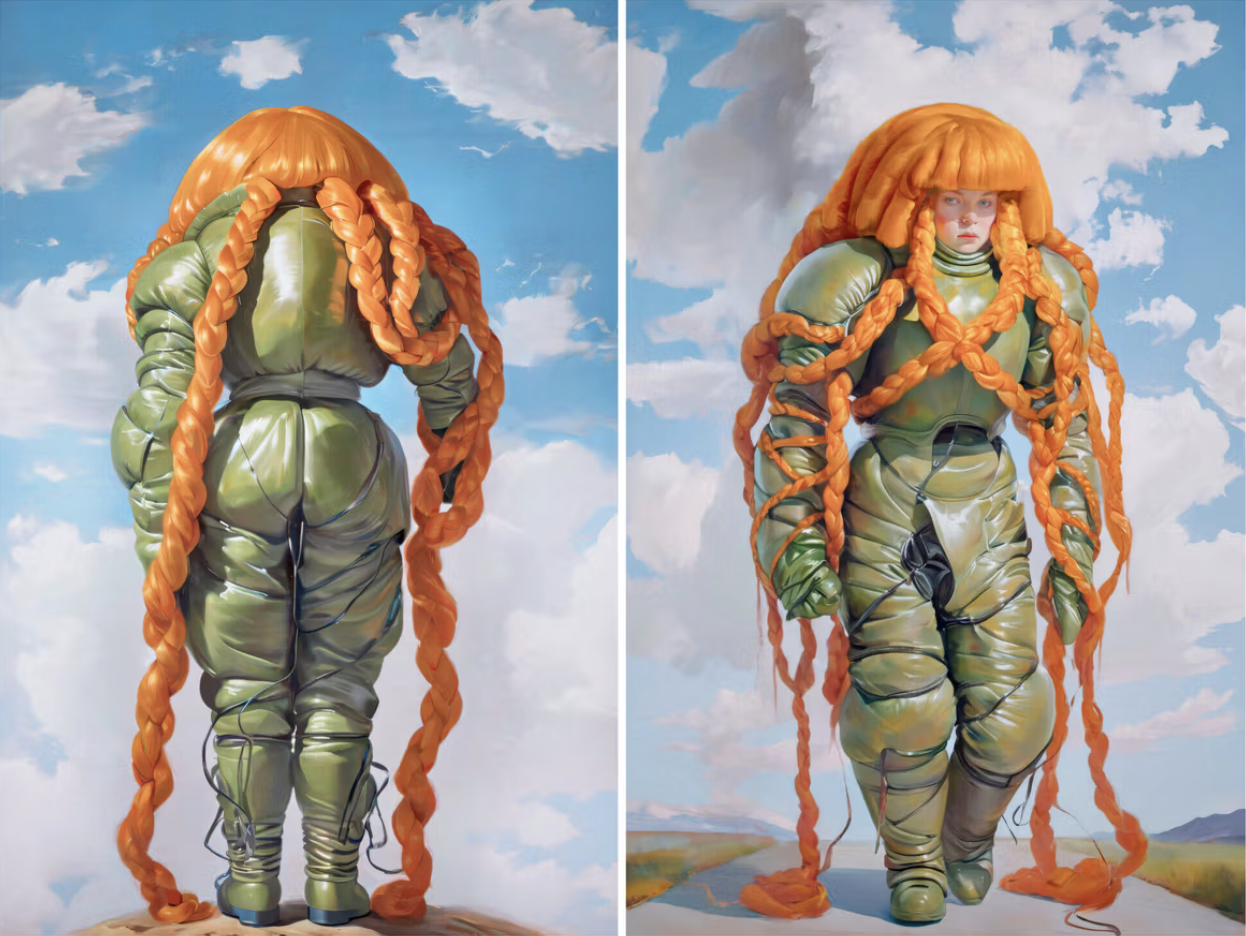
The art industry underwent drastic changes on February 20th, 2025, as the first time a British auction house in United States dedicated to selling AI art, Christie’s, opened its doors under the name “Augmented Intelligence.” This AI art auction not only shatters expectations with total earnings of $728,784 against the estimated revenue over the two-week period until March 5th, but also marks a notable shift in artist practices and collector behavior. The auction created an influx of younger, less experienced participants, which increased sales but, at the same time, brought heated discussions regarding the ethical and legal boundaries of AI in art creation. This article takes a closer look at the financial milestones of the auction, its influence on the market, and its consequences within the art industry.
AI Art Auction: A New Frontier in the Digital Age

The “Augmented Intelligence” auction challenged long-held beliefs and perceptions surrounding perceptions of art and creativity. With its focus on AI art pieces, the auction marked the beginning of what many consider the golden era of robotic art collection and curation. In a world where technology and creativity intersect, Christie’s bold moves showcase the industry wide acceptance of artwork that is created or enhanced by computers, machines, or AI.
Not only did Christie’s integrate new technology by hosting a sale dedicated to art made using AI, but they also recognized how the creative process is shifting. This auction’s title, “Augmented Intelligence,” embodies this notion since AI is not doing away with human creativity but rather augmenting it. The event has surely set the stage for a new era in which technology and art are continuously intertwined.
A Landmark Sale
From a financial perspective, the auction was a massive success. The total was projected to be around $600,000, but the final figure skyrocketed to $728,784, illustrating the healthy appetite for AI art. A highlight of the sale was the performance of Refik Anadol’s piece, “Machine Hallucinations – ISS Dreams – A.” His work had an initial estimate of $200,000 but ended up selling for $277,200, shattering the auction record.
The unprecedented sale not only illustrates the astounding amount of money collectors are willing to pay for AI art, but it also strengthens the status of AI art’s place in fine arts. The sale results of some lots confirm that even in its infancy, and when crafted by established talents and fresh approaches, AI art has the potential to generate considerable interest and financial support.
Engaging New Young Collectors
The “Augmented Intelligence” auction is particularly intriguing as it caters to a wider range of sophisticated and younger collectors. Almost 50 percent of the bidders were recognized as Millennials or members of Gen Z, while 37 percent of the attendees were new clients at Christie’s. The younger demographic marks a change in the art world, suggesting established auction houses are shifting their focus to appeal to a younger, more technologically inclined audience.
The excitement from young collectors suggests AI art is poised to change the ways we collect art, and for some younger shoppers, digital or AI art captures their imagination, given their lived experience in a digital world. This demographic shift observed at the auction reveals a potential new trend: with art’s increasing integration into technology, it seems auction houses will be able to reach new audiences by incorporating innovative pieces into their offerings.
Controversy and the Ethical Dilemma
However, in addition to its commercial potential and visionary approach, the auction garnered attention for other reasons. A notable segment of the artistic public was concerned with the ethics of the process applied in AI art fabrication. Thousands of artists have signed an open letter denouncing the use of AI models trained on copyrighted content without prior consent or payment, claiming this practice violates ethical artistic boundaries. Detractors argued that using existing human artwork for AI creation devolves the process into a “mass theft” of creative assets and actively works against the interests of traditional creators.
The discussion concerning the ethics reached its peak when critics asked for the immediate cancellation of the auction, saying it would affect the way art is made as well as sold in the long run. The public bickering has compelled the artistic community to grapple with issues such as technology’s relationship with creativity and its boundaries, as well as the complex and interwoven matters of identity theft, ownership, and the creation of art. While some argue that using AI for art is a major advancement in creativity, others express concern over the possible abuse of these practices.
The discourse on those ethical matters has obtained the legal boundaries within which AI and its use in creative works reside. It is widely acknowledged that clearer rules are needed to define the balance between the potential abuse of technology and human rights in works of art as AI art becomes mainstream. The contention of copyrights and owners for artistic work done by AI is likely to be one of the puzzles of the advanced civilization.
Mixed outputs in combination with changes in the market
Even with the auction success in achieving the most value possible, Christie’s has observed that some lots fell short of the value they expected. Out of the 34 offered lots in the 14-day online auction, 14 either did not receive qualifying bids or sold for less than Christie’s minimum estimates. Only half of the offered lots exceeded the hurdles set by bids or Christie’s estimates. This striking lack of synergy shows how the AI art market is still developing and very much in its infancy.
From the auction, it was very evident that the market is still trying to assess where AI-generated art fits in with traditional art and how valuable it is in comparison to art created by human hands. Even with investors and market proponents confusing the figure with anything resembling profit, one thing is clear mathematically: the market is new. Art born from artificial intelligence faces scrutiny from buyers and market analysts to decipher its value. In parallel, the reputation of the creator, process, and technological merit decides the art’s investment worth. Unlike traditional art forms, in the age of change and new ideas, AI-compiled art will serve as a dichotomy- a reward for some while a burden for others.
Now, market participants need to distinguish between innovative, captivating AI art pieces and those that just seem like an experimental novelty. This selective approach will take time as the markets are still maturing, though it is apparent that the commercialization of AI art will begin to level out when its buyers and sellers acquire more insights about it.
AI Art Auction: Ushering The Future Of Artistic Creativity
The Augmented Intelligence Auction by Christie’s set records for the most funds raised from an auction of AI-generated art technologies. Holy smokes, it really kicked off in the world of AI-generated visual stimuli!
Christie’s auction AI art auction not only acknowledges the dependency of art on machine intelligence but also spearheads the claim that digital art is on the same pedestal as traditional media art. Drawing attention to existing works and addressing their futures is an emerging trend in the world of technology these days..
One more proven fact of technology striking an ever greater influence is the existence of art (finally). Bidding on artworks created by different algorithms integrating machine learning and GANs (Generative Adversarial Networks) taught us a lot about AI’s ability to transform, reframe, and reinterpret datasets with endless possibilities into novel forms. First, we portrayed art as modern machinery reimagining itself. Then the machine perceives human thinking as a whole and reorganizes it in ways that not only we, but the machines too, can understand.
The latest auction of contemporary art reveals the creativity that comes from modern artists. In what could only be termed “modern art,’ today’s artists require the use of technology designed for the future, including AI, when creating art using more traditional formats. The integration of the past with the future will offer wonderful opportunities for artistic invention and may well give rise to entirely new types of art that define logic and acceptance.
Reactions from the Art Community

The art community’s response to the auction was a mix of excitement and skepticism. Some supporters highlighted that the auction showcased the validity of digital art by stating that it is part of contemporary artistic discourse. “‘This auction, in particular, confirmed that buyers and the broader public appreciate the efforts of artists who are technologically and artistically innovative,” remarked one of the sellers of digital art.”
Critics of the auction, especially traditional artists, noted that the integration of AI into art creation poses significant ethical dilemmas. The open letter that was signed by thousands of artists epitomized anger and concern from the AI as a tool perspective. Such concerns are justified and universal, posing questions regarding the very ideas of originality and authorship in this context of reproduction, where duplications are commonplace.
There’s a strong interrelationship of innovation together with tradition in the polarized reactions. An example is the AI art auction. Some people perceive it as the advent of new artistic creativity, while others think it might lead us down a very disconcerting route where technology increasingly influences and undermines human creativity in devastating ways. This problem will persist as more and more educational institutions begin to explore works of art generated by AI because it forces the world of art to consider the morality and philosophy behind such a growing medium.
Sociocultural Effects on the Global Art Market
The consequences of the “Augmented Intelligence” auction are felt beyond the boundaries of Christie’s. From a marketing perspective, the AI art concept is likely to develop into a distinct genre through future sales, which will increase the selling potential of framed computer images. The strong attention from Christie’s indicates a shift in perception that AI and digitized tools in art may have promising potential in creating exhibits, performances, and showcases. As other traditional auction houses join the digital art bandwagon, we may as well witness more dedicated events that merge technology and art.
The auction’s results, especially the record sale of Refik Anadol’s piece, have provided new benchmarks regarding what is possible in this industry. There is a growing sentiment among collectors that AI-generated art is no longer just a gimmick but rather a legitimate asset. If this shift happens, it might open up possibilities for the reevaluation of the art’s value, one where the presence of digital technology is an essential factor.
Furthermore, the age trends noted during the auction are symptomatic of an accelerating shift in the consumption of art. Most bidders are younger and relatively new to the auction scene, which indicates that the art collecting is headed toward a more digital approach. These younger bidders are likely to have different preferences, which will further drive innovations in how art is created and sold.
In response, auction houses will probably change their business strategies to better meet the needs of this younger audience. These changes could mean improved infrastructure for remote participation in auctions like online bidding, virtual reality rooms, and more focus on advertisement through social media. The new framework of the art market will need both pillars of classic and digital approaches to serve the shifting demographics of collectors.
The Legal and Ethical Challenges of Technology
Every discussion about AI art is equally important as the legal and ethical complications it brings. Perhaps one of the most perplexing debates within digital art is the use of copyrighted material to train AI models. Detractors claim that not paying for or obtaining permission prior to using existing artworks erodes creativity. Supporters, however, say that AI is simply a tool, one that rests on a long lineage of creative inspiration.
Like many technologies, the consequences of laws pertaining to AI art are virtually non-existent. While courts and lawmakers sort out the issues of intellectual rights and property, both artists and auction houses wait anxiously. The results of these discussions will be critical for the sector, affecting how artworks are monetized and determining the direction of emerging technologies in terms of governance, control, and regulation.
Auction houses such as Christie’s now sit at the center of this discussion. They preserve the legitimacy of AI-created art by claiming its use in the creative process and claiming it is merely a tool, and at the same time advocate for further acceptance of innovations in technology in art. What remains is how laws will be crafted in the efforts of attaining the rights of human artists while development is encouraged.
The Future of AI-Driven Creativity
The auction for “Augmented Intelligence” is not one single event. It marks a more enduring change in the entire art industry. AI development aims to create intricate, multi-layered works of art, and the possibilities will be boundless. Future auctions will definitely include a mixture of traditional artistry and AI, and this combination will result in new hybrids that will be beyond our imagination.
The first event of its kind explores how AI can be used in creation. The use of machine learning and neural networks by different artists will undoubtedly lead to an even greater explosion of works that redefine artistic boundaries. For art collectors, this comes with the additional appeal of a changing investment paradigm, where the mastery of new technology intertwined with art gives it new value beyond beauty.
The implications for the broader art market are profound. The implementation of an AI art auction represents a significant shift for established institutions. These institutions should adopt more technology-forward thinking, as it might entice some auction houses and galleries to try out new ways of exhibiting art. Such efforts can result in a rich art world that captures both traditional values and the new innovation of technology.



Leave a Reply