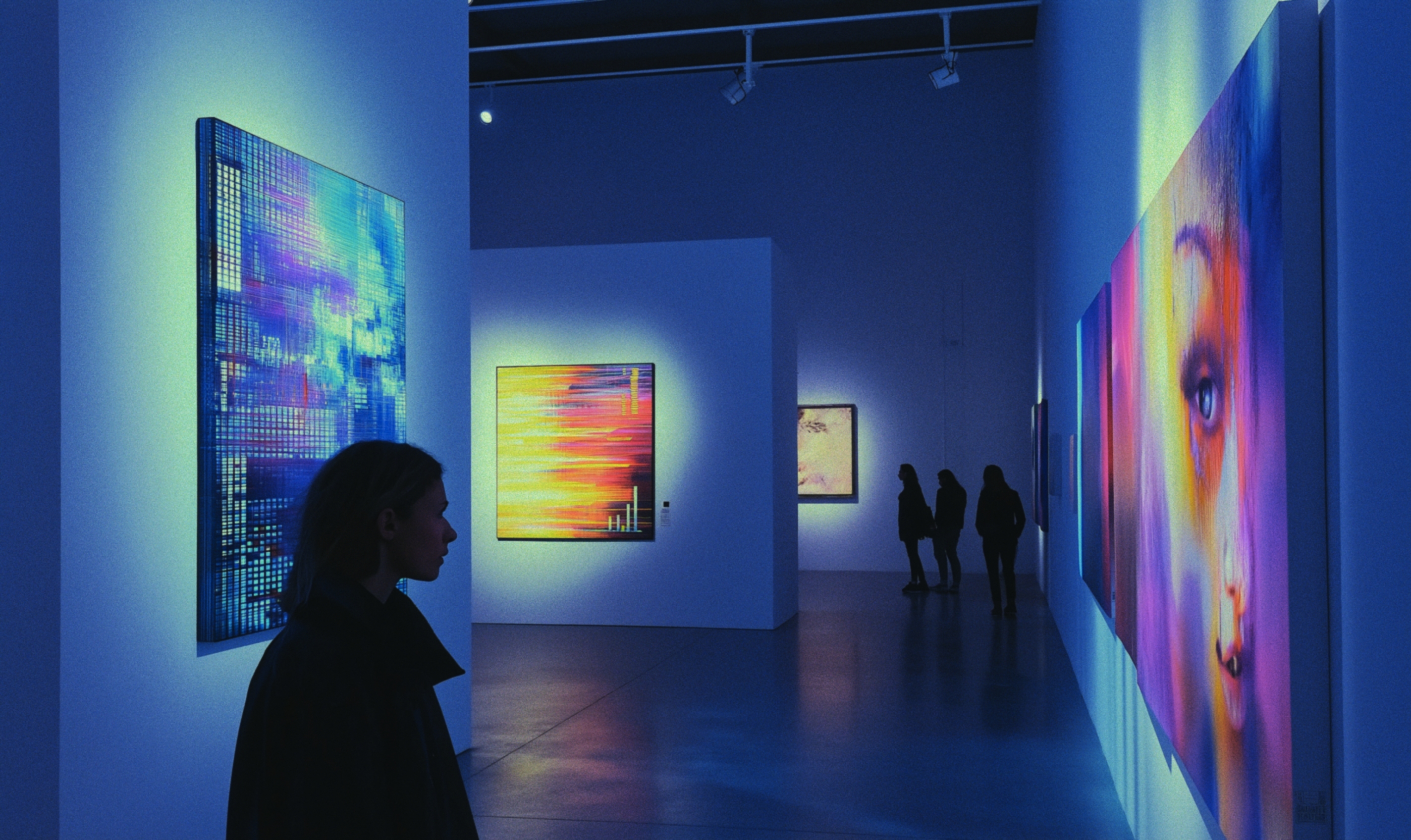
With data now taking root in every field, such as management and fashion, it is expected that the artistic field is also taking technology to try and make sense of the ever-changing market. The demand for artistic value in the art market is fueled by the Artfacts Heat Index advanced tool. For instance, it provides a ranking of numerous artists in various price categories via data appropriation. With this tool, collectors, galleries, and institutions can accurately make decisions in a volatile market.
Especially when art is looking to become big business and the market is opened up, which now more than ever presents new challenges to be able to find out new artists or when they will change direction. The new feature of the Artfacts Heat Index published on 30th September 2024 includes a comparative outstanding of outstanding artistic endeavor for three price ranges: above 50,000 dollars, 10-50,000 dollars, and below 10,000 dollars. The ranking of each artist is based on how they performed within a specific time frame of purchase using data surrounding them, which eliminates guesswork in art buying.
The Power of Data: A New Look at the Art Market Thanks to the Artfacts Heat Index
Art markets are hard to understand for even the most experienced collectors. There are price variations, cyclical trends, and various factors that determine the worth of an artist, such as their reception and commensurate factors. This, however, is not the case anymore with the introduction of the Artfacts Heat Index, which allows participants in the art market to use facts and trends through raw data to assist in finding up-and-coming artists and secure underappreciated ones.
The heat index, however, cannot be considered an unchanging list of prominent players in the global art market. It is an ever-active, up-to-date record that is flexible based on changes within the art market and is therefore a very useful asset for a person who wishes to be updated on trends. By looking at the Heat Index’s three price brackets on the art market, for example, one sees distinct and visible trends and directions that explain which artists will be dominant in the future and the estimated direction of the art market overall.
Over $50,000 Bracket
The Heavy Hitters of the Artfacts Heat Index At the very top of the market, where individual artworks sell for over $50,000, the artists remain a well-known lot. However, if funding is available, fathers may have flash lights. Seeing two flash lights may point out the artifact heat index; there are still some makers on the fore. The leader in this category is Amoako Boafo (ranked 1,352), who is already one of the hottest names in the contemporary art market. Boafo’s powerful members that concentrate on the black identity and vulnerability have never lost their interest in collectors or institutions. His success is indicative of both the growing recognition of African artists and the works of his talent and depth.

An artist who had become another famous figure was painted by the man who completed the same picture. She is María Berrío (ranked 2,560). Berrio presented several works of this nature that were made. Mesmerizing collage-like editing gives creation of memories that are part of bygone ages. Berrío’s recent performance gradual increase Artfacts Heat Index could only indicate an increasing number of collectors interested in women aiming for the female Latin American artists today inspired by cultures of social and political issues.
This bracket, however, is not static. For instance, Otis Kwame Kye Quaicoe (rank 4201), who used to be a fast-growing artist, has lost steam. With the previously great demand for his evocative portraits of both men and women of African society, the Artfacts Heat Index indicates a slight decline in demand. Maybe this is in connection to a general trend where portraiture is losing its appeal as buyers look for more conceptual approaches. In the same way, Jonas Wood (ranked 647) who creates colorful images of interiors and still-life’s also seems to be stuck. Still, he is a relevant figure in the industry, and his works are sought after, but his market has opted for consistency and not further growth.
On the contrary, there are artists like Salman Toor (rank 1447) who are still on a gradual upward trend. The work Toor creates depicts queer South Asian men in sensitive and loving ways, appealing to collectors. His market presence is equally strong and does not seem to fall. He has managed to combine personal drama with universal issues of estrangement and place in the world, which won him many fans of touching works.
Others worth mentioning in this bracket are Hernan Bas (ranked 1,444), who captured the attention of the public with his depictions of young men in mysterious gothic settings, and Caroline Walker (positioned 6,205), whose images of women’s domesticity have increasingly appealed to those dealing with femininity and work-led themes.
$10,000 to $50,000 Bracket: Emerging Stars on the Rise
For those looking to own finer art without reaching the six-digit mark, the $10,000–$50,000 slack belt has plenty to offer and has no potential risk to investors. This Center of the Artfacts Heat Index is teeming with artists who are on the brink of reaching their career peaks. A key player is Sung Tieu (ranked 609), who combines many disciplines in her work, including dealing with migration, trauma, and surveillance, which, as the practice grows, attracts more and more audiences. Her upward trend speaks to the larger trajectory of art as a political tool in today’s age.
Lauren Halsey (positioned 1,016) is another standout in this category, as she has been in the spotlight for her afrofuturist installations and sculptural works that make her one of the contemporary artists to look out for. She, the artist and community activist at the same time, has been gaining followers who appreciate her social engagement art that is rare in contemporary art. Halsey better utilize the Artfacts Heat Index, which suggests her leap into the ranks of the art champions in the future.

Still, Christine Sun Kim (ranked 477) has a different experience as she practices sound, language and disability across fields and continues to gain popularity in both the art world and commercially. She, whose work seems to defy the average sensory engagement, has become known to the crowds as well as the institutions and collectors and is rightfully considered one of the most intriguing artists actively practicing today.
As for the other side, it has not been so favorable for Julian Charrière (ranked 130) and his contemporaneous peers as they have seen a slow decline in the pace. Charriere, whose practice engages with the ecological conundrums and the Anthropocene, may be experiencing a dull phase in terms of the market as the audiences shift to younger voices in environmental art. Charrière’s work will be in demand as long as climate change and sustainability are hotly debated topics.
On the flip side, Kapwani Kiwanga (ranked 120) continues to ride on the topmost wave. With the art pieces that concern ideas of political power and its colonial pasts in their installations, Kiwanga’s works elicit similar responses from different global markets. But as institutional and collector interest continues to shift towards works that are ever engaging in self-colonial realities, work by Kiwanga is well on an escalating trend.
Under $10,000 Bracket: Underappreciated from the Ever-growing Collection
The segment between the price range of $1,000 and $10,000 is an ideal place for people who want to invest in promising talent quite early. According to the Artfacts Heat Index, at the top of this scatter of this segment is work by Malgorzata Mirga-Tas (Position 962), who creates rich textured works that depict the identity and culture of the Roma people. This market figure, who was also in charge of a performance at the Venice Biennale, has become more visible in the market, and the collectors are looking for her unique artworks more and more.
Nolan Oswald Dennis (Position 2423) comes next in line. In his latest work, his conceptual practice dealing with the history and politics of space has attracted more attention amongst people within the social practice art sphere. Another example is Sin Wai Kin (position 1,528), who combines drag, identity, and fiction in her performative practice and has gained momentum in the Western and Asian markets.

Some artists, including Bouchra Khalili (237th), have experienced a slight cooling in momentum. Khalili has emerged in a bit more stable market position in spite of her strong politically influenced multimedia works. Perhaps it is because there are other artists creating works with similar subject matter.
Sky Hopinka (rank 978), whose works focus on Indigenous identity and language in video, photography and other non-photo examples, is experiencing rising momentum. Institutional collections are increasingly acquiring works by Hopinka, who seeks to subvert mainstream narratives of Indigenous history and culture, which augurs well for this younger artist’s future.
Art Market Trends According to the Artfacts Heat Index
The Artfacts Heat Index is more than a ranking system; it’s a perspective. And its “quantifiables” offer an understanding of forces at play in the contemporary art market. Who’s hot, and which artists are ready for surge? By collecting and aggregating such information on the velocity of artists’ careers, we are able to provide answers for collectors and curators.
Amoako Boafo, María Berrío, and Salman Toor are the dominant artists in the over $50,000 bracket whose artwork takes a personal and political approach that connects with a wide range of people. Moving on to the $10,000 and $50,000 sections, names like Sung Tieu, Lauren Halsey, and Christine Sun Kim have strong potential for progress. This is primarily because they cover pertinent issues in a compelling manner. For investors who want to join the market or want to search for new names to invest in, the under $10,000 bracket would be ideal, as there are tremendous possibilities with artists like Malgorzata Mirga-Tas and Nolan Oswald Dennis gaining traction.
The Arfact Heat Index indicates how critical it is to remain updated regarding the information-heavy art sector. With the changes that are taking place in the market, this will be one of the basic tools for all investors and institutions that are serious about contemporary art and changing where to allocate their effort and resources.
The New Horizon of Art Collection Through the Artfacts Heat Index
Gone are the days when art collecting was an activity based on whims and yearning. Thanks to the Artfacts Heat Index, which is a new case. It gives real-time data of movement and trends to art collectors, curators and investors so that decisions are not made based on predictions. Whether a veteran collector wishing to add another item to his portfolio or an upstart hoping to uncover some of the next best names, the Artfacts Heat Index is a must-have tool for the competitive and continually evolving global art trade.
However, with the progression of the art market, one needs to appreciate the fact that development lays out certain opportunities and challenges, in which case surviving the competition requires understanding the current situation and having a great deal of data on one’s side. The Artfacts Heat Index is easy to use and goes beyond order; it is a movement and the future of art collecting dominance.


Leave a Reply