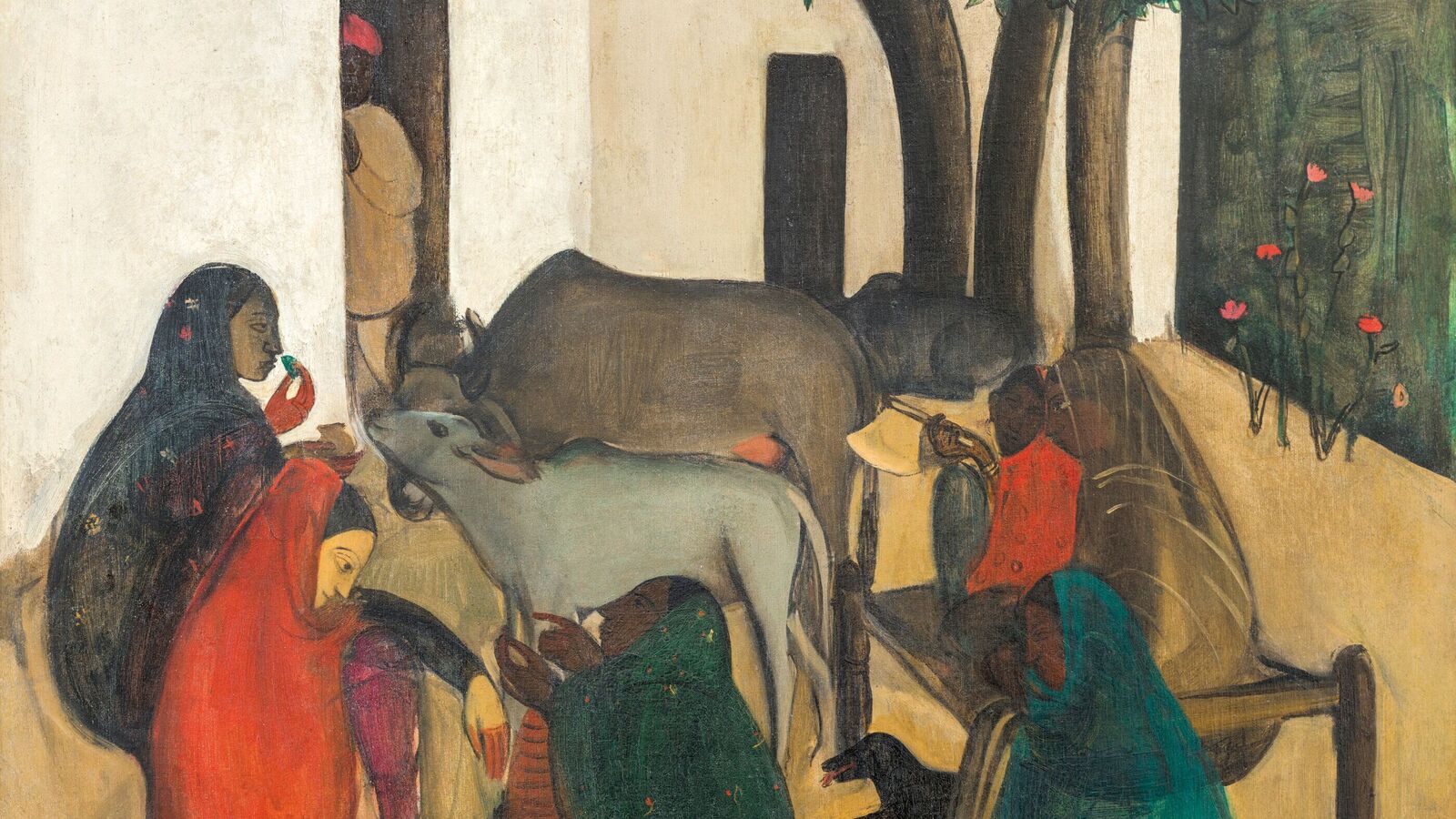
The sale of “The Story Teller,” an oil painting by Amrita Sher-Gil, at Saffronart auction for Rs 61.8 crore (about $7.4 million) recently marked a significant turning point in art history. This extraordinary auction establishes a new standard for the Indian art market, highlighting the country’s rising profile on the international scene. This examination of the art market investigates the repercussions of this transaction and offers insights into the dynamic nature of the Indian art market as it is now emerging.
Growing Acclaim Around the World The recent sale of “The Story Teller” exemplifies the growing Acclaim that Indian art is receiving worldwide. The art of Amrita Sher-Gil, which features a singular fusion of Indian and Western aesthetics, is highly sought after by collectors all over the world. The price, which broke the previous record, is evidence that international collectors are eager to spend on Indian art, further solidifying India’s status as a global art market leader.
Sher-Gil was born in 1913 in Budapest, Hungary, to an Indian father and a Hungarian mother. She went on to become recognised as one of the most influential women painters of the avant-garde movement for her body of work. She began her artistic pursuits at the young age of five, devoting herself to drawing and painting with watercolour. Her first paintings were vivid depictions of Hungarian fairy tales, and their personalities were mesmerising. In 1921, the Sher-Gil family relocated to Shimla after having previously lived in India. It was there that she perfected her talents as an observer, capturing the souls of individuals around her via sketches that were quite detailed. She was just 28 years old when she passed away in the year 1941.
The Archaeological Survey of India recognised her as one of India’s nine ‘National Art Treasure’ painters in 1976. This honour was bestowed upon her.

Amrita Sher-Gil, who is sometimes referred to as the “Indian Frida Kahlo,” has played an essential role in the process of developing the narrative around Indian art. Her body of work, which is recognised for the emotional depth it explores as well as identities, has been an inspiration to artists not just in India but all around the world. This transaction not only exemplifies the enduring legacy she has left behind but also acts as a catalyst for increased interest in her work.
Collectors from the United States and other countries: the fact that “The Story Teller” was able to find a buyer in the Indian art market demonstrates the presence of a varied set of collectors. Although Indian collectors play a vital role, the presence of overseas bidders at such prominent auctions is evidence of the market’s popularity on a worldwide scale. The market’s stability and expansion are attributed to the wide variety of collectors participating in it.
The world-record-breaking amount that was paid for this piece of art underlines the position of art as a marketable investment choice. The acquisition of works of Indian art is becoming increasingly popular not just as a method of enhancing one’s cultural life but also as a strategy for diversifying financial holdings. Because of this impression, there may be an increase in the amount of money invested in the Indian art market.
Opportunities for Up-and-Coming Painters in India While well-known painters such as Amrita Sher-Gil continue to dominate the headlines surrounding auctions, this sale draws attention to the possibilities that exist for up-and-coming Indian artists. It is possible that the success of “The Story Teller” may motivate investors and collectors to investigate artists who are not as well-known, developing an art ecosystem that is more diverse and dynamic.
There is a rising demand for enhanced openness and control as a result of the increasing significance of the Indian art industry. There is still a concern over the possibility of purchasing phoney artworks at inflated costs. The trust of investors can be helped to be preserved by the implementation of regulatory measures.
The success of the selling of “The Story Teller” highlights the cultural relevance of art in India. Since the beginning of time, a nation’s rich history and varied legacy have been reflected in its many artistic forms. This sale broke the previous record, which is a good reminder of the lasting ability that art has to both seize and communicate the spirit of a community.
The fact that “The Story Teller” by Amrita Sher-Gil sold for a price that broke a record in the Indian art market is evidence of the industry’s rising prestige, increasing attractiveness on a worldwide scale, and potential for investment opportunities. It underscores the necessity for a balanced strategy that nurtures both established artists as well as budding artists while simultaneously addressing issues posed by regulation. As the Indian art market continues to develop, it gives exciting potential for collectors, investors, and artists alike, and “The Story Teller” will definitely be regarded as a landmark in its path towards worldwide recognition as it continues to develop.

Leave a Reply