The unthinkable happened in the middle of Paris, where a million ghosts of history watched. On the morning of October 19, 2025, as the first tourists of the day entered the sacred halls of the Musée du Louvre, a group of daring criminals pulled off one of the most shocking and damaging art thefts in modern history. In just seven minutes, they not only stole jewels but also shattered French history, exposing a significant failure at the core of the world’s most esteemed cultural institution. This is the story of the 2025 Louvre Heist, a crime so well-planned and shocking that it has left the whole world and the country in shock.
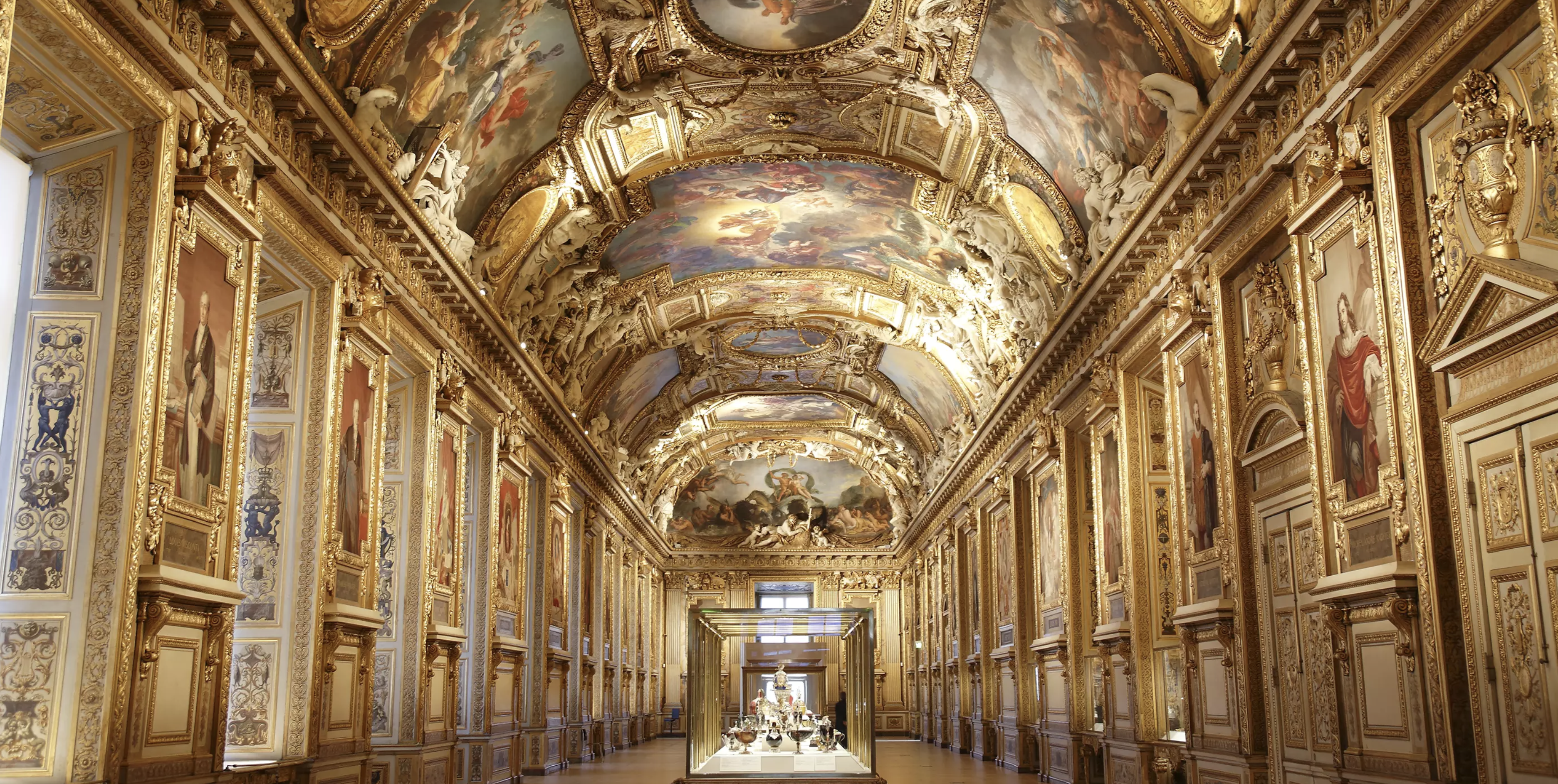
The target was not the bulletproofed Mona Lisa but the Apollo Gallery, which is a beautiful room that holds the last sparkling pieces of the French Crown Jewels. Just 30 minutes after the museum opened, a commando-style team got past all of the security measures and stole treasures worth “inestimable” amounts of money. They then disappeared into the Paris morning, leaving behind broken glass, a broken crown, and a security system that was in shambles. French President Emmanuel Macron called the act “an attack on a heritage we cherish because it is our history.” This sentiment echoed through the now-silent, blocked-off halls of the world’s greatest museum.
A Seven-Minute Blitz: The Anatomy of the 2025 Louvre Heist
The 2025 Louvre Heist was not a lucky break; it was a masterclass in how to plan a crime. French Culture Minister Rachida Dati called the operation the work of “professionals,” and it was a terrifying mix of careful planning and brutal efficiency.
Around 9:30 AM, when the Louvre was filling up with its daily 30,000 visitors, the thieves attacked. A group of three or four men on powerful scooters took advantage of the museum’s one weakness, which was easy to see: a large construction site on the facade facing the Seine. Two of the criminals, dressed as construction workers in yellow safety vests, used a basket lift on a small truck to get to a second-floor window. This is a common sight in Paris and the perfect Trojan horse. This brutally simple tactic let them fly over the museum’s defenses on the ground floor, making the lines, bag checks, and guard posts completely useless.
When they got to the Apollo Gallery window, they let their tools loose. They used portable, battery-powered angle grinders and electric saws to cut through the glass. Officials called it a “particularly fast and brutal break-in.” The sound of the cutters set off alarms, but the thieves had planned for how long it would take for the police to get there. They were a storm of destruction. According to reports, surveillance footage showed them entering “calmly,” walking straight to two specific display cases, and smashing them to pieces.
Their timeline was amazing. Minister Dati said the internal operation took only four minutes, while Interior Minister Laurent Nuñez said it took seven minutes from start to finish. Their focus was terrifyingly clear. They didn’t take other valuable items, like the famous 140-carat Regent Diamond, which is worth more than $60 million. This shows that they were following a very specific shopping list. After they got their loot, they took the elevator down and sped away on fast Yamaha “TMax” scooters, blending in with the traffic in Paris and heading toward the A6 autoroute. They made one big mistake in their hurry: they dropped the beautiful Consort Crown of Empress Eugénie. The priceless item, which had more than 1,300 diamonds and 56 emeralds set in it, was later found on the sidewalk, broken but recovered. This was a small victory in a sea of terrible loss.
The 2025 Louvre Heist: The Priceless Losses of Royalty
The jewels stolen in the 2025 Louvre Heist are not just pretty things; they are real pieces of Europe’s imperial soul. French officials have said over and over that their value is “incalculable,” and they stand for the dynastic goals of Napoleon I, the House of Orléans, and Napoleon III. The thieves didn’t just take jewels; they also took the stories of queens and empresses, political marriages, and the golden age of Parisian craftsmanship.

The stolen things are a list of royal people who have been defeated:
The Sapphire Parure of Queen Marie-Amélie and Queen Hortense: This set has a long history; it used to belong to Napoleon’s stepdaughter, Hortense de Beauharnais, before the Orléans royal family bought it. The thieves stole the beautiful tiara with more than 1,000 diamonds, the matching necklace, and one earring, leaving the other earring behind in the chaos.
The Emerald Parure of Empress Marie-Louise: Napoleon I ordered this set as a wedding gift for his second wife in 1810. It was a sign of his imperial power. Someone stole the beautiful necklace, which had 32 bright emeralds and more than 1,100 diamonds, as well as the matching pair of earrings.
The Treasures of Empress Eugénie: Napoleon III’s wife was a style icon in the 19th century, and her jewelry was the best example of Second Empire art. In 1887, the state sold off many of them, but the Louvre had to work hard to get them back decades later. The thieves went after three of these priceless works of art that had been returned to France: the stunning Pearl and Diamond Tiara, which has 212 pearls and almost 2,000 diamonds; the huge Large Corsage Bow Brooch, which has a ribbon of over 2,600 diamonds; and the historic “Reliquary Brooch,” which has two of the famous Mazarin diamonds that were given to the French crown in 1661.
The loss hurts the culture deeply. These weren’t just accessories; they were state treasures, symbols of power so strong that a republic sold them to keep a monarchy from coming back. Now, they have been stolen for a much worse reason.
Fortress Failure: How the 2025 Louvre Heist Showed Major Security Problems
The 2025 Louvre Heist is as much about how institutions fail as it is about how criminals are smart. The most popular museum in the world, a symbol of French pride, turned out to be a weak giant whose security was a form of theater that a determined crew could easily get around.
The construction zone was the thieves’ best chance of getting away with it because it gave them cover, access, and a good reason to use a lift to get to the top of the building. But the rot goes deeper. For years, labor unions have been warning about chronic understaffing, saying that 200 security jobs were cut over 15 years even though the number of visitors grew. A few months before the robbery, security guards walked off the job to protest the unsafe conditions.
The museum also suffers from the “Mona Lisa Effect.” The heavy security around da Vinci’s masterpiece makes people feel safer than they really are, which takes resources and attention away from other priceless collections. The thieves were aware of this. They hit a soft target only 250 meters from the Louvre’s most valuable piece of art. Even though alarms went off and guards stepped in, which probably made the thieves run away and leave the crown behind, the response was reactive, not proactive. The raid was over before a real lockdown could start. The director had ordered a security audit and planned upgrades, but these steps were sadly too late for the Apollo Gallery’s treasures.
The Manhunt Around the World Following the 2025 Louvre Heist and the Jewels’ Sad Ending
After the 2025 Louvre Heist, a huge investigation was started, led by a special unit that fights art theft. The crime scene had a lot of forensic evidence, like the empty truck and lift and a nearby stash of tools like angle grinders, a blowtorch, gasoline, and a walkie-talkie. Investigators are going through hours of CCTV footage, looking for any mistakes the thieves might have made that would have shown their faces. The idea that it was an inside job is strong; the raid’s accuracy suggests that the thieves knew the museum’s layout and security procedures very well.
But while the search for the criminals goes on, there is another, much more urgent race: the race to save the jewels themselves. Experts all agree that things are bad. These items are worth a lot of money in history but not at all on the legal market. They are too well-known and well-documented to be sold.
This leads to the worst possible outcome, which turns this crime from theft into an act of cultural vandalism that can’t be undone. Art detectives say they are in a “race against time” to stop the jewels from being taken apart. The thieves are most likely to break the pieces apart, pry the historic gems from their settings so they can be re-cut, and melt down the beautiful 19th-century goldwork into anonymous bullion. In this horrible situation, hundreds of years of history, craftsmanship, and royal lineage will be lost for the sake of the parts’ raw value. It would be like burning a Shakespearean folio to sell the ashes. There are other options, like a shady private collector buying them or using them as collateral in the criminal underworld, but the thought of them being destroyed is the most frightening.
The Louvre Heist of 2025: A Dark Legacy in the Pantheon of Great Museum Thefts
The 2025 Louvre Heist is already a part of the history of great museum thefts. It’s a shocking new entry in a long history of stealing culture. The Louvre has lost things before, like the Mona Lisa, which a handyman stole in 1911 by walking out with it under his coat. But this new raid is more like the brutal, high-tech smash-and-grab raids of the 21st century.
It’s scary how similar this is to the 2019 Dresden Green Vault heist. Thieves also stole priceless royal jewels, turned off alarms, broke a window, and used an axe to smash display cases in a quick and violent raid before escaping in a car they later set on fire. Both heists follow a modern playbook: get around the main security, use overwhelming force to get in and out quickly, and go after certain, irreplaceable historical treasures. This is very different from the infamous 1990 Isabella Stewart Gardner Museum heist in Boston, where thieves dressed as police officers spent 81 minutes inside, carefully cutting masterpieces out of their frames. The 13 stolen works of art, worth more than $500 million, have never been seen again. This is a haunting reminder of how permanent these losses can be.
The 2025 Louvre Heist is as daring as the theft of the Mona Lisa and as cold-blooded as the Dresden raid. It is a crime that fits the modern world perfectly: quick, strong, and focused. It is a harsh wake-up call that shows that our shared heritage is never really safe, even in the most sacred places. The seven minutes it took to hurt the Louvre will be remembered for generations as a painful scar on history and a dark warning to every institution that protects our shared memory. The hunt is on, but time is running out for the stolen jewelry of queens and empresses.





Leave a Reply