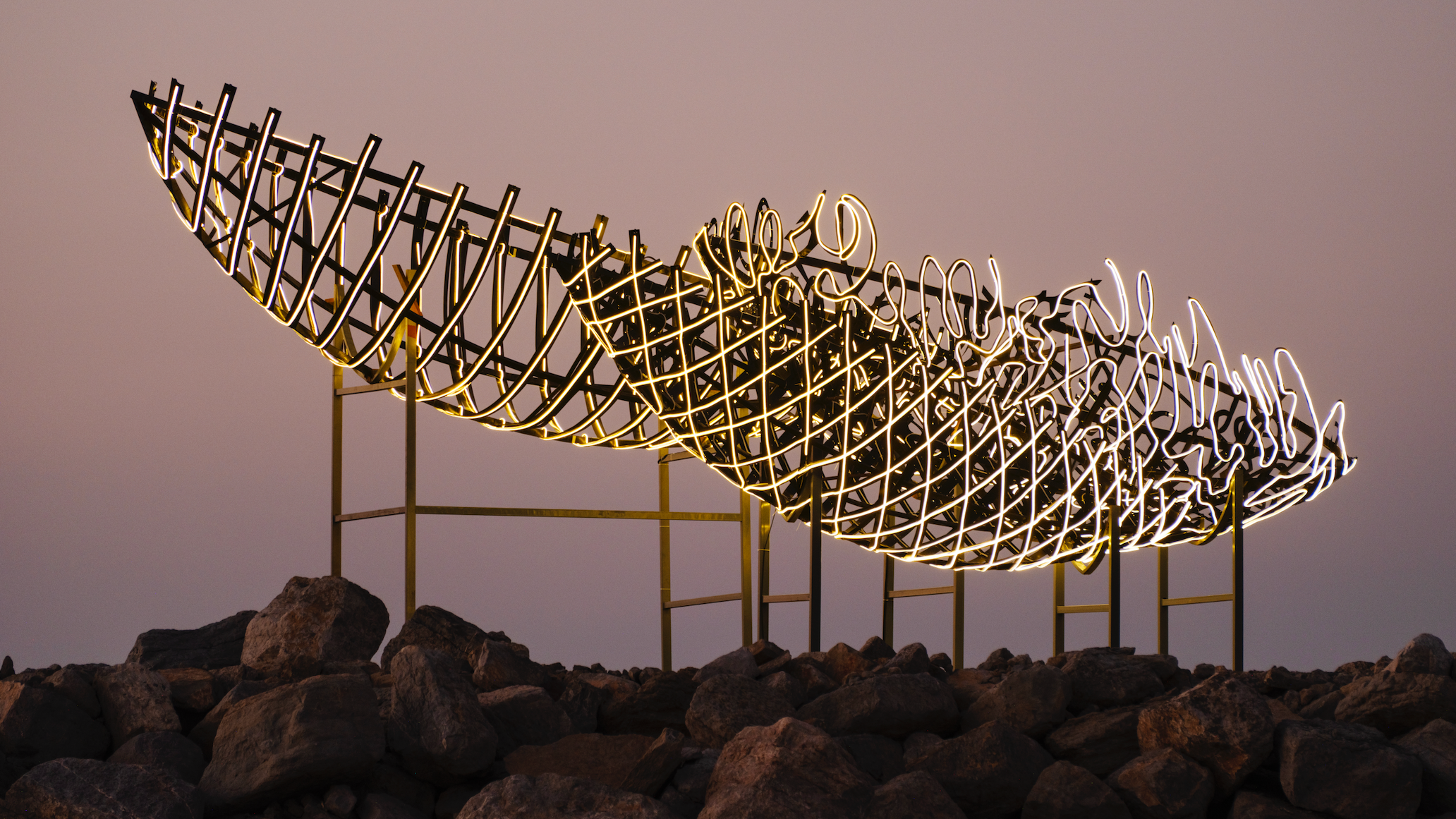
Abu Dhabi’s debut bid in the international esthetic embrace has got the world’s attention with its upcoming Biennale, Public Art Abu Dhabi, which will take off on November 15, 2024, and will be drawing to a close on April 30, 2025. Artists across the world can have a look at the Nahyan Bin Mubarak Al Nahyan art collection, which will be located in Abu Dhabi. There is an endless list of art forms, and so people can view art through animation, paintings, sketches, and a lot more. The development has been described as a push by the Department of Culture and Tourism (DCT) in Abu Dhabi to make the emirate a global center for modern art. The vision goes beyond the Biennale and includes the Manar Abu Dhabi light festival and an evolving artists commissioning scheme that seeks to open up new place-based works in the city’s public realm on a yearly basis.
Public Art and Civic Engagement: A Collaborative Approach.
Within the Urban Cultures of the Global North research program headed by Tia De Navasque, there is a specific focus on the production of art in public spaces. The intention is to allow art to be a part of the lives of Abu Dhabi residents, as well as of those visiting the city. For assistance in carrying out this ambitious task, curators Reem Fadda and Galit Eilat, who are already acclaimed artists, have been enlisted.
As Reem Fadda, director of Abu Dhabi’s Cultural Foundation, stated, “the view of the Biennial is to integrate art into the urban environment and to encourage people to interact with it.” Biennials such as the one in Abu Dhabi have the option of taking place outside the gallery, making it possible for each of the artworks to be properly integrated into the city.
The focus of this first African Biennial is not only to showcase a number of artworks but to facilitate different conversations about what a “public” is in this day and age. The aim of the curators is to select pieces that tell a story of Abu Dhabi’s heritage and growth and tell about the evolution of a society. For example, Oscar Murillo’s 80-meter painting on the Corniche of Abu Dhabi also bears testimony to an expanding city, a positive and negative aspect of development.
Through these projects, the aim of the Biennial is to create a bridge between the contemporary art world and the local community by attempting to make the idea of art a universal one that can be experienced and appreciated by locals and visitors.
The Broader Cultural Vision of Abu Dhabi: Engagement to Spend in the Wider Future
In the meantime, approximately $35 million of the annual allocation will be directed towards the funding of three major projects: the Biennial, which of course is the public art focal point, the Manar Abu Dhabi, as well as the outright commissions of artists. These three pillars are indicative of Abu Dhabi’s continuous efforts aimed at marketing the city as a worldwide cultural center. In the words of Mohamed Khalifa Al Mubarak, Chairman of DCT Abu Dhabi, this investment is in consonance with the investment made by Abu Dhabi, ‘to expand, defend and uphold the values of their exotic culture and current way of life. Sponsored by DCT, Public Art Abu Dhabi has set a new benchmark that insisted that public art is not only a process of enhancing the visual qualities of regions but rather the creation of a region and strong feelings of being a member of the community.
Manar Abu Dhabi is a light installation art festival that is held annually and aims to showcase the natural beauty of Abu Dhabi and its islands and mangroves. This program utilizes the unique geological structure of the emirate by offering a number of synergetic experiences that seek to showcase the largely ignored perspectives of Abu Dhabi as an archipelago. To cite Fadda, the term “manar,” or more popularly “guiding light,” in Arabic has been coined in order to suggest the use of art to explore the undefined beauties of the emirate and present them in such a manner that they are fresh in the eyes of the people. Every year, Manar Abu Dhabi will finish with an annual event consisting of a six-week-long series of installations that can be witnessed at the end and provides an astounding view that is different from one installment to another.
Connecting Site, Memory, and Community through Site-Specific Artworks
The Abu Dhabi Biennial stands out as very engaging because it deals with site-specific works that relate well with the culture and architectural works of Abu Dhani. Saboo Nigel, an artist from the Emirates, for example, has selected as her central focus the Central Bus Terminal, consequently making this often neglected area into a form of a site that explores issues of urban resilience. Her work literally represents the continuous efforts of Abu Dhabi to find a proper equilibrium between development and cultural self-identity.
In addition, Christopher Benton, who is practicing in the UAE, will turn the customary carpet souk into a place where the inhabitants and visitors are able to relate to the art while learning the economic history of the region. With this growth, there is an addition to the idea of the biennial, which is the conversion of sites that have been used for history and function into places for culture appreciation. Further to this, Urban Negotiation by Arquitectura Expandida invites the users to participate in making mobile furniture, hence engaging them in urban making and further reiterating the fact that the public domain is a social space and always changing.
Untitled (2024) by Farah Al Qasimi, located on the waterfront of Abu Dhabi, is an auditory sculpture that emphasizes the rich maritime heritage of the city of Abu Dhabi. This piece encourages people in the vicinity to pause, listen, and think about the integral value of the ocean for the story of Abu Dhabi, thus providing the audience with an alternative approach that evokes a strong bond with the place. All these works advance the mission of the Biennial, which is to not only display but engage the societies with the art as well as the society, the space and the memory.
A Regional Model for Cultural Collaboration and Dialogue
The objective of the Public Art Abu Dhabi initiative is to place Abu Dhabi amongst other notable Middle Eastern art hubs like Sharjah and Riyadh. Fadda and Eilat have successfully been deliberate on establishing a Biennial that supports the existing art infrastructure but also diversifies it. Fadda specifies that it is the focus of the public art and the site specificity of the Biennial that sets it apart from other festivals in the geolocation, therefore brandishing Abu Dhabi as a city that has a culture of its own. The Biennale offers a more diverse and inclusive representation by highlighting artists from the U.A.E. and the rest of the Middle East and the Global South, thus portraying Abu Dhabi as a center of cross-cultural interactions.
It is also evident that Abu Dhabi is making efforts to assist artists from different regions of the world. The event is a discussion that brings together Emirati and regional artists alongside their global counterparts and enhances the representations oftentimes omitted from the current narrative of art. This effort is emblematic of the cultural vision of Abu Dhabi, which is to be able to see the world while not forgetting how to take pride in one’s own culture. As Fadda noted, the Biennial tries to not only look for already well-known artists but new ones as well; thus, the intention is to provide a stage for a wide range of proposals and discourse in a universal context.
The Legacy and Sustainability: In Developed Conceptual Context
The overall goal of Public Art Abu Dhabi has a wider mandate than that of the Biennial’s transitory displays. Most of the artworks can be expected to stay where they are located, thereby forming a permanent artistic base that will always add to the cultural fabric of the urban vicinity. Abu Dhabi’s annual piece installation policy sees that the art scene adapts and welcomes new experiences in order to provide the old residents and returning visitors with new wonders. This allows for the catalysis of urban art and more permanent fixtures in public spaces, which is consistent with Abu Dhabi’s serviced aim to have a town where art is an everyday inspiration instead of a place.
As the city looks forward to the inauguration of the Guggenheim Abu Dhabi on Saadiyat Island in 2026, the Biennial and its related programs are meant to reflect the transnational aims of Abu Dhabi towards the development of an intricate, comprehensive, and global art, culture and heritage sector. The Biennial’s focus on community participation, public art and regional diversity also creates an active context that will underpin the role of Abu Dhabi in the future as a global cultural center.
Anticipating the Next: Extending the Vision of Urban Spaces and Enhancing Their Artistic Value
In Abu Dhabi, the Public Art Biennial does not only signify an art occasion but an evolution of urban space sculpture. From temporary exhibitions to permanent installations, each initiative’s case studies want every resident and visitor to be carried away by the ever-changing nature of Abu Dhabi. Indeed, for many, such works are embedded in everyday life, such as those located along the Corniche or at a new souk center. In this way, people can join, contemplate, and feel the city in a very personal context.
Surely, Abu Dhabi’s Public Art Biennial is a great compliment to the cultural fabric of the emirate, but it also endorses a modern era of urban dynamics and social integration. In such a way, as these installations populate the landscape of the city, they become parts of a cultural palette that will characterize the city of Abu Dhabi for generations and show the world that art in public spaces is a reality, not an aspiration.


Leave a Reply