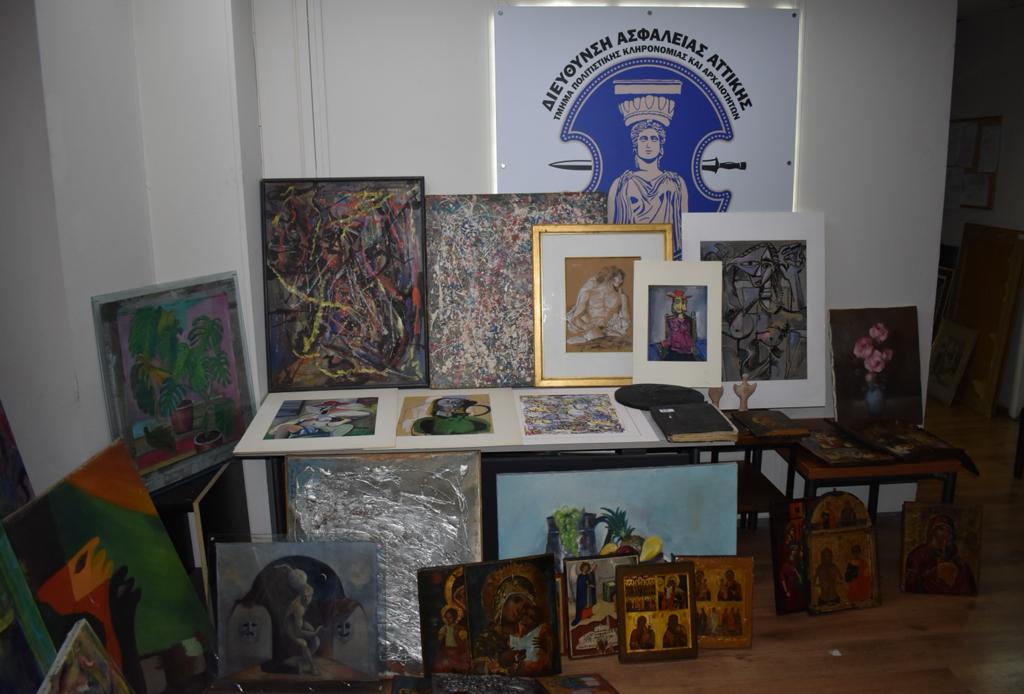
It is thought that four individuals were members of a criminal ring that was selling fake artworks, Byzantine images, and tiny antiques to purchasers in the wider region of Attica and Europe. These individuals were arrested by the Greek police agency.
Having purchased a phoney painting for 50,000 euros, the individual who fell victim to the fraud contacted the police and informed them of their situation.
During an operation that took place early on Monday morning, the four suspects were taken into custody. During the operation, officers presented as possible buyers of four bogus Picasso paintings and a counterfeit Jackson Pollock artwork, which were being sold for a total quantity of 4,400,000 euros.

Forgery, fraud, violation of the legislation for the protection of antiquities and cultural heritage, and receiving and disposing of products of crime are some of the charges that have been brought against the defendants. They are also accused of forming a criminal organisation.
As a result of the investigation conducted by the police, it became clear that the suspects had been operating as a criminal gang since at least December 2023. With the intention of selling fake paintings of a variety of genres that were reportedly created by world-renowned painters, as well as tiny antiques and icons, each individual held distinct duties within the ring with the intention of selling merchandise to potential purchasers.
Four fake Pollock paintings, three fake Rene Magritte paintings, three fake Henri Matisse paintings, three fake Yannis Tsarouchis paintings, a number of ecclesiastical icons with different representations and different dimensions, a number of objects and works of art of significant historical and archaeological value (vessels, clay figurines, metal objects, etc.), 118 paintings, 25 photographs depicting works of art or signatures of well-known artists on works of art, a digital camera, laptops, and twenty-nine thousand euros in cash were seized by law enforcement officers during a raid on the residences of the suspects.
A gallery located in the upmarket neighbourhood of Kolonaki is owned by one of the individuals who was arrested. According to the police, this individual was the instigator of the operation. He had been negotiating online for the sale of a false Kandinsky artwork for three million euros.
The paintings that were taken into custody were presented to a specialist at the National Gallery, who confirmed that they were actually forgeries. On the other hand, the antiquities that were taken into custody were presented to archaeologists and Byzantine specialists, who expressed their opinion that the majority of them are protected by the provisions of the law that are designed to safeguard antiquities and cultural heritage in general.
Image Courtesy : Citizen Protection MInistry/AMNA

TNA Editorial
- TNA Editorial
- TNA Editorial
- TNA Editorial
- TNA Editorial
- TNA Editorial
- TNA Editorial
- TNA Editorial
- TNA Editorial
- TNA Editorial
- TNA Editorial
- TNA Editorial
- TNA Editorial
- TNA Editorial
- TNA Editorial
- TNA Editorial
- TNA Editorial
- TNA Editorial
- TNA Editorial


Leave a Reply