
The global art world prepares for Art Basel 2025, which aims to transform the definition of contemporary art fairs. From June 19 to 22, more than 290 galleries from 42 different countries will display a boundless range of modern and contemporary works of art, including paintings, sculptures, photographs, digital art, and much more. The site-specific installations and various awards to be presented will transcend the previously outlined framework Art Basel 2025 set. It will also strive to reinforce its reputation as the epicenter for the vibrant art market and curatorial innovation.
Backdrop: An Overview of Art Basel 2025
Ever since the establishment of Art Basel in 1970, it has sought to epitomize the evolution of the art fair from a commercialized marketplace to a cultural centerpiece. The 2025 edition upholds its signature sectors: Galleries, Edition, Feature, Premiere, and Statements. It seeks to incorporate public art and other thematic presentations as well. Collectors, curators, and critics will have their eyes on artworks from early modernism to contemporary art during the preview days on June 17 and 18.
The fair’s enormous size, with more than 290 galleries and their respective Messe Basel halls, gives an overview of trends within the art market within the industry’s entire scope. Art merchants scatter from all continents, showcasing the art world’s decentralization along with the growing advancement of places such as Southeast Asia, the Middle East, and Latin America. So Art Basel 2025 serves as a place for commerce for blazoned brands as well as a stage to showcase rising talents, making it possible for them to discover, connect, and trade on an immeasurable level.
One of the most exciting highlights of Art Basel 2025 is the monumental effort by German artist Katharina Grosse at the Messeplatz. “Paint the world” is the grand theme of the exhibition; within these constraints, Grosse plans to spray custard-like monstrosities over the square and adjacent buildings for the “Messeplatz Grosse” project. Under Natalia Grabowska’s curatorship, the project wall, facade, and sidewalks undergo architectural metamorphosis, making these pieces of everyday surroundings immersed in a captivating perspective.
Grosse’s methodology – the use of color as a disruptive agent – asks us to rethink how we engage with a particular site and its surroundings. As flows of color spill over surfaces, the delimitation of the artwork and the city dissolves void of sepia. Locus-specific commissions capture the fair’s spirit of commitment to public art of great scope. It shows how Art Basel 2025 goes beyond the galleries and instead brings the city to life.
Unlimited: Boundless Creativity in Public Art
Within the Unlimited sector, which Giovanni Carmine curated, there lies a limit to what can be achieved for Art Basel 2025 in terms of scale and provocation. Unlimited allows for 67 large-scale works to be set up, which go beyond the usual booth boundaries. Exceeding this year’s highlights are massive sculptures, immersive video projection and wall-sized paintings.
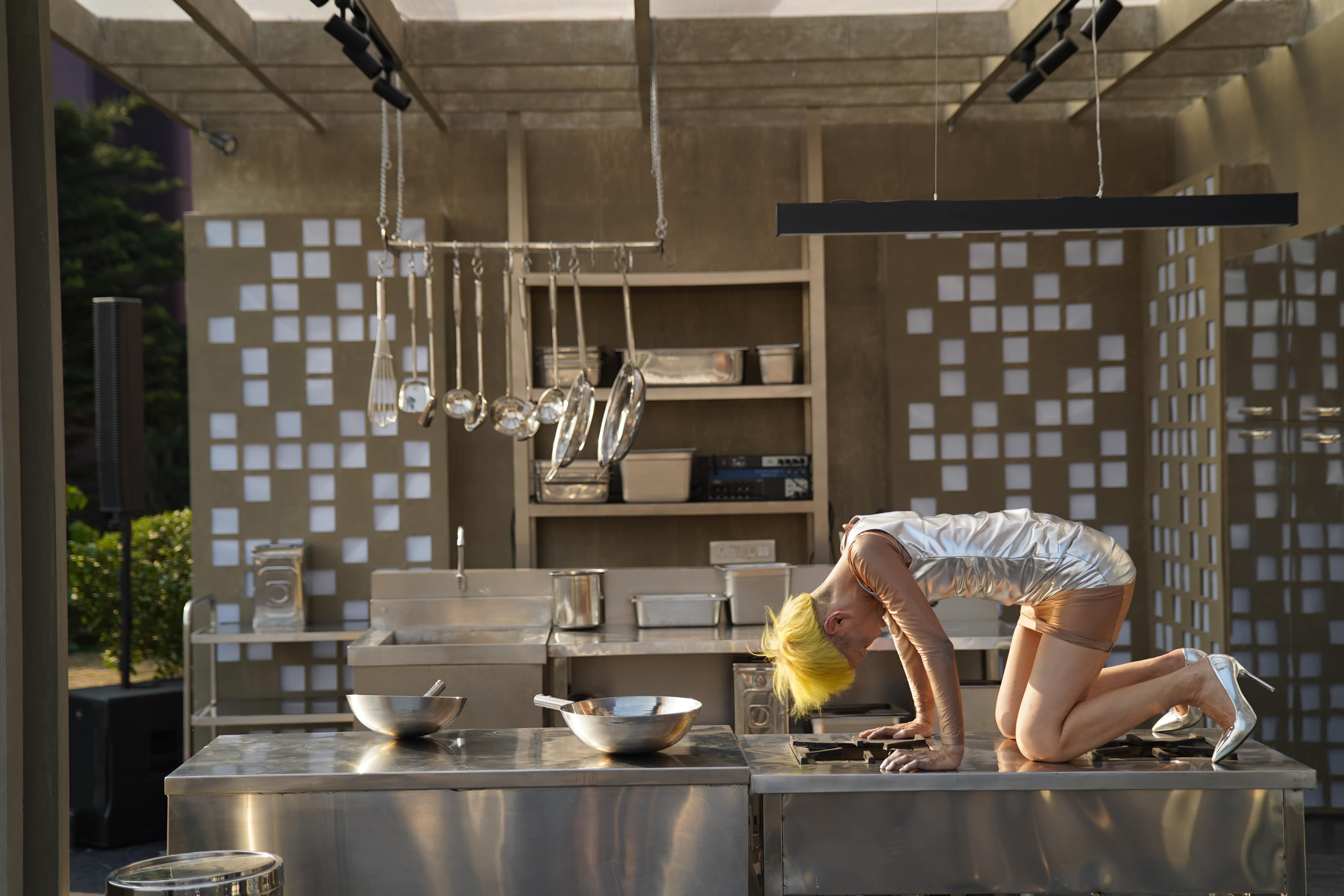
Andrea Büttner is exploring shame through expanded sculptural forms; Caroline Achaintre’s biomorphic textile persona “Gobbler” conjures ghostly masks of mythical proportions; and Cosima von Bonin renders Daffy Duck motifs in rich black velvet, assessing fatigue and over-exertion. Felix González-Torres’s go-go dancing stage in “Untitled” (1991) live resurrects the work, emphasizing the exciting sculptural potential of performance. Atelier Van Lieshout’s bizarre parade, “The Voyage – A March to Utopia,” traverses the utopian-dystopian divide alongside the Cairo-based group nasa4nasa’s performance “Sham3dan,” which combines politically charged metaphor with choreography.
Unlimited’s activities, set free from meter-square limitations, allow art patrons to interact with pieces that physically alter the fair’s architecture, reinforcing the projection of Art Basel 2025 as a center for overwhelming environmental and experiential art.
Parcours: Second Nature and Urban Interventions
While transforming city spaces into Basel’s open-air gallery, Stefanie Hessler’s curatorial work focused on the theme “Second Nature.” More than 20 specific installations are planned to be executed along Clarastrasse, the banks of the Rhine River, and at the old Hotel Merian. This includes a large-scale work at the Münsterplatz. With its thematic focal point, Parcours looks at the ever-porous border between human systems and natural systems. It raises questions about ecology, colonial histories, and the permeation of the body.
Known for his anthropological spectacles, Pavillion’s Hylozoic/Desires had the standout project of all with the 80-meter textile installation “namak halal / namak haram.” This particular piece tackles claims made by the Westerners regarding subservient Indians alongside simultaneous representations exhibiting dualistic tendencies of barriers as a means of oppression and a site for defiance. Also, Selma Selman’s installation of a salvaged car’s hood installation paired with a sniffer auditory landscape forces us to grapple with ideas surrounding mobility and spatiality. Sturtevant’s looped video of a dog running in frenetic circles transforms overzealous forms of minimalism into a meditative exercise on the unheimlich. Even with such different approaches and pieces, Parcours manages to unify the entire city as a living laboratory for the examination of the intersection of high art and urgency.
Kabinett Sector: Thematic Depth Within Gallery Booths
Reintroduced in the 2025 edition, the Kabinett sector has a dedicated area within the main gallery booths for showcasing 24 curated, thematic projects. This format promotes sharp, well-structured presentations as it allows the galleries to focus on specific stories or strategies.
Notable highlights include Pier Paolo Calzolari’s black paintings infused with salt, Hu Xiaoyuan’s portrayal of fragility through fictionalized remnants, and Martha Rosler’s feminist diaper-word painting from 1973. Other notable projects express the lineage of appropriation art, uncover the mystical sub-symbolism in Alekos Fassianos’s iconography, and interrogate language and thinghood through Lucia Nogueira’s multidisciplinary object-centered work.
The intimate scale of Kabinett pays tribute to the meticulous research and thematic order of the fair’s monumental gestures. Art Basel 2025’s micro-exhibitions expand the conversation within a greater commercial context, showing the strikingly inventive curatorial frameworks and scholarly endeavors developed in relation to the art market ecosystem.
Art Basel Awards Summit: Celebrating the Unsung Heroes of Modern Art
Art Basel is excited to announce its very first Awards Summit, set to take place in June 2025. This summit will be held to celebrate and honor 36 medalists worldwide for their incredible artistry, curatorial work, and patronage, as well as interdisciplinary ingenuity. In conjunction with BOSS, the Summit will display the artistic masters at Messe Basel on June 20, which will be accessible to the public for panels, discussions, and lectures.
With these changes, Art Basel aims to showcase the undisputed impact commerce has and the role intellectual exchange as well as industry advancement plays in the development Art Basel 2025 seeks. The summit, designed to provide insight into international social culture worth art-region representatives exploring contemporary leadership in contemporary culture, aims to shift the focus towards global art market award recipients and instigate discussion on the evolution of cultural leadership and the obligations accompanying global art governance towards its civilization.
Art Basel Shop: A New Collection Centered on Collected Editions
Complementing the Art Basel fair, they have expanded their trademark-buying retail offering into the fairgrounds with a collection at the Art Basel Shop, which features culture-commissioned objects, limited-edition design prints, and fashion products. The shop leaves the sphere of high-end collecting and enables attendees of the fair access to contemporary crest-designed items.
The shop’s offerings, such as the innovative dress models and ceramic pieces with artistic prints, hope to integrate Art Basel 2025 into daily routines, amplifying the fair’s understanding of art as a productive and constructive force. This project is aimed at capturing new revenue opportunities for galleries and creatives while simultaneously engaging the general public and developing new art fans and collectors.
Global Influence and Market Significance of Art Basel 2025
Being the most anticipated event on the global art calendar, Art Basel 2025 greatly impacts market trends and collecting behaviors. The fair encompasses an impressive list of galleries, from established blue-chip dealers to emergent niche practitioners, facilitating transactions that span from experimental digital pieces to six-figure masterpieces. It is not uncommon for sales data from the fair to inform secondary market valuations. Alternatively, artworks premiered in Basel often set the standard for New York and London’s auction seasons.
The fair’s multidisciplinary agenda combines commercial art with academic-level scholarly articulation—masters of all disciplines within the art world, as well as practitioners from beyond the realm, are welcome. Major collectors and institutional representatives, alongside art investment funds and philanthropic foundations, converge at the fair to negotiate acquisition, partnership, and sponsorship deals. At the same time, advisors and art consultants navigate their clients through the diverse array of services on offer at Basel, showcasing the fair’s multifaceted role in art-market operations and infrastructure.
In addition, Art Basel’s global digital platforms, including online viewing rooms and NFT auctions, publicized the fair beyond physical limits. Now, collectors unable to travel can engage with artworks virtually, place bids, and secure purchases while enhancing the fair’s footprint and reinforcing its role from a fair-centric hub to a 365-day marketplace.
Final Thoughts on Art Basel 2025 and the Progression of Art Fairs
In doing so, Art Basel further completes the dualistic tendencies within the art world in both culture and commerce. It provides a marketplace as well as an intellectual venue. The ever-broadening vision of what an art fair can achieve is evident in its ambitious program of site-specific commissions, large-scale installations, curated thematic sectors, and educational initiatives. From Katharina Grosse’s frequent monument to color and Kabinett’s self-absorbed meditations to the exuberant Unlimited and the contemporary art and civil transgressions of Parcours, the fair demonstrates that contemporary art is alive where notions are bold and the execution is disciplined.
For both market-focused and scholarly audiences, Art Basel 2025 offers unparalleled opportunities to engage with curatorial contemporaries and to witness key essentials of the season while examining emergent curves of aesthetics. The announcement of the Art Basel Awards Summit and the ever-changing off- and online spaces of commerce suggest a fair that is equally responsive and systemic in anticipating the multidimensional needs of a globalized artistic framework.
With Art Basel 2022 coming up, we are reminded of art’s ability to transform space, modern society, and even our sensibilities. It helps us realize that an art fair doesn’t have to just be a place for trade; it can also be a cultural lab—reacting, testing, and celebrating everything that is possible and can be possible.


Leave a Reply