Art Basel Qatar 2026: A New Era Begins
The global art calendar is about to change in a big way because Art Basel Qatar 2026 is about to open. This event, which will be open to the public from February 5 to 7, 2026, with special preview days on February 3 and 4, is more than just a new fair. It is a strategic realignment of the art market’s axis toward the Middle East, North Africa, and South Asia (MENASA) region. For people in the art market, like collectors, gallery owners, advisors, and institutional curators, the fair’s highlights give them a first look at a carefully planned ecosystem that will support the region’s creative economy.
The fair is working with Qatar Sports Investments (QSI) and QC+ to make itself not just a place to buy and sell art but also a “powerful conduit” between the established Art Basel network and the growing artistic communities in the Global South. The location itself is a break from the sterile convention center model that is common in the industry. Art Basel Qatar 2026 will take place in Msheireb Downtown Doha, using venues like M7 and the Doha Design District. This incorporation into the city’s urban regeneration project indicates an equitable experience that is fundamentally integrated into the local cultural framework, rather than being merely superimposed upon it.
The initial data is very convincing for stakeholders who are looking at the viability and tone of this new business. The fair will have 87 galleries from 31 countries, 16 of which will be showing their work for the first time. The demographic split is probably the most important thing for people who are looking at how the market is different. More than half of the 84 international artists on display are from the MENASA region. This number shows that the company is intentionally moving toward regional representation. This will create a discovery-rich environment for Western collectors and a home-court platform for regional patrons.
The Philosophy of “Becoming” at Art Basel Qatar 2026: Curatorial Vision
The curatorial theme “Becoming” is what makes Art Basel Qatar 2026 so interesting. In a market that is often criticized for being too commercial, the hiring of Wael Shawky as artistic director, who will work closely with Vincenzo de Bellis (chief artistic officer & global director, Art Basel Fairs), shows that the company is committed to curatorial rigor.
The title “Becoming” is more than just a poetic title; it is a way to think about “metamorphosis, transition, upheaval, and the thresholds in between.” This focus is especially relevant for a region that is changing quickly in terms of its economy and society. The curation aims to anchor the program in “urgent regional and global realities,” examining significant transformations in environmental, economic, and social domains.
This thematic coherence is crucial for the discerning collector or institution. It implies that the displayed works—encompassing both the Galleries sector and the Special Projects—are not isolated commodities but interrelated narratives. Wael Shawky says that the galleries and artists who are taking part are “deeply rooted in the cultural fabric of the Gulf and its extended geographies, while also pushing conversations forward in bold and unexpected ways.” The goal is to make the Msheireb district more lively by giving people new ways to “reshape how audiences engage with place.”
Vincenzo de Bellis backs this up by calling the fair a “narrative of transformation” that lets people see the region’s most diverse artistic styles. For the market stakeholder, this means that Art Basel Qatar 2026 will be both a curated biennial-style event and a commercial trade fair, which could lead to longer engagement times and more interest from collectors.

Site-Specific Interventions: Art Basel Qatar 2026’s Special Projects
A strong Special Projects program sets Art Basel Qatar 2026 apart. These nine large-scale, site-specific sculptures, installations, and performances stand out from the typical fair sectors that often receive less attention. They are part of the very fabric of Msheireb Downtown Doha. These projects make up the “largest group of public works ever done for an Art Basel show,” and they interact directly with the district’s architecture and public spaces.
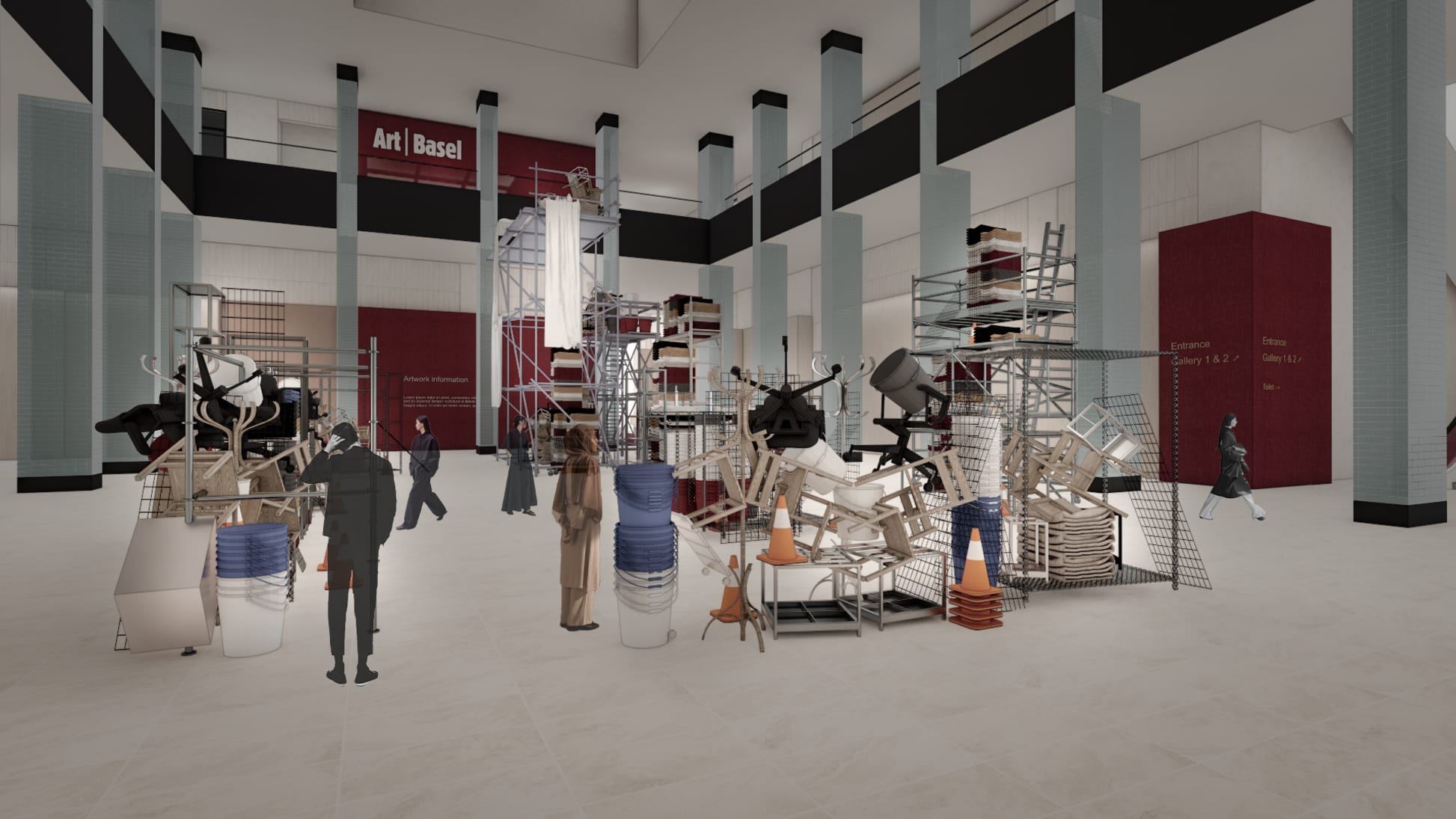
Architectural and Sculptural Interventions: Mexican artist Abraham Cruzvillegas will show a big version of his autoconstrucción series. For people who know Cruzvillegas’s work, the focus on “self-construction” through scarcity and creativity in this piece is a powerful metaphor for changing one’s identity. Nour Jaouda also builds an imaginary “rest house,” which is a skeletal structure made of steel walls that cross each other and pieces of fabric that hang from them. This installation questions fixed geography by showing a process of “continual becoming” that blurs the lines between past and future. Rayyane Tabet’s What Dreams May Come is an experiential pavilion made up of intersecting circular structures covered in palm fronds that interact with the Gulf’s unique cultural landscape. This piece gives a new meaning to the simple act of resting under a palm tree, turning it into a place to think. Khalil Rabah’s Transition is a large-scale installation made up of reconfigured pieces from homes and factories that critiques institutions. By indexing displaced objects, Rabah examines the “politics of space” and environmental memory, which are important themes in the region’s history. In the Assembly of Lovers, a constantly changing majlis, South African architect Sumayya Vally adds her own ideas. This installation is based on historic Islamic public spaces and is a “living monument” to the presence of many people.
Media and Performance: Bruce Nauman will show a new 3D video work called Beckett’s Chair Portrait Rotated at the fair. This is a big deal for the fair. This work by one of the most important artists of the last fifty years is projected on a huge screen in M7’s grand theater. It turns the space into a field of light and motion and looks at how people think about space. Nalini Malani’s My Reality is Different is a huge outdoor projection on the M7 facade. Malani is known for her work on migration and partition. Her single-channel version of her iPad stop-motion video promises to change the heart of Msheireb with “immersive, unrelenting imagery.” Hassan Khan’s Little Castles and Other Songs is a live performance of original songs on a custom-made digital system. This project was written during a time of global unrest and tries to capture the feelings of a “trembling, shifting world.” Finally, the two-person group Sweat Variant (Okwui Okpokwasili and Peter Born) puts on a three-hour movement piece. In a piece that doesn’t have a set ending, four performers will push the limits of relational memory, letting the audience move around.
These projects aren’t for sale in the usual booth sense, but they do help raise the event’s prestige, which is important for attracting museum groups and high-level curators who are needed for institutional acquisitions.

Market Analysis: The Galleries Part of Art Basel Qatar 2026
The galleries, part of Art Basel Qatar 2026, are still its main business engine. The list of participants shows a careful balance between Western blue-chip dominance and regional specificity, which is important for the long-term success of a new market hub.
Big Blue-Chip Companies:
David Zwirner in New York is showing a big version of Marlene Dumas’s Against the Wall series from 2009 to 2010. These paintings, which are based on images from the media of the Israeli-Palestinian conflict, are very valuable works of art that look at how identity is unstable and borders change. Hauser & Wirth (Zurich) looks at Philip Guston’s historical importance, focusing on his important change from abstract art in the 1960s to figurative art in the 1970s. This display of ink, drawing, and painting shows how Guston wanted to achieve “raw emotional clarity,” which is a safe but smart choice for collectors with a lot of money. Lynda Benglis’s Elephant Necklace Circle (2016) is a set of ceramic sculptures that show the “frozen gesture.” It is on display at Pace Gallery in New York and is popular with post-minimalism collectors. Mona Hatoum, an important figure in modern art, is on display at Galerie Chantal Crousel in Paris. There are nine works in the booth, including Cage for One (2022) and new pieces from 2025 like Mirror and Divide. These works look at themes of restriction and protection that are very relevant in today’s world.
Regional and Concept-Driven Highlights:
The fair is at its best when it celebrates regional masters. Gallery Isabelle (Dubai) has a booth in honor of the late Hassan Sharif, who was a pioneer of Gulf conceptual art. The gallery gives a scholarly look at his “Objects and Semi-Systems” by showing studies and works in progress. This is important for institutions that want to build Gulf-centric stories. Sfeir-Semler Gallery in Beirut shows how MARWAN (1934–2016) changed over time, ending with his famous Heads series—meditative portraits that go beyond geography. The Third Line (Dubai) shows Sophia Al-Maria’s HiLux (2025) for the first time. This project uses the Toyota Hilux truck to look at Gulf histories of fossil fuels and masculinity. International curators come to regional fairs to find work like this that is intellectually rigorous and has a strong local connection. Ahmed Mater’s photographic survey of Makkah, which shows the city as a living organism, is on display at the Athr Gallery in Jeddah. Mater’s work shows the “invisible economies” and architectural goals of the holy city, giving us a more complex picture of how Saudi Arabia is changing.
Conversations Around the World:
Anthony Meier and Waddington Custot are teaming up to give a solo presentation of Etel Adnan, whose intimate landscapes and spiritual connection to place have made her work very popular lately. Almine Rech in Paris shows Ali Cherri, whose sculptures and stories challenge the idea that humans and animals are two separate groups. The Lia Rumma Gallery in Milan is showing Shirin Neshat’s new work, Do U Dare! (2025), a haunting video and photo installation that questions the commercialization of identity and authoritarianism. Karma International (Zurich) focuses on Simone Fattal, whose simple shapes based on ancient cultures fit perfectly with the “Becoming” theme. Mohamed Monaiseer’s I, Pet Lion is on display at the Gypsum Gallery in Cairo. It uses embroidered textiles to show how symbols of conflict make their way into everyday life.
There is a lot of variety in the galleries sector, which means that Art Basel Qatar 2026 will have a tiered entry point for all stakeholders: established historical works for stability and cutting-edge regional commissions for growth and relevance.
The Ecosystem of Art Basel Qatar 2026 and Strategic Partnerships
For someone who works in the art market, the strength of a fair’s logistical and financial ecosystem is often what makes it possible. Art Basel Qatar 2026 has put together an impressive list of partners that will make sure everything goes smoothly.
Visit Qatar is the lead partner, and their goal is to make Qatar a top destination for cultural exchange by offering unique cultural and hospitality experiences. As a premium partner, Qatar Airways uses its global network to connect collectors to Doha, making it a cultural dialogue starter. UBS is still Art Basel’s Global Lead Partner, which gives the brand the financial credibility and client network it needs to be the best in the world.
GWC is the logistics partner for galleries that ship valuable items. They are working with QC+ to build the largest fine arts logistics warehouse in the region. This infrastructure is a game-changer for the region’s art handling capabilities because it was built to museum-grade standards and has ICEFAT accreditation.
Other partners are Audemars Piguet (Associate Partner), which runs a program to commission contemporary art; BMW, which offers VIP car services; and Media City Qatar, which shows off commissioned art by local artists. Rosewood Doha is the official hotel partner and offers luxury rooms in Lusail.
Parallel Programming at Art Basel Qatar 2026: Beyond the Booths
For an art fair to be successful, it needs to be part of a larger cultural constellation. Art Basel Qatar 2026 is timed to coincide with a strong program of exhibitions at Qatar Museums, which will give visitors the most value for their money.
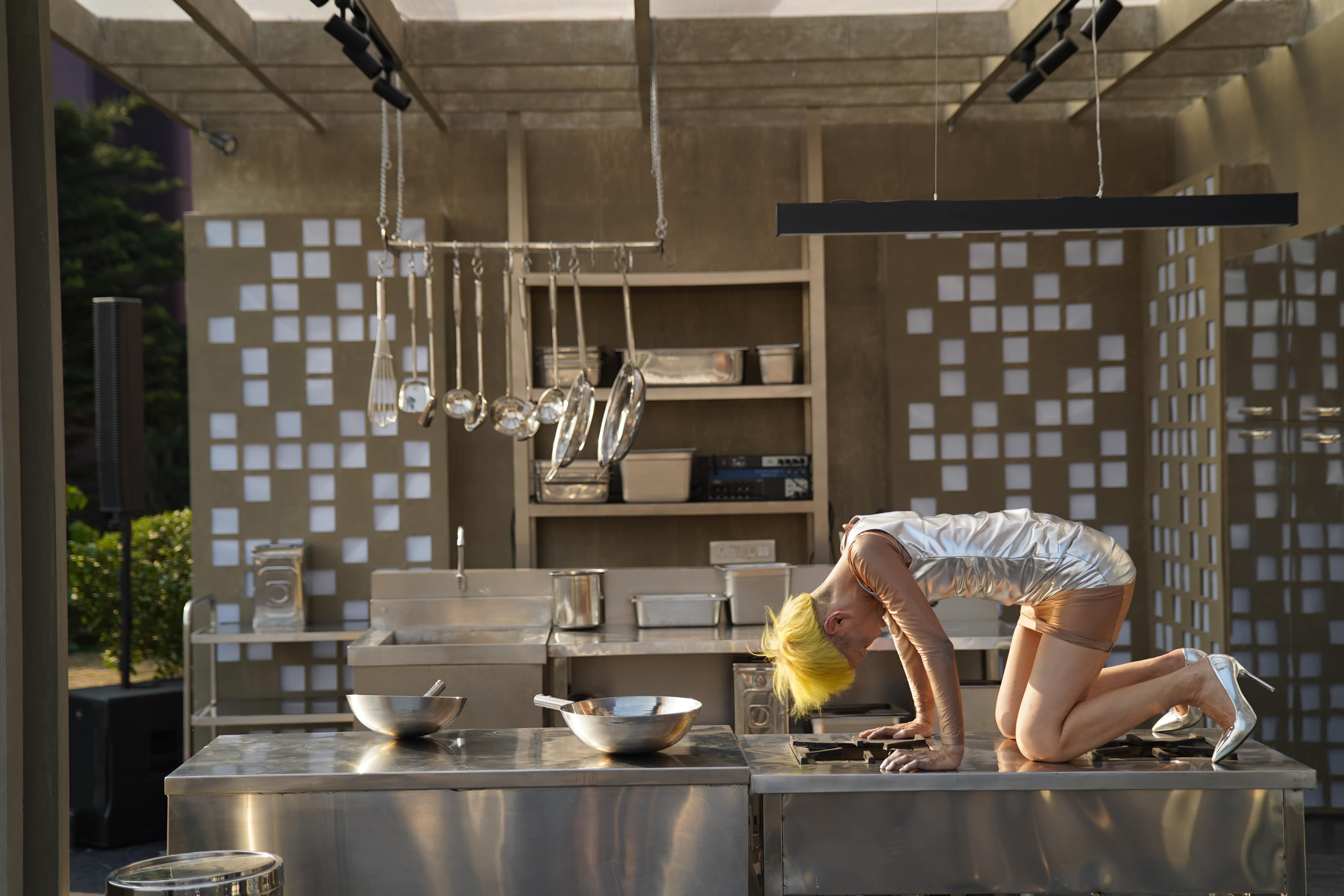
The Mathaf: Arab Museum of Modern Art will be a major focus, with Resolutions, a show that looks at the history of Arab modernism, marking the museum’s 15th anniversary. We also refused, which brings together modern artists who are interested in care and resistance. Life Is Architecture, the first full-scale retrospective of I. M. Pei, is on display at ALRIWAQ. It has more than 400 objects. Rirkrit Tiravanija’s performance installation, untitled 2025 (no bread no ashes), in MIA Park adds to this. It reimagines traditional ovens as places for people to interact with each other. I. M. Pei and the Making of the Museum of Islamic Art goes deeper into the life and work of the museum’s architect. QM Gallery Katara has an interactive exhibit of M.F. Husain’s work, The Rooted Nomad, which honors the Indian artist who lived in Qatar for the last few years of his life. The Qatar Preparatory School is home to the thought-provoking exhibit “Countryside: A Place to Live, Not to Leave,” which was co-curated by Rem Koolhaas and Samir Bantal. It challenges the dominant urban narratives. 3-2-1 Sneakers Unboxed at the Qatar Olympic and Sports Museum uses sneaker culture to show off Virgil Abloh’s designs.
Additionally, Qatar’s public art scene, which already includes Richard Serra’s East-West/West-East and Olafur Eliasson’s Shadows Traveling on the Sea of the Day, adds a permanent layer of artistic value to the visitor’s experience.
The Power to Change
The release of the Art Basel Qatar 2026 program shows that the fair is ambitious, well-thought-out, and well-organized. The event is set to become a key part of the MENASA art market by combining the global brand value of Art Basel with the unique culture of Doha.
For those involved, the message is clear: this is not just a satellite event; it is a “defining moment.” Art Basel Qatar 2026 will be a must-see event on the future global art circuit because it has a blue-chip inventory, a site-specific goal, and a theme that deals with the important issue of “Becoming.”



Leave a Reply