The world art market is about to go through a major structural change. The North Atlantic has long been the center of cultural power, with London and New York setting the standards, prices, and status. The recent announcement that the London-born contemporary art platform will launch Frieze Abu Dhabi 2026, on the other hand, marks a major shift in the center of gravity of the international cultural economy. This isn’t just an expansion of a Western franchise into a developing area; it’s the approval of a new, polycentric world order in which culture, capital, and power have definitely moved East.
To understand Frieze Abu Dhabi 2026, galleries, collectors, investors, and people who build institutions in the art market need to look beyond the press releases. It means breaking down a high-stakes story about politics and economics that includes issues like sovereign finance, corporate consolidation, and competition between regions. This event, which was planned in collaboration with the Department of Culture and Tourism – Abu Dhabi (DCT Abu Dhabi), shows that the United Arab Emirates (UAE) has grown from being a consumer of Western cultural brands to a major hub for global artistic exchange.
Frieze Abu Dhabi 2026: A New Direction for the Global Art World

It would be wrong to think of Frieze Abu Dhabi 2026 as a sudden event; it is the business side of a huge government investment in “hard” cultural infrastructure. The launch is timed to coincide with a “super-cycle” of institutional completions on Saadiyat Island. This will create an ecosystem that is arguably the densest concentration of Pritzker Prize-winning architecture and museum-quality art in the world.
The plan calls for a complicated operational takeover in which the current Abu Dhabi Art fair, which has been run by the government for almost 20 years, will become a Frieze-branded event. This change is not being seen as a hostile takeover but as a “natural evolution.” The 2025 edition of Abu Dhabi Art will be the last one under the current brand. It will be a way for the local team to pass on their operational knowledge to Frieze’s global team.
The timing of Frieze Abu Dhabi 2026 is very important because it takes advantage of the long-awaited opening of the Guggenheim Abu Dhabi in 2026. The Guggenheim, designed by Frank Gehry, is the “white whale” of the art world and a “demand generator” of the highest order. It will bring in museum groups, trustees, and critics from New York and Europe, and Frieze Abu Dhabi 2026 will be able to take advantage of this traffic. The fair becomes the commercial engine for a fully realized cultural district when it opens in December 2025, along with the Zayed National Museum. Before that, it was just a tent in the desert.
How Frieze Abu Dhabi 2026 Will Be Funded
The corporate architecture that makes Frieze Abu Dhabi 2026 possible is what most interests financial stakeholders. The fair is no longer just a local trade show; it is now a global asset class run by holding companies that have strong ties to sovereign wealth.
Ari Emanuel, the CEO of Endeavor, bought Frieze through a new holding company called Mari. This was a big move that changed everything in 2025. This purchase, which cost about $200 million, gives the Frieze brand the chance to take advantage of synergies in sports, fashion, and entertainment. Abu Dhabi is also putting a lot of money into these areas. Emanuel sees modern art fairs as more than just places to buy things; he sees them as high-margin luxury experiences.

But Mari’s capital structure shows a strange geopolitical paradox that has a direct effect on Frieze Abu Dhabi 2026. The holding company got more than $2 billion in equity, with the main investors being IMI (International Media Investments) from Abu Dhabi and the QIA (Qatar Investment Authority), which represent the sovereign interests of two Gulf states that are rivals.
In this case, the Qatar Investment Authority is a partial owner of the parent company that owns Frieze. At the same time, Frieze is opening a flagship fair in Abu Dhabi that is a direct competitor to Qatar’s own state-sponsored event, Art Basel Doha. This financial mess shows that the competition at the highest levels of sovereign finance is more complicated than it seems. While the cities compete for cultural prestige on the “front stage,” their capital pools are mixed up in global asset vehicles on the “back stage.”
Even with all these changes, Deutsche Bank is still a stabilizing force and has confirmed its support for the first Frieze Abu Dhabi 2026. This partnership is very important for business because it shows that the fair will follow international standards for financial conduct and VIP client service. It will also bring together the excitement of an emerging market with the high standards of European collectors.
How to Get Around the Cultural Ecosystem of Frieze Abu Dhabi 2026
Frieze Abu Dhabi 2026 will only be successful if it can fit in with the local “host ecology.” To avoid the “parachute” problem that Western brands often run into when they enter the Middle East, the change from a locally grown fair to a global franchise is being carefully planned.
Keeping Dyala Nusseibeh as the fair director is an important part of this continuity. Many people respect Nusseibeh for her smart way of thinking and the strong ties she has with families in the area. Her leadership makes sure that Frieze Abu Dhabi 2026 keeps the “DNA” of the local culture, which is important because fly-in executives often don’t know how to follow local rules.
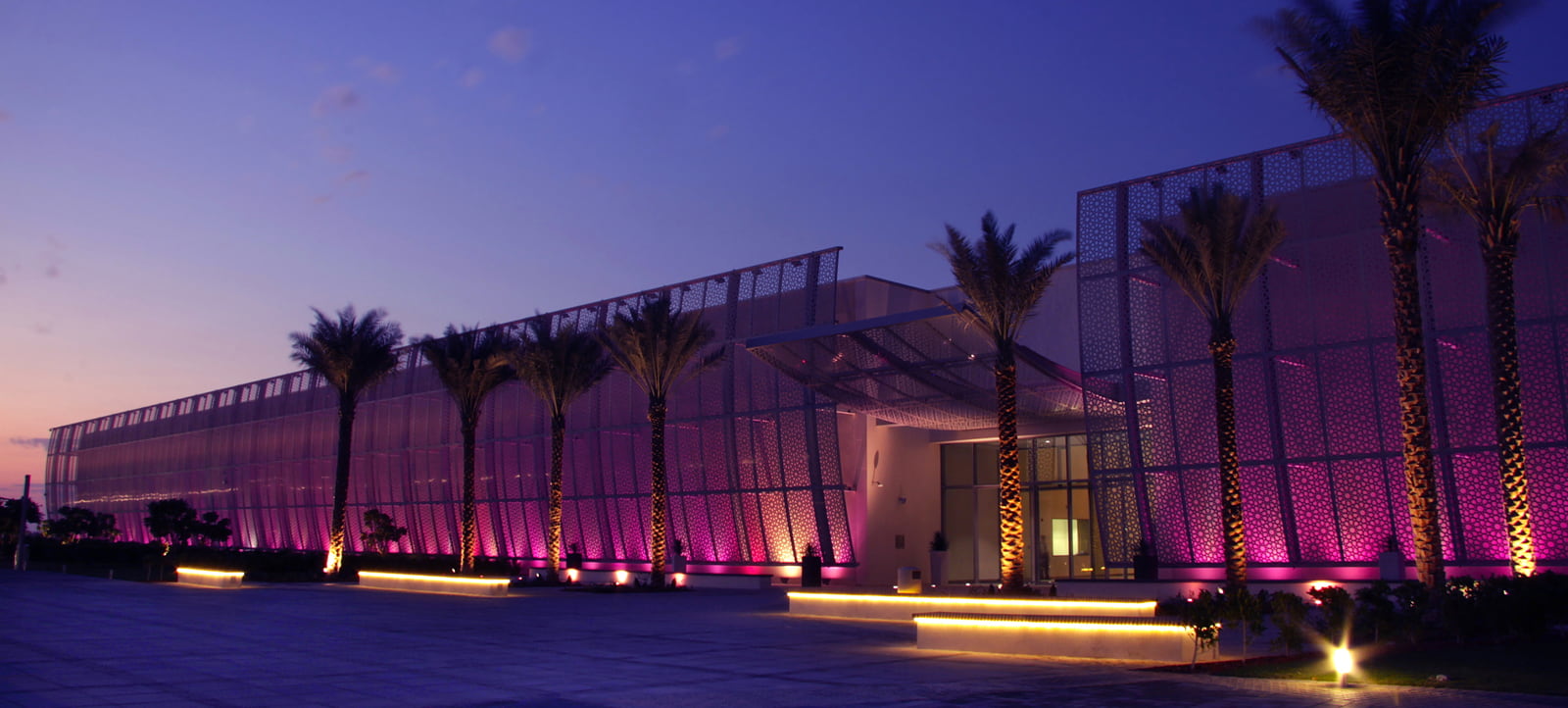
The venue itself, Manarat Al Saadiyat (“Place of Enlightenment”), ties the global brand to the physical history of the emirate’s cultural growth. The 15,400-square-meter space is smaller than the convention centers used for Art Basel Hong Kong, but it fits the “boutique” feel that high-end collectors like right now, making it easier to see the art up close. It is also physically connected to the rest of the Cultural District, making it easy to move between the fair and the Louvre or Guggenheim.
The Louvre Abu Dhabi, which has been open since 2017, has already proven the Saadiyat idea and shown that cultural tourism can be a strong economic base. Frieze Abu Dhabi 2026 doesn’t have to convince people to go to a desert island; people already know about it. The fair can use the Louvre’s programming to improve the experience for collectors by setting up VIP tours or gala dinners under the famous rain-of-light dome.
Art Basel vs. Frieze Abu Dhabi 2026 Doha: The “Fair Wars” of the Gulf
The year 2026 will be remembered as the year the “Cold War” of Gulf culture turned hot, when the two biggest art fair franchises in the world opened in the region at the same time. Frieze Abu Dhabi 2026 and the upcoming Art Basel Doha are in a fierce competition with each other.
Both fairs want to attract the same wealthy people in the area, but they do so in different ways. Frieze Abu Dhabi 2026, which starts in November, uses a “Legacy” model. It gets an existing database of collectors and government contacts when it takes over Abu Dhabi Art. This is like “upgrading” a running engine instead of starting from scratch. Its timing is smart because it takes advantage of the winter tourism market and gives galleries a chance to sell off their stock before the end of the fiscal year.

Art Basel Doha, on the other hand, is starting from scratch with a “Greenfield” launch in February 2026. It doesn’t follow the “trade show” model; instead, it has a “boutique” format and only 87 galleries, while Frieze is likely to have more than 100. Art Basel Doha seems to value critical discourse more than just business, with artist Wael Shawky as the artistic director.
Art Basel Doha is too close to Art Dubai, which usually happens in March, because it happens from February 5 to 7, 2026. This situation forces collectors to choose between events or to make multiple trips to the Gulf within a short period. Frieze Abu Dhabi 2026, which takes place in November, avoids this busy time of year by being far away from the busy spring.
The Kingdom of Saudi Arabia is a big part of the rivalry between the UAE and Qatar. Right now, collectors in Saudi Arabia spend the most money in the region. Both Frieze and Art Basel are trying to get the attention of wealthy people in Riyadh. With events like Riyadh Art Week expected to get bigger, it’s only a matter of time before a third major player shakes up the “Abu Dhabi-Doha duopoly.”
Curatorial Mandate: The “Global South” and Frieze Abu Dhabi 2026
Frieze Abu Dhabi 2026 has clearly called itself a “gateway into the Global South” to stay relevant. This isn’t just marketing talk; it’s a necessary way to set yourself apart from the competition. Frieze London has the story of Europe, and Frieze New York has the story of America. The “Rest of the World” story must be told by Frieze Abu Dhabi 2026.
The fair’s goal is to focus on artistic practices that have been on the fringes of Western capitals, including those from the MENA region, South Asia, and Africa. Abu Dhabi is the natural meeting point for these markets because it is close to Mumbai, Cairo, and major African hubs.
We can expect the gallery at Frieze Abu Dhabi 2026 to be a carefully chosen mix of different styles. Pace, Gagosian, and White Cube, among other big names, will be there to keep in touch with sovereign buyers. But it’s likely that regional galleries like The Third Line (Dubai), Chemould Prescott Road (Mumbai), and Kó (Lagos) will get a lot of attention. This changes the usual order of things in Basel or London, where galleries from outside the West are often pushed to the edges.
This curatorial strategy fits with the mission of the Guggenheim Abu Dhabi, which has spent more than ten years building a collection that changes the way we think about art history from a non-Western point of view, focusing on the histories of West Asia, North Africa, and South Asia (WANASA). Frieze Abu Dhabi 2026 creates a strong feedback loop between institutional validation and commercial value by giving visitors a place to buy the art they see in the museum.
The Economic Engine Behind Frieze Abu Dhabi 2026
Strong economic fundamentals set the UAE market apart from other emerging regions and support the launch of Frieze Abu Dhabi 2026. The UAE has become a major beneficiary of global wealth migration thanks to the introduction of Golden Visas for investors and artists. This policy has completely changed the UAE’s population from a place where people come and go to a permanent home for wealthy people from Russia, Europe, and the Subcontinent.
This change in population is causing a boom in real estate, especially on Saadiyat Island. Collecting art is a natural part of decorating high-end homes, and Frieze Abu Dhabi 2026 has the pieces that these new homes need. The growth of the Abu Dhabi Global Market (ADGM) and the arrival of hedge funds and family offices make it a great match for the Frieze audience.
Also, Frieze Abu Dhabi 2026 is a big draw for tourists. The “Frieze Week” effect is beneficial for the local economy because visitors spend money on food, transportation, and other shopping. The St. Regis and Park Hyatt are two of the high-end resorts on Saadiyat that are important partners. They fill rooms during the shoulder season in November.
Deutsche Bank leads the corporate sponsorship model, which gives the fair a financial safety net that lets it take curatorial risks. The fair is a chance for the bank to meet the new wealthy people in the area. This will help the bank become more well-known in Abu Dhabi as it becomes a global financial center.

The Future: 2026 and the New Polycentric Order
The UAE has been putting together a puzzle for twenty years, and the opening of Frieze Abu Dhabi 2026 is the last piece. It means going from “building” to “activating.” Abu Dhabi is trying to end the West’s dominance by bringing in Western brands like Frieze, the Louvre, and the Guggenheim. The goal is to use these brands to make the local scene more real until the “Abu Dhabi” suffix is as important as the “Frieze” prefix.
The main risk is still how deep the collector base is. Can the Gulf handle three big art fairs (Abu Dhabi, Dubai, and Doha) and a growing art scene in Riyadh? Some people think the market might eat itself, which would mean that only one person would win. Frieze Abu Dhabi 2026, on the other hand, is betting that it will win because it is in a unique “Global South” location and is close to world-class museums.
Frieze Abu Dhabi 2026 is a work of contemporary art that makes a political statement. It says that the UAE is no longer on the edge of the cultural world. The fair is set to become the main business link between the West and the Global South by using Mari’s financial power, the Guggenheim and Zayed National Museum’s institutional power, and Abu Dhabi’s logistical hub.
When the doors open at Manarat Al Saadiyat in November 2026, the art world will see not only a new fair but also the approval of a new, polycentric world order.


Leave a Reply