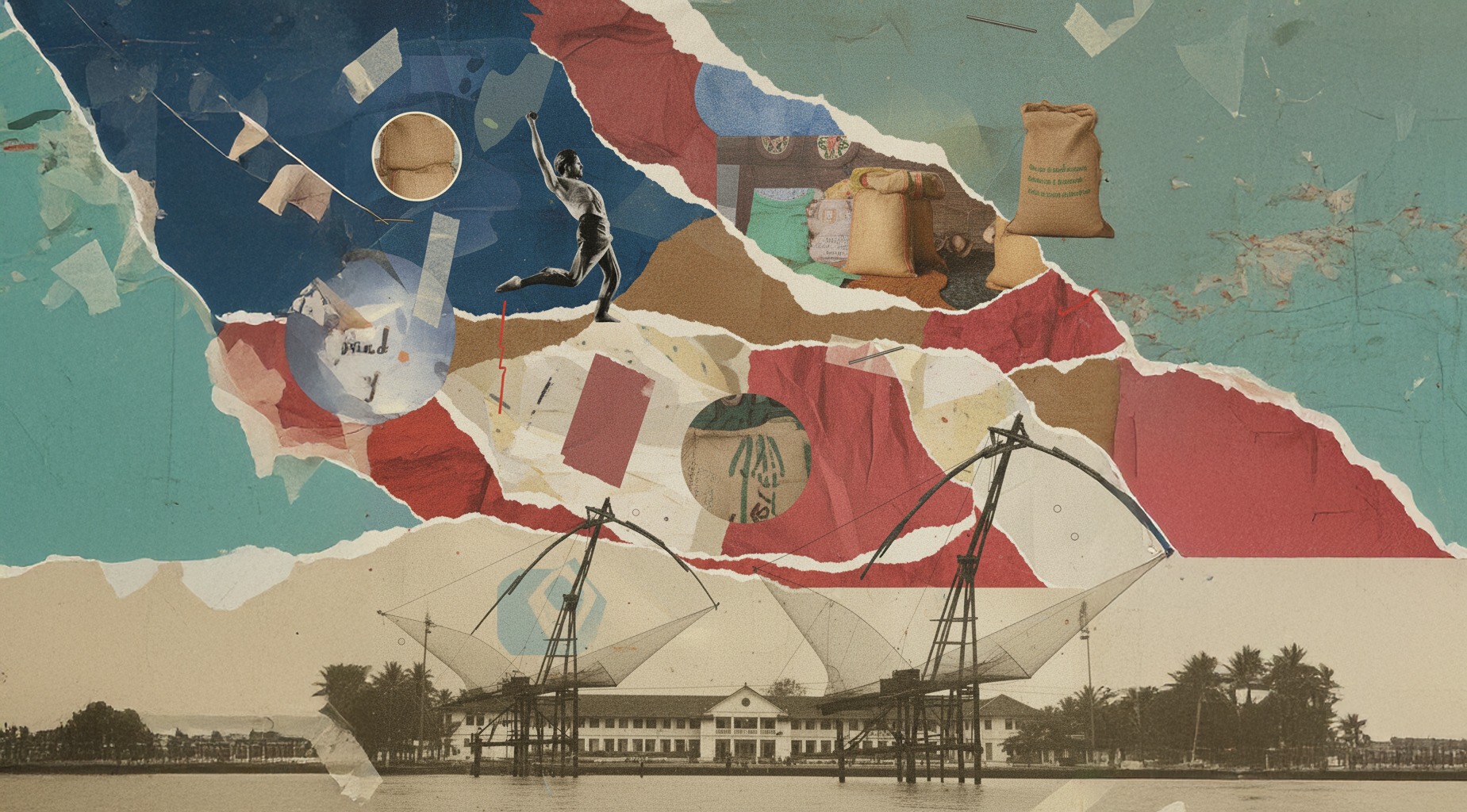
This is your complete guide to the sixth edition of the Kochi-Muziris Biennale. Welcome, art lovers and cultural explorers! This event has become a must-see on the global art calendar since its first show. The Kochi-Muziris Biennale is more than just an art show; it’s a lively cultural event. It’s the first of its kind in India and the biggest and longest-running contemporary art biennial in South Asia. It turns the historic port city of Kochi into a huge “cultural laboratory,” encouraging a deep conversation between art and society. Its artist-led foundation is what really makes it stand out. This principle gives each edition a unique, practitioner-focused energy that sets it apart from other international events.
The name of the Biennale itself is a bridge through time. It connects the modern city of Kochi with the legendary ancient port of Muziris, which was a cosmopolitan center of cultural exchange long before globalization became a thing. The historical resonance makes a strong background for the modern works on display. The sixth edition, “For the Time Being,” will carry on this tradition while also taking a bold new direction. This edition is a direct and thoughtful response to our troubled modern world. It will run for an immersive 110 days from December 12, 2025, to March 31, 2026.
“For the Time Being,” the title itself, is a philosophical anchor in a world that is always changing. The curatorial vision talks about the shared experiences of our time, like the “aftermath of a global pandemic,” the “unease of war and regimes,” and the “isolating effect of a world saturated with digital images.” In this light, the Biennale is a strong call to be present and to interact with art and with each other in a mindful, physical way. There will be 66 artists and groups from more than 25 countries at the event. It promises to be a “dynamic constellation of both established and emerging voices,” each chosen for their ability to show “courage, care, and reflection.” This edition isn’t just an exhibition; it’s a statement about what art is for in our time. It supports the fleeting, the process-driven, and the power of direct, unmediated experience.
The Curatorial Vision for the 2025 Kochi-Muziris Biennale
The choice of curators for the sixth Kochi-Muziris Biennale makes it obvious what the event will be about. For the first time in history, the Kochi Biennale Foundation has given its vision to a group of people instead of just one person. This group is HH Art Spaces, an artist-led initiative based in Goa and led by its co-founder, the internationally known performance artist Nikhil Chopra. This break from the single-author model of past editions, which were curated by well-known figures like Jitish Kallat, Anita Dube, and Shubigi Rao, is a deliberate statement on the “spirit of solidarity and collective endeavor” that defines this one.
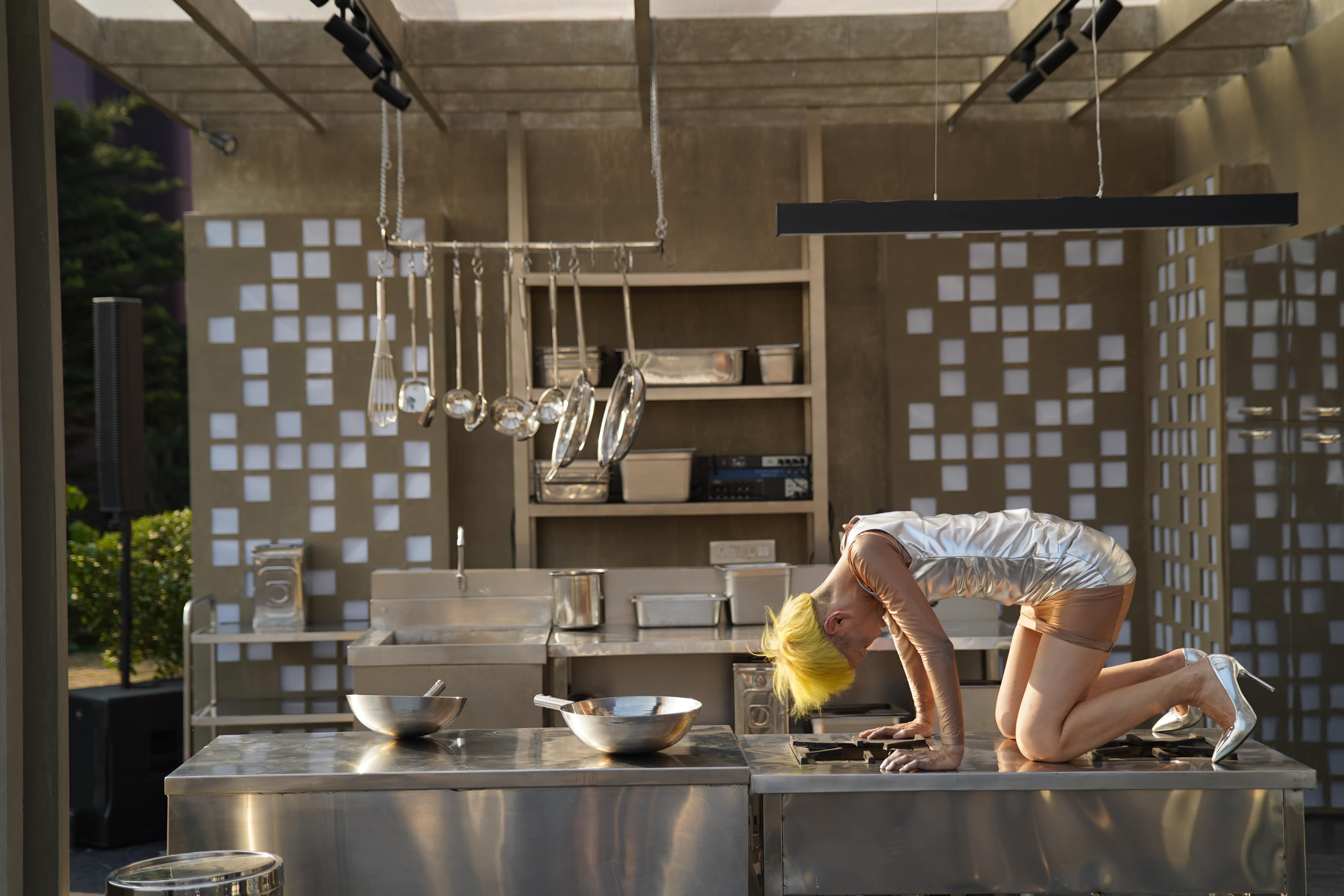
To comprehend the curatorial framework, it is essential to understand its creators. Nikhil Chopra’s own art is a powerful mix of drawing, photography, installation, and durational performance, with the body as the main medium. He is known for performances in which he takes on different roles, often based on his family history and the colonial past of the subcontinent, to look at how identity, memory, and history change over time. His focus on “landscapes in distress,” from the politically charged terrain of Kashmir to the ecologically fragile Himalayas, is directly related to the main ideas of the Biennale.
HH Art Spaces upholds values that bolster this individual’s practice. Chopra helped start it in 2014. It is a place where people can work together to be creative through residencies and workshops, and it connects modern and traditional art forms. The idea behind this artist-run project, which is based on relational networks and “friendship economies,” has grown to the level of a major international biennial.
The curatorial vision for “For the Time Being” calls for a complete rethinking of the biennial format. There are a few main pillars that support it:
The main idea is to move away from a static exhibition and toward a dynamic model where “each element shares space, time, and resources and grows in dialogue with each other.” This implies that the event is not fixed and predestined, but rather unfolds and interacts with other elements.
The Body as Landscape: The vision begins with the body, characterized as “chemical, tender, marked by memory and intimacy,” as the principal locus of experience. It is a “vessel of labor, memory…and transformation” that contains both “hope and grief.” This metaphor also applies to the city of Kochi, which has a broken geography that has been shaped by centuries of movement and trade.
Process Over Spectacle: The curators are clearly “resisting the pressures of the conventional biennale model as a finished spectacle” in favor of something that is “evolving, responsive, and alive.” These traits will show up in a focus on long-term works, experimental performances, and installations where the process of making art is just as important as the final product. The aim is to get people to “share time and space” with the art, not just view it.
Deep Local Engagement: One of the main ideas is to ask artists to “work with Kochi’s climates, conditions, and resource realities; make time, think quickly, and work together locally.” This puts the international event in its immediate context and calls for a way of producing things that is flexible, resourceful, and deeply connected to the people and environment in the area.
This framework is not just a theme; it is also a moral and practical idea. By putting “friendship economies” in the spotlight and accepting “precarity and vulnerability,” the curators are turning possible weaknesses into creative strengths. This method provides a real and long-lasting example of how big art events in the Global South can thrive without copying the expensive shows in the West. Instead, they can use their own unique circumstances to come up with new ideas.
A Global Constellation at the Kochi-Muziris Biennale
The list of 66 artists and groups who will be taking part gives us our first real look at how this “living ecosystem” will be filled. It is a carefully chosen mix of renowned artists from around the world, respected figures from Indian modernism, and a wide range of contemporary artists from South Asia and other places.
| Artist/Collective Name | Country/Region of Practice | Primary Medium/Artistic Focus |
| Abul Hisham | India / Netherlands | Painting, Sculpture |
| Aditya Puthur | India | Painting |
| Adrian Villar Rojas | Argentina | Large-scale, site-specific installation |
| Ali Akbar PN | India | Painting |
| Anja Ibsch and Grüntaler9 | Germany | Performance, Installation |
| Arti Kadam | India | Sculpture (stone, wood) |
| Athina Koumparouli | Greece | Multidisciplinary research, Installation |
| Bani Abidi and Anupama Kundoo | Pakistan / Germany / India | Video, Photography / Architecture |
| Bhasha Chakrabarti | USA / India | Mixed Media, Textiles |
| Biraaj Dodiya | India | Painting, Sculpture |
| Birender Yadav | India | Multidisciplinary, Installation |
| Cinthia Marcelle | Brazil | Video, Photography, Installation |
| Dhiraj Rabha | India | Visual Arts (exploring displacement, identity) |
| Dima Srouji and Piero Tomassoni | Palestine / Italy / UK | Architecture, Research, Installation |
| Dineo Seshee Bopape | South Africa | Multimedia Installation |
| Faiza Hasan | Pakistan | Painting, Literature |
| Gieve Patel | India | Painting, Poetry, Playwriting |
| Gulam Mohammed Sheikh | India | Painting, Art Criticism |
| Hicham Berrada | Morocco / France | Installation, Video, Performance |
| Himanshu Jamod | India | Painting, Sculpture |
| Hiwa K | Iraq / Germany | Performance, Video, Installation |
| Huma Mulji | Pakistan / UK | Sculptural Installation, Photography |
| Ibrahim Mahama | Ghana | Large-scale Installation (found materials) |
| Jayashree Chakravarty | India | Painting, Large-scale paper installations |
| Jompet Kuswidananto | Indonesia | Installation, Performance |
| Jyoti Bhatt | India | Painting, Printmaking, Photography |
| Khageswar Rout | India | Sculpture (ceramics, metal) |
| Kirtika Kain | Australia | Multidisciplinary (Dalit diaspora experience) |
| Kulpreet Singh | India | Painting, Sculpture |
| Lakshmi Nivas Collective | India / USA | Installation, Mixed Media |
| LaToya Ruby Frazier | USA | Photography, Video, Social Justice |
| Lionel Wendt | Sri Lanka | Photography, Pianism |
| Malu Joy (Sister Roswin CMC) | India | Visual Arts |
| Mandeep Raikhy | India | Dance, Performance |
| Maria Hassabi | Cyprus / USA | Choreography, Performance |
| Marina Abramović | Serbia / USA | Performance, Endurance Art |
| Mark Prime | UK / India | Sculpture, Installation |
| Matthew Krishanu | UK | Painting |
| Meenu James | India | Visual Arts |
| Minam Apang | India | Painting (acrylic, watercolor, ink) |
| Mónica de Miranda | Portugal / Angola | Film, Photography, Installation |
| Monika Correa | India | Weaving, Fiber Art |
| Moonis Ahmad Shah | Kashmir/India / Australia | Installation, Sculpture, Sound, Video |
| Naeem Mohaiemen | Bangladesh | Film, Photography, Writing |
| Nari Ward | Jamaica / USA | Sculpture, Installation (found objects) |
| Niroj Satpathy | India | Multidisciplinary (non-conventional media) |
| Nityan Unnikrishnan | India | Painting, Design |
| Otobong Nkanga | Nigeria / Belgium | Drawing, Installation, Performance |
| Pallavi Paul | India | Film, Video Installation, Research |
| Panjeri Artists’ Union | India | Multidisciplinary Collective, Performance |
| Prabhakar Kamble | India | Conceptual Art, Installation, Performance |
| Raja Boro | India | Music |
| Ratna Gupta | India | Sculpture |
| Sabitha Kadannappally | India | Painting |
| Sandra Mujinga | Congo / Norway | Video, Installation, Sculpture, Textiles |
| Sayan Chanda | India / UK | Textiles, Installation |
| RB Shajith | India | Painting (watercolor) |
| Sheba Chhachhi and Janet Price | India / UK / New Zealand | Multimedia Installation / Activist Art, Textiles |
| Shiraz Bayjoo | Mauritius / UK | Film, Painting, Installation |
| Smitha Babu | India | Painting, Theatre |
| Sujith S.N | India | Painting (watercolor) |
| Tino Sehgal | Germany / UK | Constructed Situations, Performance |
| Utsa Hazarika | USA / India | Video, Installation, Sculpture |
| Vinoja Tharmalingam | Sri Lanka | Drawing, Painting |
| Yasmin Jahan Nupur | Bangladesh | Installation, Performance, Drawing |
| Zarina Muhammed | Singapore | Performance, Installation, Research |
International Headliners and What They Mean.The Biennale’s ideas are based on well-known, influential artists from around the world.
The presence of Marina Abramović, who calls herself the “grandmother of performance art,” is a strong sign of her intentions. For the past fifty years, she has been exploring endurance, the limits of the body, and the relationship between performer and audience. Her famous works, like The Artist is Present (2010), have changed the field. Her involvement is a key idea for the Biennale’s focus on liveness, presence, and embodied experience.
LaToya Ruby Frazier (USA): Frazier’s work is at the important crossroads of social justice, documentary photography, and collaborative storytelling. Her long-term projects, such as The Notion of Family (2014) and Flint Is Family (2022), give a voice to people who are on the outside looking in and are dealing with the effects of industrial decline, systemic neglect, and environmental racism. The Biennale is all about “shared memories, mirrored struggles, and new affinities rooted in empathy and deep listening,” and her “collaborative storytelling” style fits right in with that.
Ibrahim Mahama (Ghana): Mahama is known for his huge architectural projects that use materials with a lot of history, like jute sacks, which are very well known. He makes the hidden networks of money and work that support our global economy visible by sewing together these old sacks and hanging them over important buildings. His deeply collaborative process is a direct reflection of the Biennale’s values of involving the community and making art in specific places.
Adrian Villar Rojas, an Argentine sculptor known for his large, temporary installations, and Otobong Nkanga, a Nigerian-Belgian artist who looks into the politics of land and natural resources, are two other well-known international figures who add to this global conversation.
The Indian Vanguard: What They Left Behind and What They Still Do
One of the best things about the artist roster is that it is very well-informed about the history of Indian modern and contemporary art. Including a number of senior Indian artists makes sure that the global conversations are always in touch with local artistic traditions.
Gieve Patel is a poet, playwright, and painter. His work has always been about how weak the human body is and what life is like in Indian cities.
Gulammohammed Sheikh: Sheikh is a key figure in the Baroda School. His huge, narrative paintings combine personal memories, art history, and world events.
Jyoti Bhatt is a well-known modernist painter and printmaker. He is also known for taking a lot of pictures of rural Indian folk traditions.
Sheba Chhachhi: Chhachhi’s work has changed from documenting the women’s movement in the 1980s to making interactive multimedia installations that look at gender, the environment, and myth.
These artists give the Biennale a specific cultural and historical path, making sure that the “global collaborations” are firmly based in the “local energies” of the subcontinent.
The City as Canvas: Places for the Kochi-Muziris Biennale
One of the most important things about the Kochi-Muziris Biennale is how well it fits in with the city. The event has never used the sterile “white cube” gallery; instead, it has always put art in Kochi’s historic buildings, old warehouses, and public spaces. This site-specific approach makes a strong connection between modern art and the city’s long histories of maritime trade, cultural exchange, and colonialism.
The sixth edition will continue this tradition, taking place in more than 20 places in the unique neighborhoods of Fort Kochi, Mattancherry, Willingdon Island, and the modern city of Ernakulam.
Core Heritage Venues: The Biennale will once again be based in its famous historic sites. Aspinwall House, which used to be the headquarters of a British trading company, has a maze of warehouses that look out over the sea. The restored 19th-century spice warehouse Pepper House is a more private place. Durbar Hall used to be the courthouse for the Maharaja of Kochi. Now, as a gallery, it adds to the sense of civic and colonial history. These places aren’t just empty spaces; their histories and atmospheres are also part of the show.
Expansion and New Commissions: One of the most important things happening in 2025 is the plan to commission about 50 new works. Many of these will be shown in “first-time venues in neighborhoods that are full of trade, people, and movement.” This plan takes the Biennale beyond its usual art trail and into the city’s living arteries, which is exactly what the curatorial call for artists to “collaborate locally” calls for. This physical growth makes the idea of the exhibition as a “growing organism” real. It breaks down walls between the art world and the public sphere and makes the Biennale a bigger part of Kochi’s social and cultural life.
A Guide for Visitors to the Kochi-Muziris Biennale
To get the most out of “For the Time Being,” a visitor must be an active participant who is willing to spend time and be there. Here is some useful information to help you make plans for your trip.
Tickets and Shows
There are different ways to buy tickets for the Biennale. You can go to all the official venues for the day with just one ticket.
Prices for tickets:
₹150 for adults (one day)
₹100 for seniors
Child or student: ₹50
Pass for a week: ₹1,000
Pass for a month: ₹4,000
How to Buy: You can buy tickets online through the official website or in person at the main venue, Aspinwall House.
Along with the main exhibition, there are many other events going on at the same time, such as the Students’ Biennale, the Art By Children program, talks, film screenings, workshops, and an artist residency program. For more information, check the official schedule closer to the opening date.
Beyond the Biennale, take some time to see the area. See the famous Chinese Fishing Nets, the historic Jew Town and Paradesi Synagogue, and the Mattancherry Palace. See a traditional Kathakali show and enjoy the unique tastes of Kerala’s food.
A Time of Change
The sixth edition of the Kochi-Muziris Biennale, “For the Time Being,” is going to be a very important time of change. Nikhil Chopra and HH Art Spaces are working together to make it a deep response to our current situation. The focus on the body, the process, and making a “living ecosystem” is a big change from the way many international biennials work, which is based on spectacle. It asks people to be there, listen, and take part in a shared experience.
This edition also shows how strong institutions can be. Choosing to have a smaller, more focused group of artists and accepting “precarity” in logistics as a creative method shows a shift toward a model that is more sustainable and based in the real world. “For the Time Being” feels like something that needs to be done right away. The Biennale is a place where people can connect, think, and maybe even heal together during this “transformative time” when the curators “hold space for grief and mourning.” It promises to be a cultural journey that changes the way we interact with the world and appreciate art. This makes it a must-see event on the 2025-26 art calendar.



Leave a Reply