
In the humid Coromandel Coast, December is more than just a month; it’s a season that people talk about with respect and capital letters. Chennai, the sprawling capital of Tamil Nadu, sheds its reputation for being a dull industrial city and puts on the silk vestments of the Margazhi. This month-long celebration of classical music and dance has defined the city’s cultural pulse for almost a century. But in the last few years, a new rhythm has started to play against the classical beat. It is a rhythm of canvas and installation, of architectural debate, and of avant-garde textiles. This movement doesn’t want to replace the old; it wants to reframe it. Madras Reimagined is the theme for the 2025 edition of the Madras Art Weekend (MAW). It will return this winter to explore the heart of a city that lives in both the colonial past and the bright future.
The festival’s fourth edition will take place from December 3 to December 6, 2025. It comes with the confidence of an institution that has survived its early years and is now ready to make a statement. The theme, “Madras Reimagined,” is a deliberate reference to the city’s two identities: Madras, the colonial port city of the British East India Company, and Chennai, the busy automotive and software center of modern India. The festival organizers say that the theme is an invitation to “reinterpret the familiar.” They want artists, architects, and thinkers to see heritage sites and daily rituals not as fixed objects but as living things that can be “remixed and projected forward.”

Madras Art Weekend founder Upasana Asrani has long engaged in this intersection of preservation and disruption. When she discusses the 2025 edition, she paints a picture that goes beyond the simple choice between tradition and modernity. Asrani says, “Madras Art Weekend has always been about celebrating the creative pulse of this city.” He goes on to say that the goal of Madras Reimagined is to “inspire a more nuanced understanding of Chennai—its stories, its makers, and its evolving identity.” It’s a big job for a four-day event, but the curation shows that they are really trying to deal with these issues. The festival’s goal is to connect the “timeless spirit of the city” with “bold, contemporary expressions,” creating a space where history is not “preserved in silence” but is instead a loud, active part of the present.
The location of the festival is just as important as the time it takes place. The events take place in different places, and each tells a different story about how the city has changed. For example, the Taj Coromandel has luxurious, modern interiors, while the British Deputy High Commission has a colonial-era weight. The Wild Garden Café at Amethyst has lush, restored chaos.
The Architecture of Madras ReimaginedYou can’t talk about reimagining a city without talking about its bones—the brick, mortar, and limestone that make up its physical history. The festival will switch to a discussion on Friday, December 5th. This is especially important in a city that is quickly tearing down its history to make room for glass-fronted high-rises. Pradeep Chakravarthy, a historian, will lead a panel called “Art of Restoration” that will include Abha Narain Lambah, an architect whose name has become synonymous with the careful restoration of India’s historic buildings.
Lambah’s presence means that the conversation is moving from simple nostalgia to strict technical and philosophical standards. The panel aims to discuss the intricacies of architectural conservation, a term that inadequately captures the intense conflict that frequently arises when attempting to preserve history within a burgeoning economy. In the context of Madras Reimagined, this conversation has a specific meaning: How do you keep the “Madras” of the Indo-Saracenic imagination while also making room for the “Chennai” of the twenty-first century? The session will be about “the art of preserving history in a modern world,” which is a challenge that has to do with both cultural identity and structural engineering.
Along with the discussion about the built environment, there is also a larger look at the curated space. On Thursday, December 4th, a panel on “Curatorial Cartography” will bring together a strong group of gallerists and artists to map out the changing landscape of the Indian art market. Pallavi Khandewal is in charge of the panel, which includes big names like Tarana Khubchandani from Art & Soul and Uday Jain from Dhoomimal Gallery. It will be especially interesting that artist Ashok Bhowmick will be there to talk about his new book, Liminal Line, which he is going to release during the session. The title of the book seems to fit with the theme of the festival: being on the edge of something, in a space of change that is neither here nor there, just like the city itself.
Weaving Stories: Madras Reimagined Through Design
Textiles are like the skin of a city, while architecture is like the shell. Chennai is a city of cloth, with thick Kanjeevaram silks and crisp cotton veshtis. So, it’s fitting that Madras Reimagined focuses a lot on the intersection of art, craft, and design. Jaipur Rugs, a brand that has successfully blurred the lines between fine art and floor covering, will have an exclusive “Art x Craft x Design” showcase at the 2025 event. This isn’t just a commercial placement; it’s a curatorial statement that the old hierarchy between “craft” (which is usually linked to the artisan) and “art” (which is linked to the individual genius) is no longer valid.
The height of this exploration of the textile narrative comes on the night of December 4th with an exhibition walkthrough called “Truths Our Clothes Told Us.” The session, which took place at the Raw Mango store, which is a stylish take on traditional Indian handloom, featured the work of Kallol Datta. Datta is a designer who doesn’t like the word “fashion.” Instead, she sees clothes as a way to remember and express who you are. The show “Volume IV” works with Raw Mango to look at “how fabric, form, and memory intersect to express identity.” It sees fashion as a real art form that can “blur the lines between textile, design, and discourse.”
Datta’s role is key to the “Designer as Disrupter” theme, which will be discussed in a panel on the festival’s first day. This panel will take place at the private home of the British Deputy High Commissioner, Halima Holland, which has a strong connection to the Raj. Datta will be there with other creative activists like Tahir Sultan and Vivek Karunakaran. Madras Reimagined seems to love the ironic idea of talking about problems in the well-kept lawns of a diplomatic compound.
Gathering the Future of Madras Reimagined
The quiet machinery of patronage keeps any art week going. The idea of the starving artist is close to the truth of the market, and MAW 2025 deals with this directly with a “Collector Panel” on the first day. The session, called “The Impact of Private and Public Patronage,” will have speakers from around the world, such as Amit Khanna from Amaya Ventures in Singapore and Rhea Kuruvilla, a VIP Consultant for Frieze.
The fact that Madras Reimagined has hired international consultants shows that it wants to make Chennai not only a regional hub but also a part of the global art market. The discussion will look at the “evolving dynamics” of patronage, which is a polite way of asking who is paying for art in 2025 and why. Is it the government? The company’s CSR program? or the new group of wealthy, tech-savvy private collectors? The answers will shape the city’s cultural output for the next ten years.
The commercial side of this is balanced out by the fact that the gallery shows are so wide-ranging. After the VIP preview at the Taj Coromandel on December 3rd, the exhibitions open to the public. They feature works from a wide range of Indian galleries, such as Gallery G, Art Magnum, and the Dakshinchitra Museum. The range is wide, from Dakshinchitra’s traditional preservationist work to Ink Art and Memeraki’s more modern, edgy work.
The Unbecoming
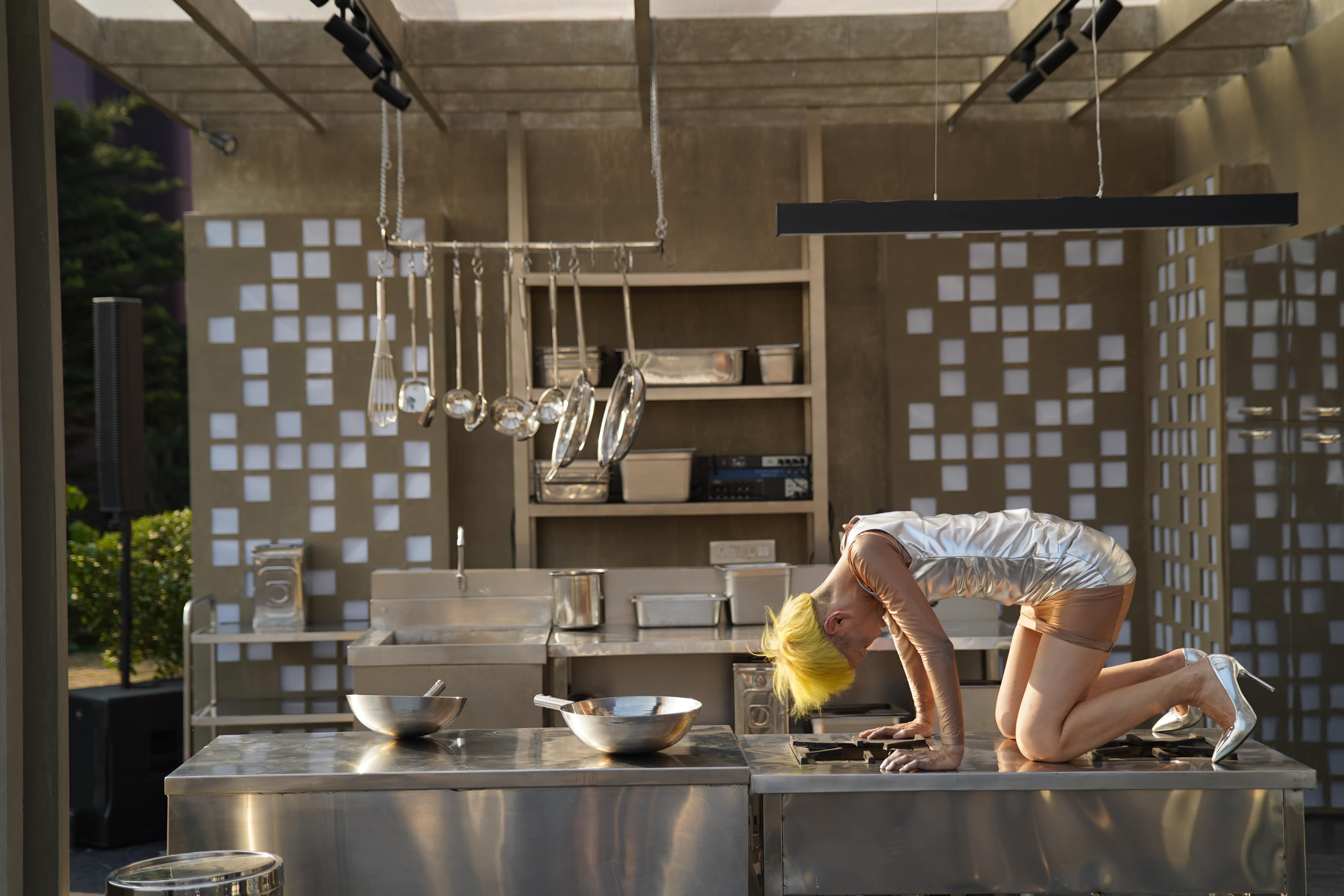
The most moving interpretation of the Madras Reimagined theme might happen on the night of December 5th at the Wild Garden Café, which is surrounded by greenery. The multi-talented artist Lekha Washington will perform a poetic performance here called “Unbecoming, or Ways to Survive the Apocalypse.” The title suggests that the self will be broken down, just like the city will be broken down. Washington’s work often mixes the real and the imaginary, and this performance promises to “weave together art, poetry, and emotion.”
“Unbecoming” tells a different story at a festival that is all about rethinking a city. Reimagining isn’t always about building more. Sometimes it’s about getting rid of the things that have built up over time to see what’s underneath. It is a “fitting finale” to a weekend full of mental and sensory stimulation.
The festival will end on Saturday, December 6th, with public gallery walkthroughs and collector home tours. After that, people will have to go back out in the heat of Chennai. They will drive through the busy streets of Mount Road, past the Art Deco theaters and glass office buildings, and maybe see them in a new way. The 2025 edition of Madras Reimagined does not promise to fix the city’s problems. Instead, it gives you a way to see the chaos not as a problem but as a beautiful, complicated, and changing work of art.



Leave a Reply