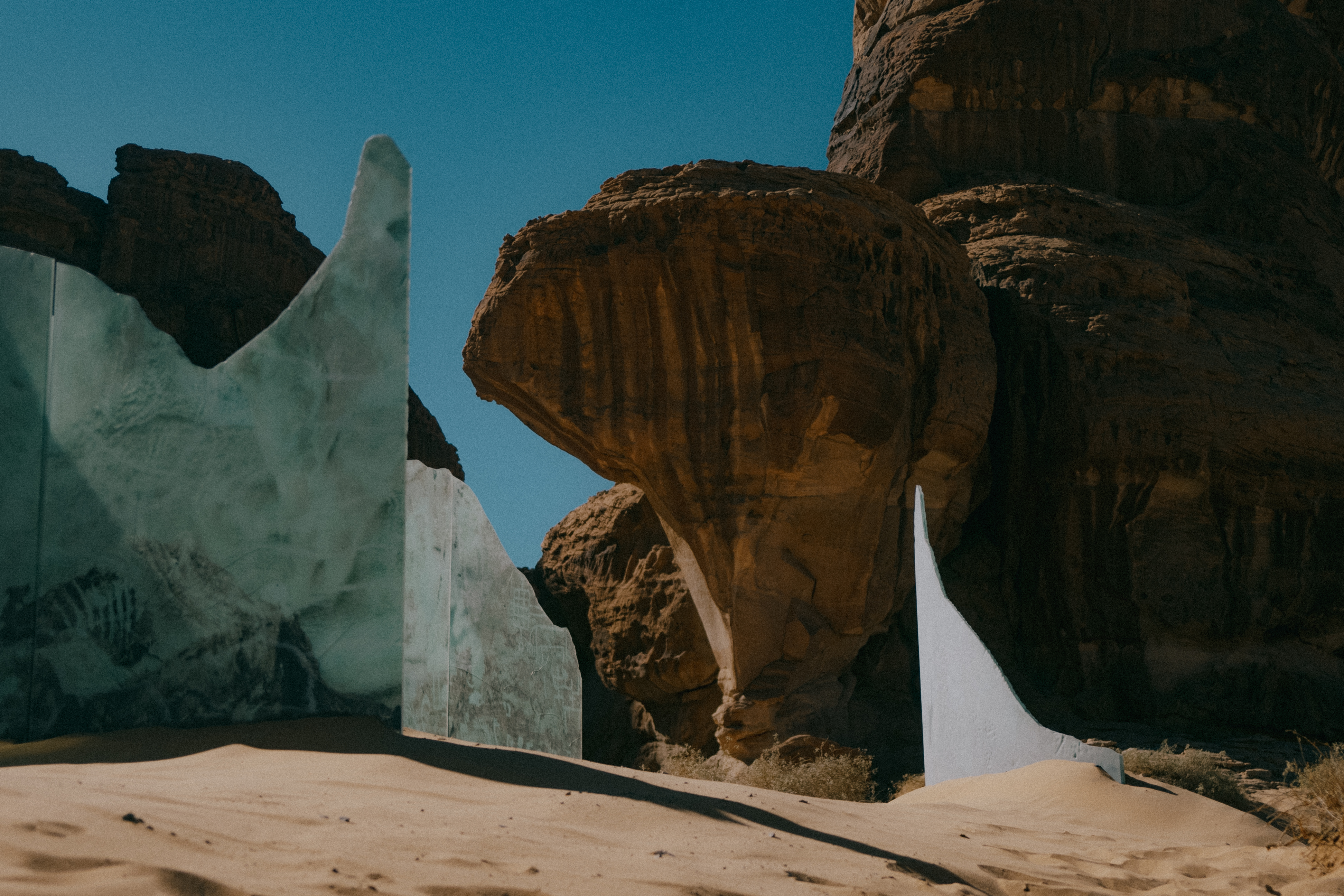
Sitting under the Grand Palais’ nave and in the core of Paris marks the beginning of the intercultural art venture. Saudi-French cultural institution Villa Hegra will showcase an extraordinary interdisciplinary installation that connects empires and artistic thoughts from April 3 to 6 in 2025, during the 27th installment of Art Paris. This retrospective will take place in the 27th iteration of Art Paris. NEUMA The Forgotten Ceremony, takes form as a multidisciplinary sculpture by a Saudi-American artist, Sarah Brahim and French artist, Ugo Schiavi, crafted as an ode to the ancient AlUla landscapes in Saudi Arabia, reflecting the boundless human imagination. For those scanning through art journals, this particular exhibition is not just in-person participation but rather an experience that warrants a meditative journey—one that urges thoughts about the breath, body, and the invisible forces that provide energy to life.
Villa Hegra has only opened its doors in 2023, but it has already positioned itself as a cross-cultural dialogue center because of a historical partnership between Saudi Arabia and France. Its debut at Art Paris was especially impactful, as it showcased the results of their first artist residency program in AlUla—a desert region famously known for its lush oases, dramatic sandstone mountains, and ancient cultural landmarks. Alongside a 150 square meter exhibition space, the NEUMA sculptures of The Forgotten Ceremony will also include videos, photography, and performative activations that will be curated by Wejdan Reda and Arnaud Morand. This artwork is not merely a sculpture but a living story—a story that fuses various dichotomies, such as history and existence, nature and civilization, and the self and the universe.
NEUMA: A Reimagined Ritual
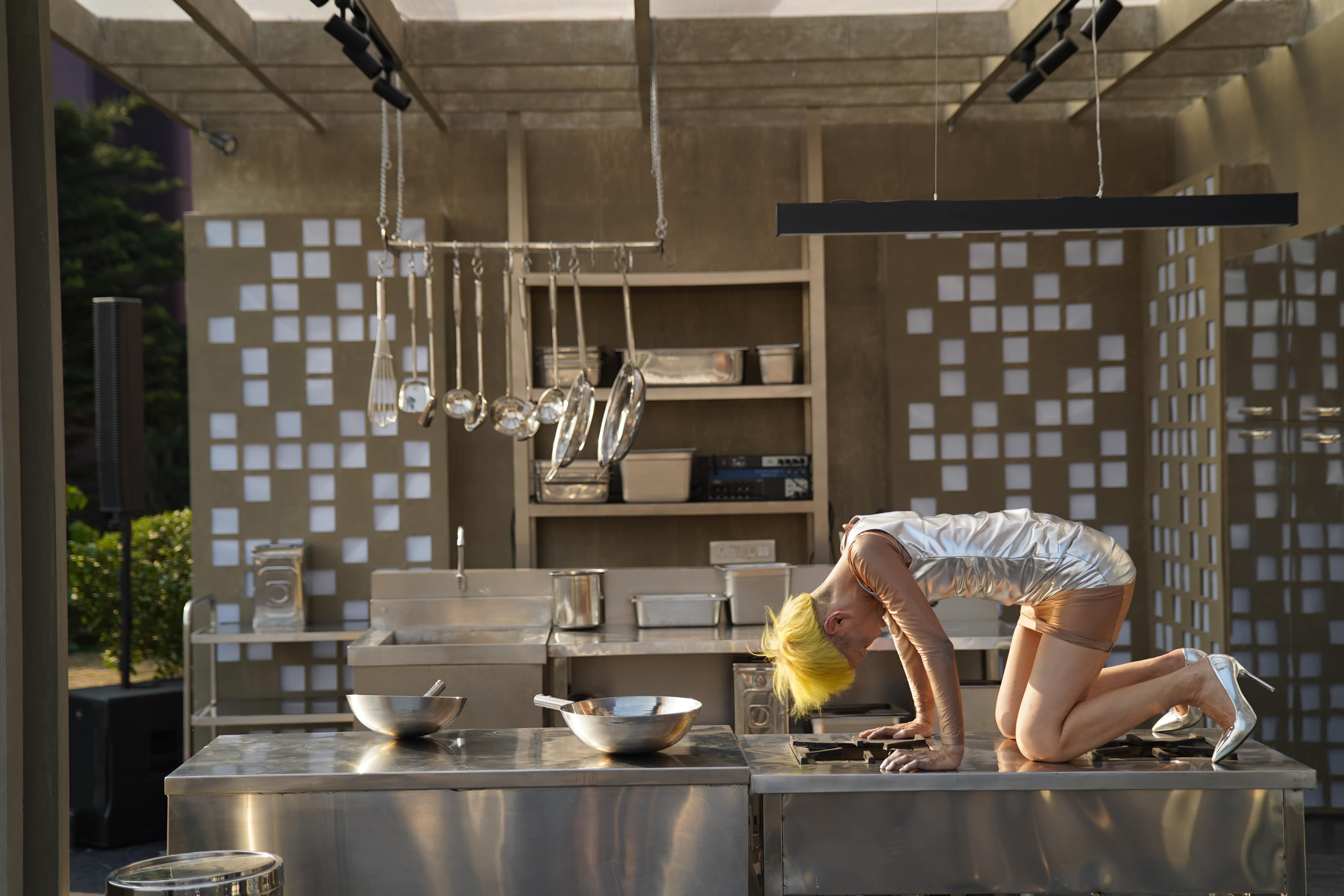
Essentially, NEUMA The Forgotten Ceremony pays tribute to the pre-Islamic civilizations of AlUla and modern people who live in this region. Drawing from the area’s mythology, heritage, and geology, Brahim and Schiavi, who created together during Villa Hegra’s residency, created an installation that was first showcased in December 2024 at AlUla’s Arts Festival and Villa Hegra’s preopening cultural season and has now been updated for Paris alongside new commissions intended to further the conversation with the Grand Palais architecture.Schiavi’s sculpted glass AlUla vessels shimmer in the light of imagination as they recall the ever-changing forms of the landscape of AlUla. It becomes breath, both method and metaphor. Brahim and Schiavi gathered in Villa Hegra, and in December 2024 they presented an audiovisual installation composed of already accomplished works alongside a polished residency in AlUla. Porters, the performers, performed on breath-activated ceremonial relics. Transformed objects in the scenography of the archaeological reserve interact subtly with Brahim’s large-scale photography sculpture. Polaroids document the body as a place of grief, transformation, and connection in movement.
The classical precept of “pneuma,” or breath, is inseparably linked to the title “Neuma,” which, as Aristotle claimed, is a vital force of life and is believed to be a Stoic divinity appropriate to the wind of life.
The installation’s reflection on the world is enhanced by its setting. The Grand Palais, with its classical Art Nouveau wrinkles, juxtaposes the aged reverberations of AlUla’s Wadi Al Naam canyon for NEUMA, The Forgotten Ceremony. Here, modern creation blends with the past and encourages the audience to meditate on the relationship between time, space, and spirits. For art lovers, the work is a glimpse into how two artists from diverse backgrounds come together to examine shared ideas rooted in a specific place.
The Creators Behind The NEUMA Vision: Ugo Schiavi and Sarah Brahim


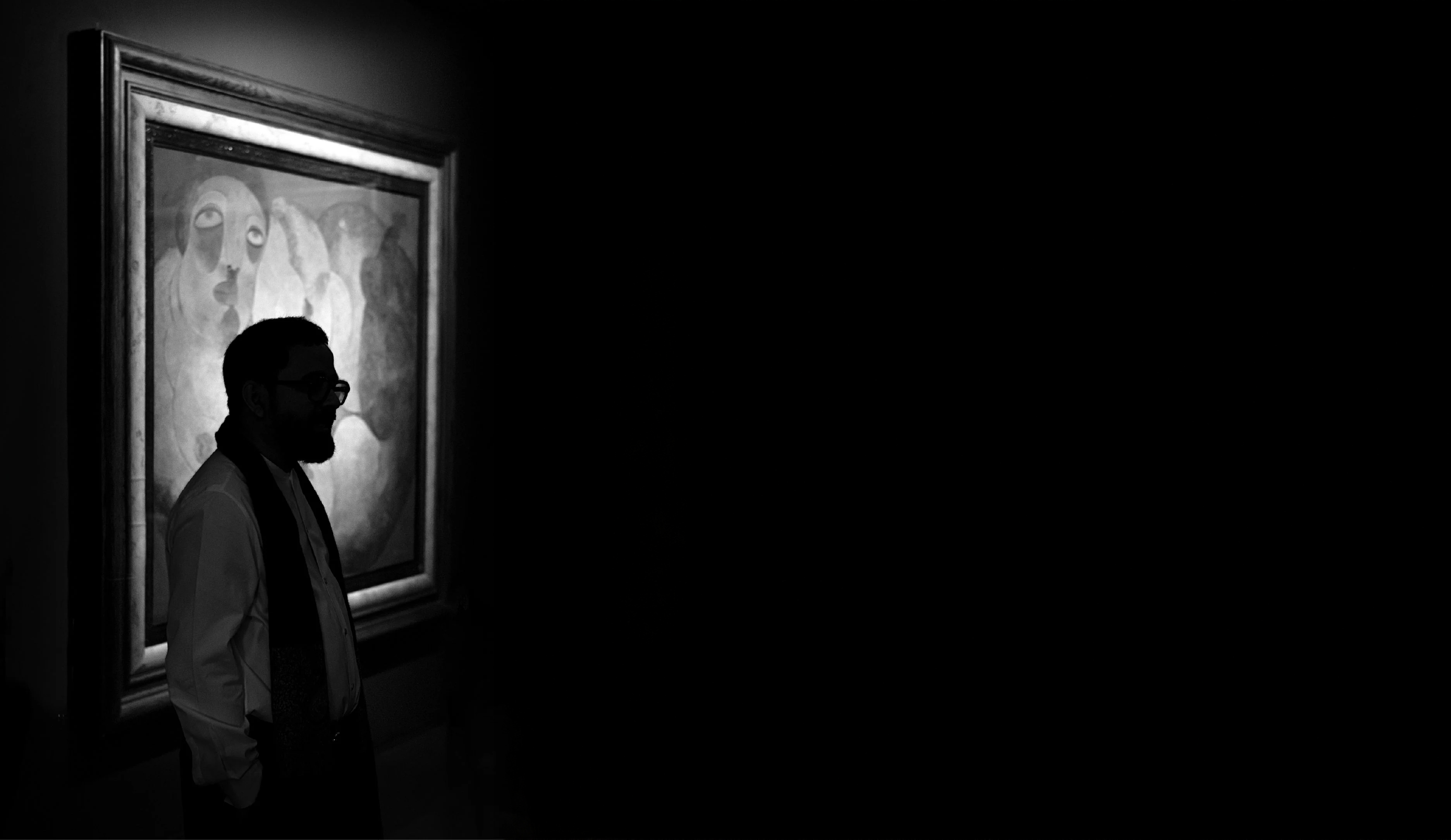
As noted previously, the power of NEUMA: The Forgotten Ceremony particularly stands with the intersection of its creators. Sarah Brahim (b. 1992) is a Saudi-American multidisciplinary artist viscerally engaged with the body as a vessel for expression. She trained in dance and choreography at the San Francisco Conservatory of Dance and the London Contemporary Dance School before shifting her focus to a BS in medical anthropology and naturopathic medicine at the Oregon Health and Science University. This ensemble of degrees shapes her approaches, which examine the biological, physiological, and lived realities of being in the body. Her work for NEUMA, such as Polaroids and accompanying videos, captures a kinetic vocabulary of social, spatial, and spiritual connections.
Ugo Schiavi, who was born in France in 1987, is, alongside Brahim, interested in the concept of time. Living and sculpting in Marseille, Schiavi produces uncanny forms that blend contemporary styles with ancient ones, almost like a fictional archaeology. His physically demanding casting processes—often derived from life models and public statues—endow his sculptures with an expressive spontaneity. In NEUMA, The Forgotten Ceremony, his glass breath vessels are elegant yet monumental and serve as a metaphor for the equilibrium of overpowering tension and softness between fiction and history.
Working in synergy, Brahim and Schiavi designed an installation that surpasses singular authorship, realizing Villa Hegra’s intention to encourage multicultural dialogue. Their yearlong residency in AlUla, in close collaboration with archaeologists and local communities, resulted in a work that celebrates the region’s history while casting it on an international platform.NEUMA The Forgotten Ceremony: From AlUla to Paris
As a tribute to Villa Hegra’s dream, the journey of NEUMA, The Forgotten Ceremony from AlUla to Paris, is a testament to Villa Hegra’s ambition. Now set to premiere in the Wadi Al Naam canyon and AlUla’s old town from December 2024 to February 2025, the installation had previously captivated audiences with its site-specific reverberation by the old world brushes twice in the turn. The timeless inspiration in AlUla’s Rockies serves as beauty: canyons as oases of landscapes, which grid the work both in and masterfully provide defeated deep basins to be slain, portrayed as reality. While in Paris, the installation retains its essence and adapts to the new context of ‘reimagined for grand-palais,’ where mid-new commissions of Brahim video, large-scale photographs, and Schiavi’s fused glass sculpture polaroids, along with the dynamic in renewed engagement, fresh dialogue with the swathe of Paris surrounding.
This enhances the adaptability of NEUMA, The Forgotten Ceremony, as a living artwork. In Al Ula, it incorporates the stories of the region’s inhabitants into its fabric. In Paris, it intersperses these narratives while addressing and embracing global phenomena. This creates a collage that invites narrative threads to unify humanity across time and geographies. Schiavi’s glass vessel, activated by animated breath, enacts a ritual from the earth to the celestial singular, while the collective oscillates between remaining, crossing, and remaining constant within the whole.
Fueling Creativity: Villa Hegra

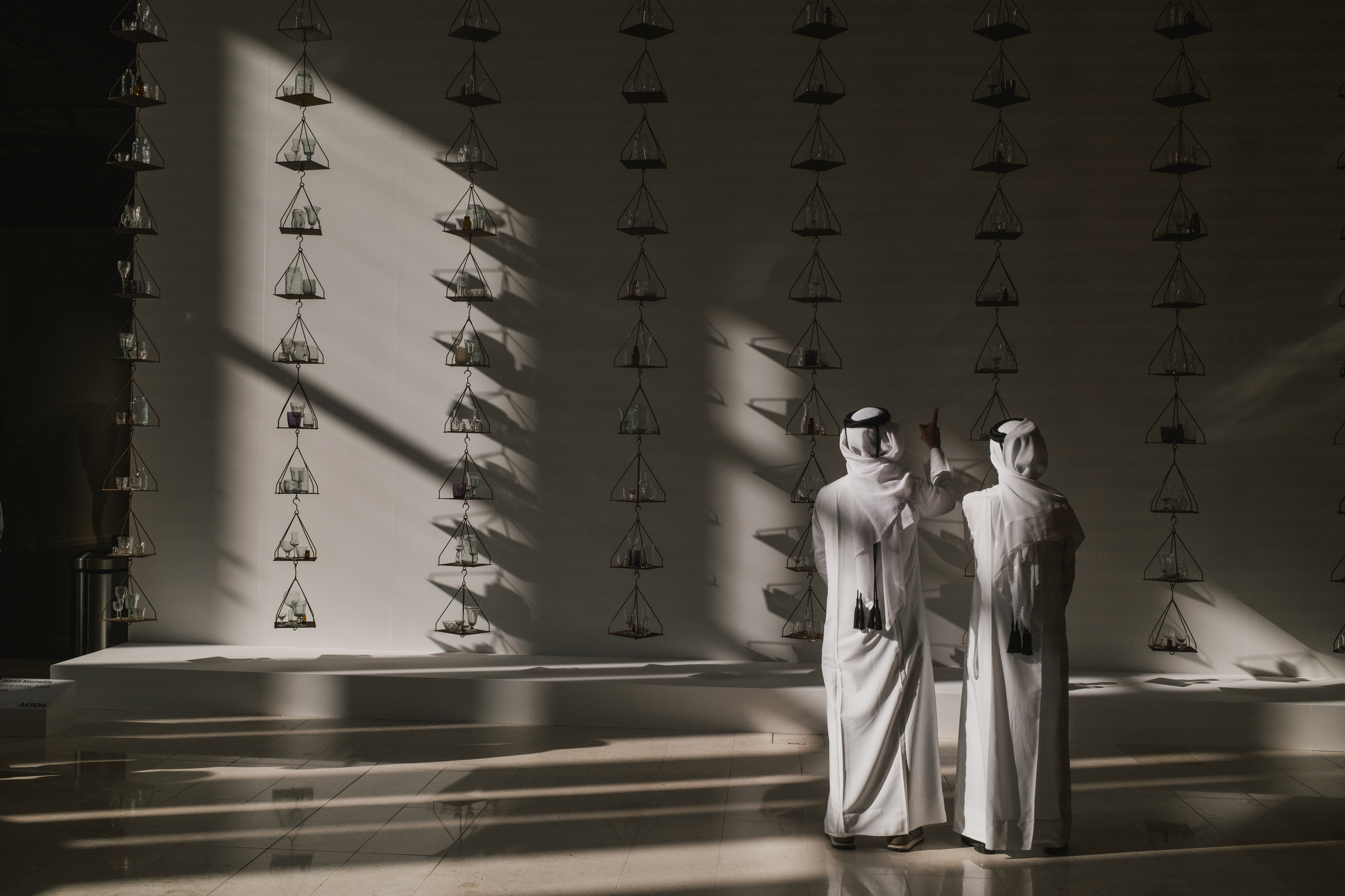
The Art Paris exhibition features Villa Hegra’s overarching vision alongside The Forgotten Ceremony. There is a dedicated part of the space that illustrates the history of the institution since 2023; it serves as a marker of Saudi-French cultural collaboration. Visitors can engage with the initiatives conceived alongside the Opéra national de Paris, the Philharmonie de Paris, and the Centre national de la recherche scientifique (CNRS): artist residencies, concerts, exhibitions, and even academic collaborations. The first architectural sketches of Villa Hegra’s new building plans by Pritzker Prize-winning architects Anne Lacaton and Jean-Philippe Vassal highlight its future potential as a landmark in AlUla.
Join us for a conference on April 4 from 2:30 PM to 4:30 PM for a deep dive into the creative journey of NEUMA and Villa Hegra’s artistic engagement; they will focus on the commitment to dialogue. This forum, with Feriel Fodil (CEO of Villa Hegra), curators Wejdan Reda and Arnaud Morand, and artists Brahim and Schiavi, will showcase the impact of the residency on the institution’s vision, illuminating a shed of insight for the art magazine readers. This conversation is an unmissable opportunity to engage with the architects of culture for our world.
NEUMA The Forgotten Ceremony: A Meditation on Breath and Being
The philosophical breadth of NEUMA The Forgotten Ceremony, is what distinguishes it. Harnessing ‘pneuma,’ Brahim and Schiavi invoke a concept permeating all cultures and times. Breath, in their hands, transforms into the rhythm of life—the force that brings the body, soul, and cosmos to existence. The glass sculptures are relics of an age long forgotten, geological contours that have performative aspects breathing life into them, blurring the lines between object and ritual. Brahim’s video and photography documentation capture the fleeting moments, expressing grief, change, and the subtle movements of the world’s elements.
Form and meaning come together to grant silence to the viewers. In this hurried epoch, NEUMA, The Forgotten Ceremony, provides solace—a space where breathing transforms into a rich conversation with humanity and history. In a contemporary art-informed society, this installation is a masterpiece of subtlety and intention, demonstrating how deep contemplation unveils countless realities.
What lies ahead for Villa Hegra and beyond?
While Villa Hegra will unveil its provisional location in the middle of Al-Ula in April 2025, NEUMA, The Forgotten Ceremony, acts as a precursor to its promise. This site will serve as a sanctuary for innovative talent development and reception. Its creation under the aegis of the Royal Commission for AlUla (RCU) and French Agency for AlUla Development (Afalula), ratified during the visit of the French head of state to Saudi Arabia in December 2024, signifies his diplomatic and cultural importance.
For enthusiasts, Villa Hegra’s appearance in Art Paris acts as the first glare of a new cultural endeavor. NEUMA, The Forgotten Ceremony, is more than an exhibition; it is the incredulous portrayal of art forged at the intersection of collaboration, contemplation, and deep respect for history. As the Grand Palais thrums with the life of performers and the soft sounds of guests, this installation remains a witness to the creativity that serves as a bridge connecting us to one another, to the land, and to everything.


Leave a Reply