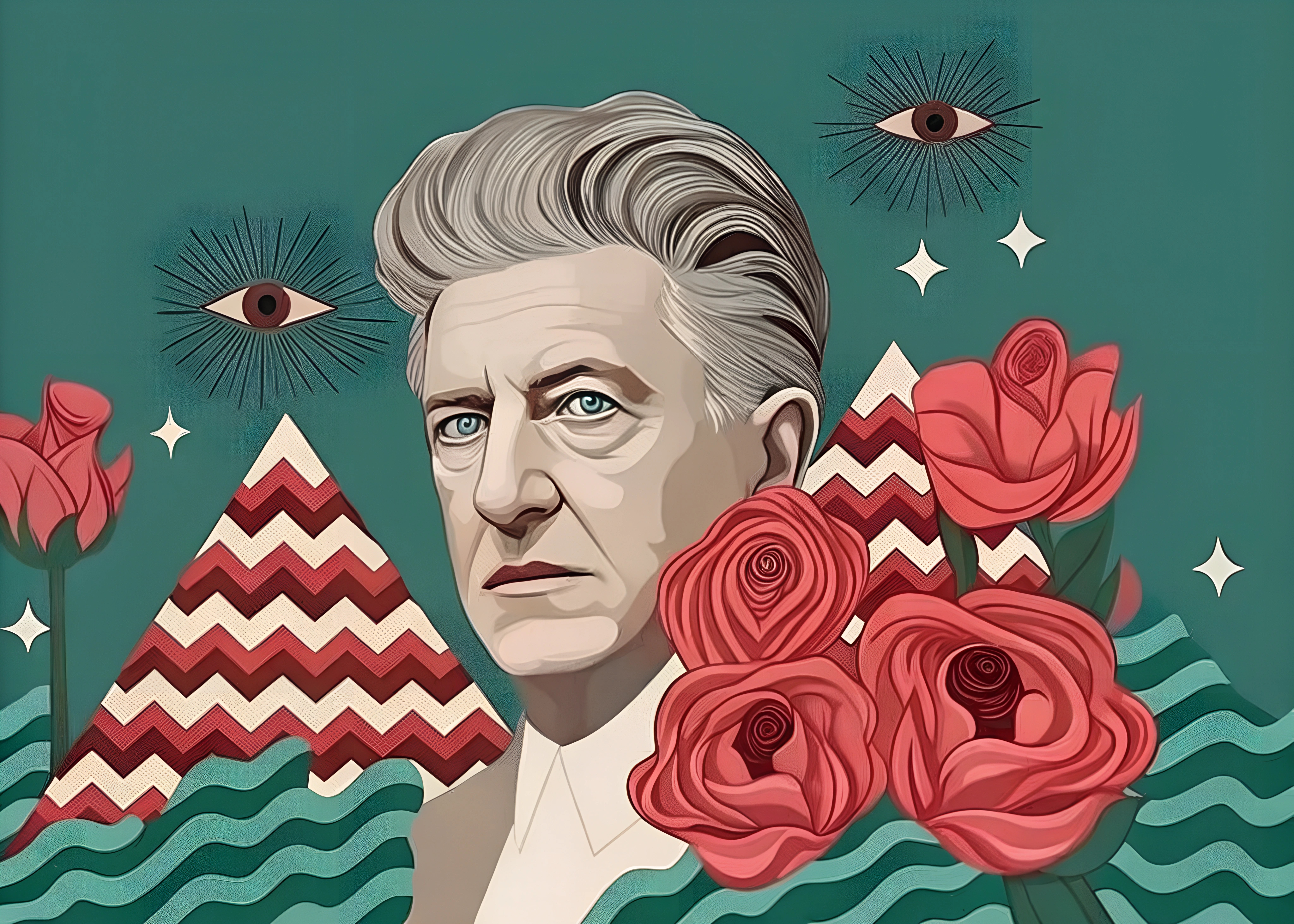
The world has lost one of the most accomplished auteurs of modern cinema. David Lynch has sadly passed away at the age of 78 years on January 16, 2025. With their departure, the world looks sorrier, edges appear blurred and silences seem deeper. What characterized his life’s work was a lifelong pursuit of unimaginable worlds filled with tender and terrifying sceneries, unfiltered surrealism and dreamlike wonders. The worlds we now reside in have changed forever as Lynch has departed from this realm.
It’s worth noting that Lynch was a filmmaker in name only. For decades, his work and very existence were a journey that many undertook alongside him. He grasped life’s paradoxes into art and was known as a texture and mood conjurer. “I don’t know why people expect art to make sense when they accept the fact that life doesn’t,” as he previously said.
The Uncanny’s Origin
David Keith Lynch was born in Missoula, Montana, on January 20, 1946. He spent the early years of his life in the rural Midwest of America, which later found its way into the depiction of the grotesque coziness of his art. Lynch has mentioned his father had a job as a researcher, which led to a lot of moving around; hence, as a child, he developed a strong interest in the mundane. The diner culture of small towns, the forests, and even the neon signs he would see as a child began to loom larger and larger in his work and became a dire and hubristic symbolism of the American dream that was.
As a young man, Lynch focused his interests on painting first, first attending the School of the Museum of Fine Arts in Boston and the Pennsylvania Academy of the Fine Arts in Philadelphia. It was in Philadelphia amidst urban rot and the absence of humanity where Lynch picked up the tool that would later define his existence: film. ‘The environment was hoary, industrial and pretty horrid. That is why the city itself was intimidating and filled with dread, which in fact made its way into my work,’ he recollects.
It was here where Lynch shot his first short films, tests in the combination of still painting and video. These early works served as the blueprint for his lifelong journey into the unknown.
The Birth of a Visionary: David Lynch
In 1977 Lynch presented Eraserhead to the unsuspecting world—his first full-length feature film, which was unlike anything else that existed. It was characterized by there being no categorization and its origin being alien. Stark, oppressive, and grotesquely beautiful, Eraserhead explored themes of existential dread, parenthood, and isolation through imagery that lingered like a fever dream.
Aside from establishing Lynch as a cutting-edge filmmaker, this film also became an emotion-based manifesto. Stanley Kubrick plainly stated that Eraserhead is his favorite film, and its nightmarish influence resonates throughout Lynch’s creative lineage.
It did not take long for Hollywood to notice David Lynch’s talent. His second film, The Elephant Man, is far more polished than his first but was still created with Lynch’s signature touch. It tells the story of Joseph Merrick, who was shunned due to his physical conditions. The film beautifully married Lynch’s humanity and grotesquerie style to perfection. The film bagged eight nominations at the Academy Awards, including Best Director.
Things took a turn when Lynch stepped into big-budget filmmaking with Dune. This adaptation of Frank Herbert’s expansive science fiction novel suffered due to studio involvement, which led to Lynch disowning the project. However, Lynch’s signature style began peeping through with the addition of soundscapes and surreal imagery.
Blue Velvet (1986) helped to solidify Lynch’s talents as a filmmaker. The film captures the decay hidden beneath the surgically polished suburbs while alternating grotesque violence and achingly beautiful moments. Lynch’s capacity to expose the darkness intruding upon the light is perfectly encapsulated by his opening shot—a detached ear nestled in an immaculate lawn.
The Phenomenon of Twin Peaks
In 1990, Lynch started his television journey with Mark Frost. A murder mystery revolving around the murderer of the homecoming Chosen One-including the addition of Lynch’s signature dream sequences, quizzical symbols, and bizarre characters titled “Twin Peks,” Peaks”—settled beautifully into the cultural phenomenon role. Lynch’s alternating episodes of dreamlike and real captivated audiences while simultaneously allowing television to obtain the status of art.
Twin Peaks is far more than a mere series; it was an artful portrayal of grief, reality, and the translucent line that separates good from evil. Its essence resonates in various modern television shows like Stranger Things and The Sopranos.
Cinema as Dreamwork
Lynch’s later films, including Lost Highway (1997), Mulholland Drive (2001) and Inland Empire (2006), took deep dives into the subconscious. These films challenged the audience to brush off logic and surrender to embrace the unknown while seamlessly blurring the lines between reality and imagination.
Mulholland Drive is widely regarded as Lynch’s greatest achievement, and it demonstrates how well he understands disorientation. The film started as a television pilot but ended up as a complex reflection of the themes of desire, identity, and the reality of dreams. Its complexity makes it a challenge for critics and scholars who try to dissect its different layers in search of elusive answers.
Beyond the Frame: Lynch the Polymath
When one refers to David Lynch, the first thing that comes to mind is his work as a filmmaker. Nevertheless, his artistic repertoire was broader as he was also a painter, musician, designer, and an avid supporter of transcendental meditation, which unlocked his creative abilities. He used the David Lynch Foundation to help bring meditation to troubled youth as a form of inner peace.
His visual paintings, which were presented around the world, painted the same picture as his films, surreal and disturbing. His music was eerie and atmospheric, adding another dimension to his storytelling. Lynch’s unique vision was incorporated into all his works, such as furniture, his Parisian nightclub Silencio, and even the Parisian club itself.
A Legacy Etched in Shadows
With the death of David Lynch, the world has lost a creative puzzle that can never be filled. His ability to delve into the darker regions of humanity was unparalleled and unfettered. Even after his death, his work lives on in a way that continues to baffle people and compel them to find answers to the essence of existence itself.
Lynch proved to the world that conventionality didn’t rule the world of cinema. In fact, there were no boundaries. Cinema could transcend into the dreamscape. His work was deeply rooted within human nature; hauntingly beautiful, soulfully human, and thorough. Each film offered a unique experience rather than a puzzle to be solved.
Even after his death, David Lynch begs us to challenge the prism through which we view life with the words, “I don’t think that people accept the fact that life doesn’t make sense. I think it makes people terribly uncomfortable.” In this discomfort, art can be found. In the art of film, one can find themselves.
Four children and his wife, Emily Stofle, are all that remain of David Lynch. The changes he made to the world Chang forever changed our perception of reality alongside the movies we’ll cherish for a lifetime.





Leave a Reply