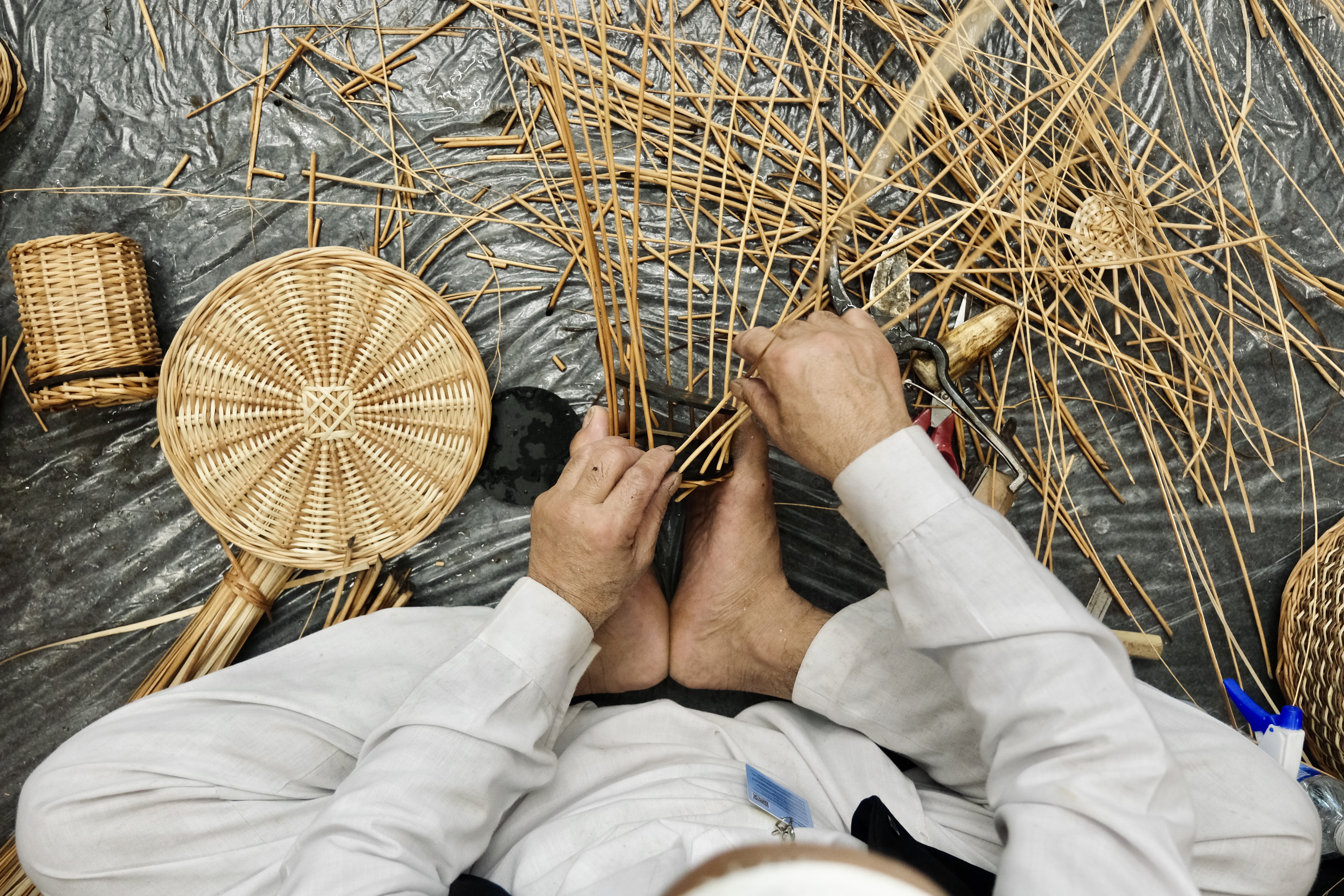
South Asia’s most ambitious interdisciplinary arts platform is gearing up for yet another transformative chapter. The Serendipity Arts Festival 2026 will take place in Panjim, Goa, from 13 to 20 December and will celebrate its eleventh edition with a rigorously conceived, curator-led vision. The festival takes place every year and is free to the public and has established itself as a vital bellwether for the production, presentation, and contestation of contemporary South Asian art on the international platform, reimagining more than 300,000 square feet of heritage architecture and alternative venues.

The 2026 cohort is characterized by a tight-knit group of practitioners whose practices are based on inquiry, experimentation and long-term collaboration. Together they reaffirm the festival’s core methodology: programming that doesn’t just present finished work but actively shapes thought, builds bridges across disciplines, and provokes productive dialogue across artistic forms. The cohort approaches each medium not as a closed category but as a porous, evolving conversation and that ethos animates every line of the 2026 program.
“As Serendipity enters its second decade, we are committed to not only presenting art but also influencing the way it is experienced, shared and understood. This is where the curators come in. They bring deep expertise but more importantly a spirit of inquiry that keeps the Festival restless, questioning and alive to its times.” – Sunil Kant Munjal, Founder Patron, Serendipity Arts
The Curatorial Philosophy: Disciplines as Conversations with Holes
The organizing framework of the Serendipity Arts Festival 2026 is based on a resistance to fixed disciplinary boundaries. Curators are not invited to fill slots within predefined categories but are asked to shape a broader intellectual terrain in which visual arts, music, theatre, dance, craft, culinary practice and accessibility programming inform and complicate one another. The 2026 roster signals a deliberate move toward more research-based curation, where each discipline is contextualized within an interrelated ecosystem of ideas, practices, and conversations, rather than a standalone showcase.
This perspective is expressed with characteristic precision by Smriti Rajgarhia, Director, Serendipity Arts, who describes the curatorial body not as a programming committee but as a chorus of critical voices.
“Curators at Serendipity Arts are not simply program-makers; they are critical voices for how audiences experience, understand and question the arts today. “We have curated our 2026 cohort with a specific purpose—to take interdisciplinary dialogue further, make space for slower and more layered engagement, and tell sharper, more intentional stories across the festival.” – Smriti Rajgarhia, Director, Serendipity Arts
Visual Arts: Latika Gupta and Sheba Chhachhi

Latika Gupta and Sheba Chhachhi, whose practices combine rigorous art historical inquiry with politically engaged lens-based work, will lead the Visual Arts program. Their pairing suggests an interest in how scholarship and image-making might be contained within a single curatorial argument.
Latika Gupta is an art historian and curator based in Delhi. Her practice has been characterized by sustained engagement with pedagogy, institutional practice and contemporary art discourse. She is also an associate editor at MARG Publications (2016-2020) and is currently on the editorial collective of “100 Histories of 100 Worlds in 1 Object” and an associate editor of *South Asian Studies*. She co-mentored the Curatorial Intensive South Asia program, a collaboration between Khoj and Goethe-Institut / Max Mueller Bhavan, from 2019 to 2025, which has created a generation of curators in the region. Gupta is currently the Director of the Sher-Gil Sundaram Arts Foundation and teaches courses on Trans-Himalayan visual and material cultures as visiting faculty at Ashoka University.

Sheba Chhachhi is internationally renowned for her pioneering lens-based works that explore gender, the body, the city, cultural memory and ecophilosophy through intimate, sensorial encounters. She started out as an activist and photographer of the Indian women’s movement, then moved into collaborative staged photography in the 1990s, and then into large-scale multimedia installations. Her work animates marginal worlds—of women, mendicants and forgotten forms of labor—often referencing pre-modern thought and visual histories and interweaving mythic and social strands. Chhachhi’s work is held in major public and private collections, including MoMA, New York; Tate Modern, London; the Metropolitan Museum of Art; and the National Gallery of Modern Art, India. She received the Juror’s Prize for contemporary art in Asia from the Singapore Art Museum in 2011 and the Thun Prize for Art and Ethics in 2018 and still lives and works in New Delhi.
Craft: Sudheer Rajbhar & Kshitij Jalori
In Craft, Kshitij Jalori and Sudheer Rajbhar bring different but complementary perspectives, bridging design innovation with grassroots material practice. The pairing positions craft both as a space of high-design refinement and a contested social terrain—a duality that runs through the entire Serendipity Arts Festival 2026 program.

Kshitij Jalori is known as a fashion and textile designer for his structural mastery of Banarasi weaves and for his intricate embroideries, a vital link between traditional handcraft and global luxury. Since founding his eponymous label in 2019, he has built a brand identity that he describes as an “amalgamation of architecture, art and culture.” His work is a sophisticated dialogue between the intricate soul of Indian handlooms and the crisp, structured silhouettes of contemporary tailoring—a mash-up that places India’s ageless heritage within an international lexicon but also resists the easy exoticism that often attends such crossings.

Sudheer Baldeo Rajbhar is an interdisciplinary artist, designer and social entrepreneur from Mumbai who has created transformative work in both artistic ambition and political conviction. Founder of CHAMAR, a sustainable fashion label, who has reclaimed a historically derogatory caste term as a symbol of pride and craftsmanship. Rajbhar’s love for leatherwork is not confined to fashion. He has been actively involved in preserving the cultural heritage of leatherwork. He’s been awarded grants from institutions including the Royal Ontario Museum and the Guggenheim Museum to develop an archive that documents the history of Indian leather workers, a project that aims to return dignity and visibility to a craft community that has long been pushed to the margins of mainstream design discourse.
Culinary Arts: Rachel Anisha Oommen
The Culinary Arts vertical will be curated by Goya’s founder, Anisha Rachel Oommen, who will shift the conversation around food from a consumption-based approach to a cultural and critical one. Goya is an award-winning publication at the intersection of culture, community and media, using food as a vehicle to tell stories and build lasting cultural platforms that spotlight regional cuisines, local producers and the knowledge systems that sustain them. Led by Oommen, the Culinary Arts program at Serendipity Arts Festival 2026 interrogates food as a vehicle for memory, labor, ecology and identity, bringing the kitchen into the same critical conversation as the gallery and the stage.

Her appointment is part of a larger, deliberate effort on the part of the festival to recognize food as a serious art form, one that has its own histories of authorship and regional identity and ethical complexity. For many large-scale arts festivals, food is still ambient hospitality; at Serendipity, it has always been a curated, research-led program. The 2026 edition will take that commitment further, foregrounding makers and traditions that rarely receive institutional attention.
Music: Ankur Tiwari, Aruna Sairam
Aruna Sairam and Ankur Tiwari will bring together contemporary soundscapes and classical depth to shape the music at Serendipity Arts Festival 2026. Their collaboration echoes the festival’s wider instinct to listen across registers, not within them.
Aruna Sairam is a Carnatic vocalist and composer. She was awarded the Padma Shri award and is known for her rich voice and her mastery over South Indian classical traditions. She is best known for bringing the bhakti repertoire, abhangs and a wider spiritual canon into the contemporary concert hall, and often builds bridges between performance traditions that have historically existed in separate spheres. Her body of work has redefined the place of Carnatic music in the global concert circuit while being deeply rooted in its lineage.

Ankur Tiwari is one of India’s leading singer-songwriters and musicians. A Recording Academy Voting Member, he was the former Creative Architect of the award-winning Coke Studio Bharat, where he crafted collaborations that reflected the depth and diversity of India’s musical landscape. Together Sairam and Tiwari are expected to create a music program that moves fluidly from classical roots to the most experimental territories of contemporary composition, demonstrating in practice what it means to listen across generations and idioms. Their pairing also suggests a generational handshake, the kind of cross-pollination of rigor and risk that has become a hallmark of the festival’s musical programming.
Ashley Lobo and Surjit Nongmeikapam: Dances

Curated by Ashley Lobo and Surjit Nongmeikapam, the dance program at the Serendipity Arts Festival 2026 will investigate the body as a site of discipline and an instrument of disruption. The pairing brings together institutional pedagogy and community and geography-based practice.
Ashley Lobo is widely recognized as a leading figure in contemporary dance and a pioneer of formalized Western dance education in India. His four-decade career in performance, choreography and pedagogy has over forty film and stage works staged in India and abroad. He trained in Australia and his practice draws on a cross-cultural choreographic vocabulary. He is founder-director of Navdhara India Dance Theatre, which has toured more than fifteen countries and performed at venues including the Suzanne Dellal Centre for Dance and Theatre in Tel Aviv, Théâtre National de Chaillot in Paris, the Joburg Theatre in Johannesburg, Harbourfront Centre in Toronto, and Kampnagel in Hamburg. He works in Prana Paint, a somatic practice of breath, impulse and movement, which has developed a unique lineage of Indian contemporary dance.

Surjit Nongmeikapam is a choreographer, performing artist and cultural practitioner based out of Imphal, Manipur, who reinterprets traditional performance frameworks through a contemporary movement lens. As artistic director of the Nachom Arts Foundation, he has played an instrumental role in nurturing a sustainable contemporary dance ecology in Manipur through artistic production, pedagogy and institutional engagement. His work has been awarded several prizes and presented on international platforms like ImpulsTanz, Tanz im August and Sadler’s Wells, establishing him as one of the most important choreographic voices of his generation and a critical anchor for dance from India’s northeast.
Theatre: Mahesh Dattani & Anuradha Kapur
The theater program will be curated by Mahesh Dattani and Anuradha Kapur, two of the leading voices in contemporary Indian theater, whose practices bring together artistic rigor, critical inquiry, and a sustained engagement with the social and cultural landscape. With their combined stewardship, theatre at the Serendipity Arts Festival 2026 is poised to be a writerly discipline as much as a research-based one.

Based in Mumbai, Mahesh Dattani is a playwright, stage director, screenwriter and filmmaker. His published works include Final Solutions and Other Plays, Tara, two volumes of Collected Plays (Penguin India), and most recently Me and My Plays. His plays have been performed across India and internationally – in the UK, USA, Australia, Sri Lanka and Dubai—and translated into Hindi, Gujarati, Nepali, Swedish, German, Japanese and Kannada. In 1998, Dattani was the first playwright writing in English to receive the Central Sahitya Akademi Award, the highest national literary honor in India — a milestone that continues to define the visibility of English-language Indian drama.

Anuradha Kapur is a theater-maker and teacher whose work encompasses performance, pedagogy and institutional leadership. She is a founder member of Vivadi, a cross-disciplinary group of theater makers, visual artists, filmmakers, musicians and writers who seek to link practice with research. Her theatre productions have toured nationally and internationally. Kapur taught for over three decades at the National School of Drama in New Delhi and was its director from 2007 to 2013. She has been a visiting professor at Ambedkar University Delhi, University of Warwick and University of Cape Town. Her landmark book *Actors Pilgrims Kings and Gods: The Ramlila at Ramnagar* (Seagull Books, 1993; reissued in a revised edition 2004) is still a foundational text in South Asian performance studies. In 2004, she received the Sangeet Natak Akademi Award for Direction for her sustained contribution to the field.
Accessibility: Salil Chatturvedi

Salil Chatturvedi, whose leadership on accessibility has been one of the festival’s core and ever-evolving priorities, will again ensure that inclusivity is built into the very fabric of the festival rather than an add-on. Chatturvedi, a writer, poet and disability rights campaigner, has also represented India in wheelchair tennis, and in 2009 sailed from Mumbai to Goa with a team to draw national attention to accessibility issues—a journey emblematic of the conviction with which he approaches advocacy. His continued association with the Serendipity Arts Festival 2026 is indicative of the institution’s commitment to making contemporary art truly accessible to all audiences and extending accessibility from the physical to the deeper terrain of curatorial and pedagogical practices.
Special Projects: Sreyansi Singh, Padmini Chettur
Finally, Special Projects, curated by Sreyansi Singh and Padmini Chettur, will be a connective tissue across the festival, bringing cross-disciplinary explorations that challenge the limits of how we encounter art. The vertical is conceived as the most experimental seam of the festival—the site where its disciplinary conversations are sewn together.

Sreyansi Singh is a curator and researcher who works critically with contemporary textile art and clothes-making practices in South Asia. Her curatorial advocacy foregrounds underrepresented and experimental approaches that inquire into the material histories and politics of the maker, situating cloth and garment-making within wider questions of labor, identity and inheritance.

Padmini Chettur began her contemporary dance journey in 1990 with the legendary Chandralekha’s troupe. Over the decades she has developed her own idiom of choreography—minimalist, abstract and formal—that reduces movement to its essential, anatomical investigation. Her work that prioritizes tension over emotion has made her a pioneer in the redefinition of contemporary dance vocabularies in India. Together, Singh and Chettur will craft a Special Projects program that resists categorization, celebrating sustained, attentive encounter. Why the Curator-Led Model Matters Today
The choice of curating the Serendipity Arts Festival 2026 with such an intentional curatorial body is not incidental. The wider cultural infrastructure in South Asia is under-resourced compared to the scale and seriousness of artistic practice in the region. Public museums are too few, biennial circuits rely heavily on individual patronage, and critical writing on contemporary South Asian art is scattered across small magazines, occasional anthologies and the growing panoply of online platforms. In this landscape, a festival of Serendipity’s scale carries unusual responsibility; its choices become, in effect, propositions about what should be taken seriously, who should be read alongside whom, and how an audience can be trusted to engage.
The curator-led model addresses that responsibility by privileging argument over inventory. Every program in the 2026 edition has been shaped by practitioners who have been thinking about their fields for decades. Their choices will inevitably read as positions—about what music is for, what counts as craft, who is allowed to choreograph the body, and what kitchens deserve a stage. It is this visible authorship that provides the festival with its critical bite.
An ecosystem of ideas, not a series of showcases
This curatorial cohort represents a deliberate shift towards research-led, intentionally layered programming. The Serendipity Arts Festival 2026 is being constructed not as a series of independent showcases but as an interconnected ecosystem of ideas, practices and conversations—one that anticipates audiences prepared to slow down, return and read across disciplines. The festival continues to push creative boundaries with exhibitions, performances, workshops and interactive experiences and promises a 2026 edition that is more introspective, more interconnected and more deeply rooted in curatorial thought than ever before.
The Festival and Serendipity Arts


The Serendipity Arts Festival is South Asia’s largest multidisciplinary arts festival, held annually in Panjim, Goa and is open to the public free of cost. The festival and its leadership have been widely recognized for their contribution to cultural life: Founder-Patron Sunil Kant Munjal was awarded the Chevalier de l’Ordre national du Mérite by the French government in recognition of his long-standing commitment to the arts, and the festival has received the Cultural Impact Award at the Business Goa Lifestyle Awards 2025, Best Cultural Festival at the 8th Annual LCD Berlin Awards, and the Svayam Accessibility Award 2025 for its commitment to creating a truly inclusive cultural environment.
As the Serendipity Arts Festival 2026 gears up to open its doors in Panjim from December 13 to 20, the eleventh edition reaffirms what has always made the festival unique: an openness to its curators, to disciplines bleeding into each other, and to treating each year not as a repetition but as a renewed argument about what an arts festival can be in South Asia today. For the regional art community it offers something more rare: a well-funded and sustained space where long-form curatorial thinking is treated as a public good worth defending.


Leave a Reply