Visitors from around the world chose the India Pavilion as the best national pavilion at the 61st Venice Biennale. It was India’s first pavilion in Venice in seven years, and it came home with one of the art world’s most famous prizes.
On 25 November 2026, three days after the 61st International Art Exhibition closed its doors, La Biennale di Venezia announced the winners of a prize that had never existed before. The Visitors’ Lion for Best Participant went to the American artist Nick Cave. The Visitors’ Lion for Best National Participation went to the India Pavilion.
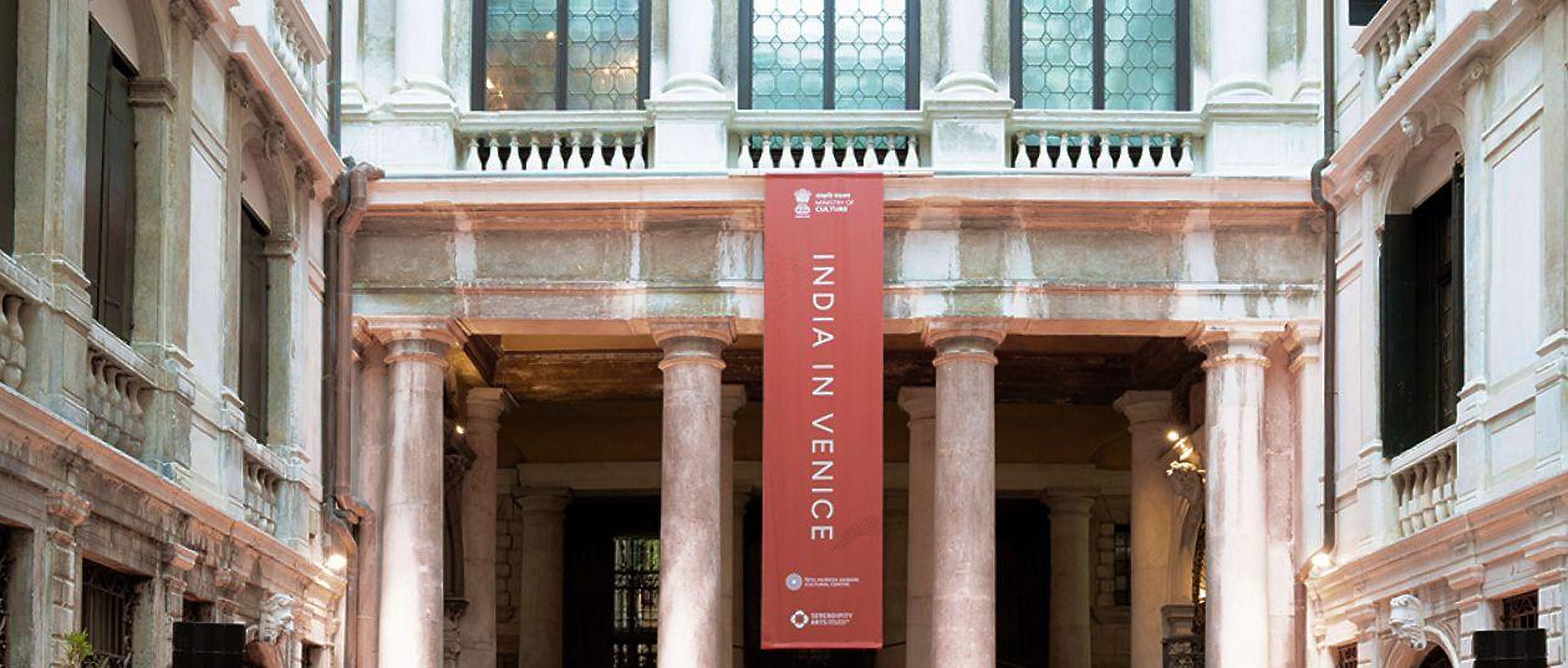
India, the world’s most populous country, has staged a pavilion in Venice only three times in the Biennale’s 131-year history. The first was in 2011 and the second in 2019. This year’s pavilion, Geographies of Distance: Remembering Home, was curated by Amin Jaffer and installed in the Isolotto spaces at the Arsenale. It was India’s first appearance since 2019, and on that return it took the top national prize.
Within hours the news was everywhere in India. Prime Minister Narendra Modi called it a “proud moment” for the country’s art world. Culture Minister Gajendra Singh Shekhawat called it “a moment of immense pride.” Wire services ran the story with words like “landmark.” The photo opportunity was obvious: a lion, finally, for India.
The win is also a first for the Biennale. For the first time in its history, the top national prize was decided not by a small jury but by the people who walked the exhibition. That makes India the first country to win Venice by popular choice.
How the Visitors’ Lion was born
The trouble began over who was allowed to exhibit. This edition, titled In Minor Keys, was conceived by the late curator Koyo Kouoh. It opened with both Israel and Russia among the national participants. Russia was returning for the first time since its full-scale invasion of Ukraine. Boycott campaigns and open letters had circulated for months.
On 22 April, the five-member international jury Kouoh had selected issued a statement of intent. It would not consider for the Golden or Silver Lion any country whose leaders were charged with crimes against humanity by the International Criminal Court. In practice, that meant Israel and Russia.

The backlash was quick. Israel’s foreign ministry accused the jury of politicizing the exhibition. The artist representing Israel’s pavilion made legal threats. According to reports, the Biennale’s legal department then warned the jurors that they could be personally liable for damages if a dispute followed. On 30 April, nine days before the public opening, the whole jury resigned.
The Biennale responded within hours. It said it would not accept censorship in culture and would exclude no official participant. It dropped the Golden and Silver Lions for this edition and created two one-off prizes, the Visitors’ Lions: one for the best artist in the main exhibition and one for the best national pavilion. Every country on the official list, Israel and Russia included, would be eligible. Italy’s Deputy Prime Minister, Matteo Salvini, welcomed the change as a positive alternative to decisions by a jury.
Voting was not open to everyone. Only ticket-holders who had visited both main venues, the Giardini and the Arsenale, could cast a ballot. Voting ran from 9 May until the show closed on 22 November. The awards ceremony, normally held on opening weekend, moved to the end of the run.
A vote from visitors: why the India Pavilion’s win stands out
Visitors had six months to decide. Every eligible ticket-holder had seen both the Giardini and the Arsenale, so each ballot came from someone who had toured the whole exhibition, national pavilions included.
The new format had its critics in the art world, and a number of artists and pavilion teams withdrew from consideration in solidarity with the departed jury. The India Pavilion and its five artists stayed in, trusting the public to judge the work.
That trust was rewarded. Across a crowded Arsenale, visitors chose the India Pavilion ahead of every other national pavilion on the ballot. The other Visitors’ Lion went to Nick Cave, one of the best-known names in the main exhibition, which puts India’s win in strong company.
A jury prize reflects the taste of a few experts. A visitors’ prize shows what moved the people who actually came. For a pavilion built around a universal idea, home, that is a fitting kind of recognition.
The Biennale has not yet published vote totals. But the result itself is clear, and it gives India a distinction no other country holds: the first Visitors’ Lion for Best National Participation.
Inside the India Pavilion: five artists, one idea of home
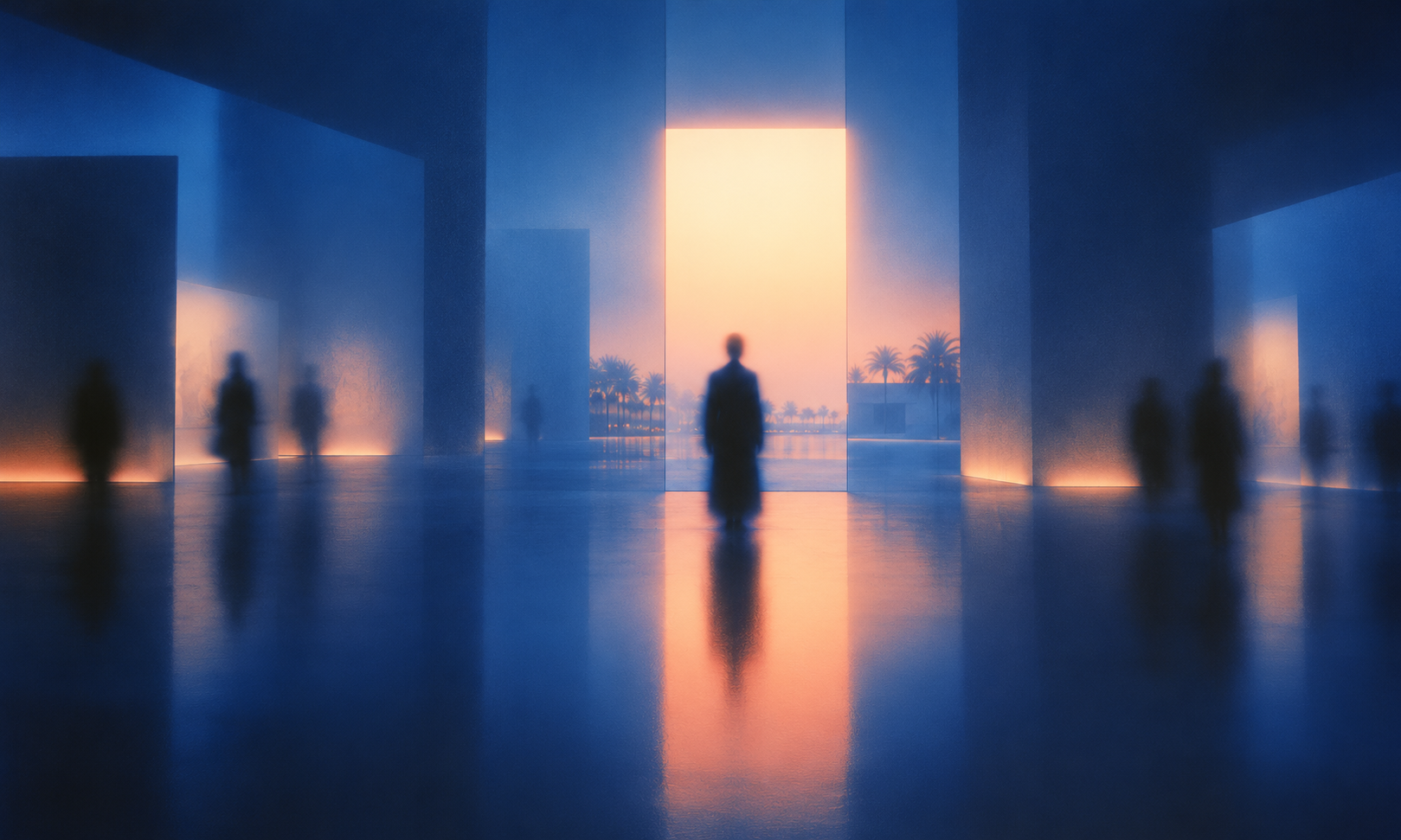
Whatever the politics, visitors had to choose something, and many of them chose a quiet show. Geographies of Distance: Remembering Home brought together five contemporary artists. Their work deals with belonging, migration, and how quickly Indian cities and landscapes are changing. Jaffer picked artists who all use organic materials rooted in Indian traditions: thread, bamboo, earth, and hand-woven cloth.
- Alwar Balasubramaniam (Bala): Not Just for Us
- Ranjani Shettar: Under the same sky, in hand-woven cotton fabric, steel, and lacquer
- Asim Waqif: Chaal
- Sumakshi Singh: Permanent Address
- Skarma Sonam Tashi: Echoes of Home
Together, the works use thread, bamboo, earth, and cloth to ask what is left of home when places change, grow, or disappear.
The pavilion was more than a set of installations. Alongside the five works, it ran a wide program of performances through the season, which gave visitors more reasons to return to the Arsenale and spend time with the art. For many who voted, the India Pavilion was an experience that lasted longer than a single walk-through.
Critics were largely sympathetic. Hyperallergic compared the India Pavilion to minor tones in music, an apt image in a biennale titled In Minor Keys. Designboom wrote that the rooms seemed remembered by touch before they were understood as images.
That restraint may help explain the vote. Visitors who had walked through both the Giardini and the Arsenale found a show built from familiar materials around a question anyone can answer: what is home? In an edition full of protest and closed pavilions, the India Pavilion asked people to slow down, not to pick a side. Even so, ArtReview Asia ran a piece on its politics of belonging, a reminder that a quiet show still makes an argument.
The India Pavilion’s long road back to Venice

India’s history in Venice has been short. The first India Pavilion came in 2011 and the second in 2019, and the country had no national pavilion in 2022 or 2024. Many in the Indian art world had long argued that the world’s most populous nation deserved a regular place at the Biennale. In 2026 the Ministry of Culture made that happen.
The 2026 return was built on a new model. The National Gallery of Modern Art, under the Ministry of Culture, commissioned the India Pavilion. The Indira Gandhi National Centre for the Arts was the executing agency. Two private partners, the Nita Mukesh Ambani Cultural Centre and Serendipity Arts, came on board. ArtAsiaPacific noted that the arrangement brought the public and private sectors closer together, since private institutions currently do most of the work of promoting Indian art abroad.
To lead it, the organizers chose Amin Jaffer, an internationally respected scholar of Indian art and director of The Al Thani Collection. He framed the pavilion around plurality. Outlook headlined its interview with him with his words: “India has more than one voice.” Union Culture and Tourism Minister Gajendra Singh Shekhawat inaugurated the pavilion on 6 May before diplomats, curators, collectors, and artists from around the world.
What the India Pavilion win means
In New Delhi, the win was read as a story about national standing. Shekhawat called it a remarkable recognition of India’s growing cultural influence, decided by visitors from around the world. Modi said Indian artists were offering the world new ways of seeing and hoped the win would inspire more young Indians to pursue art. Sachchidanand Joshi, Member Secretary of the IGNCA, said it reflected how visitors had responded to India’s cultural ethos.

The most practical effect may be on budgets and planning. India’s presence in Venice has depended on one-off efforts. A prize, of any kind, makes it easier to argue for a pavilion in 2028 and beyond and for the public-private model that paid for this one.
There is a soft-power side too. National pavilions in Venice are among the most visible ways a country presents its culture to collectors, curators, and museum directors from around the world. A winning pavilion travels further through catalogues, press coverage, and the conversations that decide which artists are invited next. For the five artists of Geographies of Distance, the Visitors’ Lion will now be part of their story wherever their work goes.
The win also gives Indian art new momentum abroad:
- For artists: five Indian artists have now shown, and won, on one of the world’s most visible stages.
- For institutions: the partnership of NGMA, IGNCA, NMACC, and Serendipity Arts now has a proven record to build on.
- For the next edition: a prize-winning return makes a strong case for an India Pavilion at every Biennale from 2028 onwards.
Seven years after its last pavilion, India came back to Venice with a quiet, carefully made show about home. Visitors from across the world walked through it and chose it as the best. The Golden Lion may return in future editions, but the first Visitors’ Lion for a national pavilion will always belong to India.
Sources
- La Biennale di Venezia: Voting procedures for the Visitors’ Lions
- Artsy: Nick Cave and Indian pavilion awarded Visitors’ Lions
- The Tribune: India Pavilion wins Visitors’ Lion
- The Art Newspaper: Venice Biennale’s jury resigns
- The Art Newspaper: Five artists announced for India’s pavilion
- Hyperallergic: Dozens of Biennale artists withdraw from awards
- Artforum: Venice Biennale faces legal action from artists
- ThePrint: Shekhawat calls it a moment of immense pride